






Abstract
The tariff rate quota (TRQ) is a widely utilized market access instrument in global agricultural trade that allows a predetermined quantity of a product to be imported at a lower tariff rate than the usual rate. This study examines the design and administration of TRQ systems from an operations management perspective and analyzes their impact on market access, fill rates, and revenue for policymakers. We investigate the two most common TRQ administration methods, namely, licensing and first‐come, first‐served (FCFS) systems. We characterize the Nash equilibria (NE) of importers' strategies and observe how information delays and lead times can result in under‐utilization (i.e., imports being less than the quota limit) in licensing and over‐utilization (i.e., imports exceeding the quota limit) in FCFS TRQ systems. We introduce a dual TRQ system and demonstrate its superiority over licensing and FCFS systems. We study the effects of stock‐keeping options through customs‐bonded warehouses and the choice of logistics channels on arrival patterns and fill rates. We conduct a case study of the United Kingdom and the European Union imported beef market using customs data. Our numerical study provides an explanation for the suboptimality of the current TRQ systems and proposes modifications to transform the existing systems. Our findings offer practical directions for agricultural traders to reassess their supply chain strategies by considering the logistical implications of TRQ systems and understanding their competition. This study also urges policymakers to adopt an integrative approach in (re)designing TRQ systems, recognizing the pivotal role of supply chains in global agricultural trade.
Keywords
INTRODUCTION
The food and agribusiness industry accounts for almost 10% of global consumer spending, with an estimated total value of USD 9 trillion in 2020 (Plunkett Research, 2020). Given its significant contribution to the gross domestic product (GDP) (The World Bank, 2020), governments use a variety of market access instruments to balance their product deficits while protecting domestic producers. In regard to the importation of an agricultural product into a market, a policymaker often considers a critical volume beyond which imports become excessive. Implementing an absolute quota may seem like an option, but as part of the 1996 Uruguay Round Agreement on Agriculture, the world trade organization (WTO) prohibits the use of such “quantitative trade restrictions” (Skully, 2007a).
The tariff rate quota (TRQ) is a common market access mechanism employed by host countries to control and regulate the flow of agricultural imports from exporting countries (Bishop et al., 2001). TRQ has long been a central aspect of trade negotiations and operates through a two‐tiered tariff system.1 A TRQ system applies a lower tariff on imports up to a preset quota limit and a higher (often significantly higher) tariff for subsequent imports exceeding this limit (WTO, 2020). TRQ systems originated from the conversion of all nontariff barriers into tariffs and the creation of minimum market access provisions set by the WTO (Tangermann, 1996). These systems initially aimed to set quotas up to 5% of a supplying country's market share (De Gorter & Kliauga, 2006), thereby promoting domestic welfare in the face of potential fluctuations in the import market (Skully, 2007a). Currently, over 1100 TRQs on agricultural products are implemented by WTO members (WTO, 2020).2
An important aspect of a TRQ system is its method of administration. There are four common types of TRQ administration methods, namely licensing, first‐come, first‐served (FCFS), historical trade, and auctions (Skully, 1987). This paper focuses on licensing and FCFS, which are the two most frequently used methods in agricultural TRQ systems (WTO, 2020). In a licensing TRQ system, the available quota is turned into licenses for import and then allocated to exporting countries and their importers (Mönnich, 2003). A license serves as an option to import and can be utilized within the quota period (Gervais & Surprenant, 2000). In an FCFS TRQ system, early importers clear their cargo at the low tariff rate, while those who are late must pay the high tariff rate—potentially making the import unprofitable (Rude & Gravis, 2006). Since the quota status is registered upon customs clearance at the market border, long lead times force importers to execute their decisions under uncertainty regarding import volumes, transportation times, and quota status upon arrival to the market. FCFS and licensing systems have their advantages and disadvantages. The FCFS systems, due to their competitive nature, can result in high fill rates. However, they can also cause substantial externalities for importers (De Gorter & Sheldon, 2000), information management challenges for policymakers, and congestion at ports (Skully, 2007b). The licensing systems can cap fill rates but are susceptible to under‐utilization—over 60% of all TRQ systems are found to have a low fill rate (Beckman et al., 2021). They also give the license holders a preferential access to the market, making the system susceptible to unfairness. The FCFS systems can result in higher revenues, while licensing systems can limit imports more strictly.
The main performance measure for a TRQ system is its quota fill rate, calculated as the percentage of the total volume of imported product divided by the corresponding quota limit (Beckman et al., 2021). During nearly 80 WTO Committee on Agriculture meetings from 1995 to 2015, members asked about 1400 questions regarding TRQ utilization, administration, and transparency, with a focus on fill rates (Beckman et al., 2021). The US Department of Agriculture analyzed the performance of 249 TRQ systems during 2011–2015 and classified them into four categories based on their fill rates, namely, low demand, underutilized, functional, and binding (Beckman et al., 2021). Only 21% of the TRQ systems were deemed functional, meaning that imports filled more than 65% of the quota limit and domestic prices were equal to or lower than import costs.3 The over‐quota imports are also a prevalent challenge in the agribusiness industry, particularly for commodities such as cereals, fruits, vegetables, meat, and sugar (De Gorter & Kliauga, 2006), rendering TRQ systems inefficient. Despite its significance, the aforementioned report fails to consider the volume of over‐quota imports in its analysis. In this paper, we define the desired conditions of a TRQ system and consider it to be “well‐performing” if it satisfies both the no‐underutilization and no‐overutilization properties. Additionally, we take into account the (expected) revenue from the system for the policymaker as another crucial factor in the design and control of TRQ systems.
Despite their significance in today's global agribusiness environment, the TRQ systems are sparsely studied in the operations research/operations management literature. Motivated by the real‐world applications, we model the competition among importers in TRQ systems administered through licensing, FCFS, and dual (licensing and FCFS) methods. To the best of our knowledge, this is the first operations management paper to model and analyze dual TRQ systems. The present study focuses on the logistical aspects of TRQ systems and analyzes the complexities associated with incomplete and asymmetric information, as well as long and uncertain lead time, which stem from the geographically dispersed agricultural supply chains that rely almost entirely on maritime transportation (Fransoo & Lee, 2012). Using noncooperative game theory, we consider a heterogeneous set of importers, analyze the Nash equilibrium in the associated games, and investigate how transportation and warehousing costs influence the importers' decisions. By characterizing the equilibrium strategies, such as import quantities, arrival times, and warehousing decisions, we analyze the performance of TRQ systems in terms of their fill rates and expected revenues. Our contributions are fourfold: We examine how information lags and extended lead times can lead to under‐utilization in licensing systems and over‐utilization in FCFS systems. We show that dual TRQ systems outperform either licensing or FCFS systems, improving fill rates and revenues. We also determine the optimal set of parameters for dual TRQ systems. We explain the impact of the option of keeping stocks in bonded warehouses and the choice of expedited transport on the behavior of players and the overall performance of TRQ systems. Using the case study of the United Kingdom (UK) and European Union (EU) imported beef market, we demonstrate the pattern and mixture of imports through customs data and provide practical recommendations for system improvement.
The rest of the paper is organized as follows: Section 2 provides a review of the related literature. In Section 3, we introduce the import control mechanisms and describe TRQ systems, including their main features. We then focus on the two most common administration methods for TRQ systems. Section 4 analyzes the licensing systems, and Section 5 examines the FCFS systems. We compare these two mechanisms in Section 6 and develop them into dual TRQ systems in Section 7. In Section 8, we incorporate the option to keep stocks and examine its impact on the performance of dual TRQ systems. Section 9 extends the model to include the possibility of logistics channel selection and expedited transportation. Section 10 contains our case study of the UK and EU imported beef market and our numerical experiments. Finally, Section 11 concludes our work. All proofs are given in the Supporting Information.
LITERATURE REVIEW
The present study contributes to the intersection of two bodies of literature: (i) the TRQ mechanism design and (ii) logistics channel choice in global supply networks.
The literature on international trade mechanisms in operations, logistics, and supply chain management is rather scarce. Fan et al. (2022) provided an overview of operations and supply chain management research incorporating the role of political economy in global trade. In a related vein, Lam et al. (2022) investigated the impact of foreign competition on the product quality of domestic firms. Through a quasi‐natural experiment using data from 1991 to 2016, they showed that low import tariff rates negatively affect the product quality of local companies in the United States. Dong and Kouvelis (2020) examined the contemporary research on global supply chain management and investigated the effect of tariffs on the configuration of the global supply chain networks. Drawing upon the Nash bargaining framework, Mu et al. (2022) study government‐to‐government food‐importing contracts while focusing on ad‐hoc and forward multiple‐sourcing negotiations. Nagurney, Besik, and Dong (2019), Nagurney, Besik, and Li (2019), and Nagurney, Besik, and Nagurney (2019) developed a spatial‐price network equilibrium model with TRQ to analyze the joint import quantity decisions, route selection, and equilibrium prices. Meanwhile, Nagurney, Besik, and Dong (2019) gauged some of the theoretical results in latter papers and examined the application of TRQ systems on the avocado market in the United States. However, these models overlook the logistics factors in international trade, such as long lead times and players' lack of information on the fill‐rate status. The crucial difference in our model is the consideration of lead time, that creates a lag in observing the actual fill‐rate status and, in turn, gives rise to overquota imports even under prohibitive tariffs. To the best of our knowledge, the present study is the first attempt to explain over‐quota in terms of logistical factors.
There is a substantial body of work on TRQs in the economics literature. Among the most notable contributions is Skully (1987) who developed a basic static model and investigates different administration methods, including FCFS and licensee on demand. The focal point of research on TRQ systems in the field of economics is the issue of quota rent, which is defined as the difference between the price of imports in the importing country and that of the world price plus the import tariff. The economists, however, generally ignore competition on arrival times, which is influenced by logistics channels and lead times in the study of TRQ systems. Admittedly, in the absence of timely information on the fill rate, potential importers may avoid shipping if they estimate that the quota is close to being filled and there is a high risk of being over‐quota. Skully (1987) conjectured that importers' rational risk‐aversion behavior can result in a low fill rate, even if domestic prices exceed the in‐quota profit margin. As we show in this paper, the main obstacle in decision making is due to lead times, that is, the lack of timely information on fill rate. Gervais and Surprenant (2000) compared the performance of different administration methods of TRQs in terms of domestic welfare; however, they assumed the availability of information on the fill rate for the FCFS method. The latter assumption, which we relax in this paper, prevents the FCFS method from encountering any over‐quota. Our work is the first to formally incorporate the logistics issues such as inventory holding and the competition on arrival time into the study of TRQ systems.
Despite the rise in interest in global supply chain management in recent years, the literature on logistics mode selection from a seller/supplier perspective, unlike its counterpart from a buyer/customer perspective, is scarce. The bulk of literature that considers transportation in inventory models is confined to either lead time variation as a source of uncertainty, or transshipment among nodes of the same network to balance the inventory and transport cost. The works of Jain et al. (2010), Hausman et al. (2013), and Hoen et al. (2014) are among the very few articles that explicitly consider the choice of transport mode and its trade‐off with cost and time to enhance competitiveness in bilateral trade across supply networks. In a related vein, Cohen and Lee (2020) discussed how research in operations management can help to reshape the practices in international trade to boost efficiency and competitiveness. The transportation mode selection by sellers/suppliers is predominantly influenced by a combination of the cost and speed of the available alternatives. This is particularly pronounced under Cost, Insurance, and Freight (CIF)/Free on Board (FOB) contracts in which suppliers are responsible for paying for the transport and insurance costs up to the port of destination (Majaski, 2022). This problem is exacerbated in competition with other players. The outcome of a player's logistics mode decision in this context will then be dependent on the actions of other players who compete in the same market. Such interactions can be analyzed in a noncooperative game theoretic setting. In this strand of research, Ha et al. (2003) analyzed the pricing and delivery‐frequency decisions of two suppliers who compete for orders from a buyer using a noncooperative game theoretic model. Jin and Ryan (2012) modeled the competition among multiple symmetric suppliers based on price and service (fill rate) and showed that the equilibrium prices, fill rates, and the buyer's cost increase as the number of suppliers increases. Qi et al. (2015) endogenized the wholesale prices and reliability of suppliers and investigated the equilibria of the supplier competition game and the buyer's corresponding sourcing decisions. In this paper, we extend the literature on logistics channel choice by considering access control mechanisms in the form of TRQ systems. We also include the stock‐keeping option as an alternative to expedited transportation and examine the importers' arrival strategies and customs clearance patterns. By analyzing the equilibrium behavior of the competing players, we offer recommendations to policymakers of the importing market to positively influence the efficiency of trade relationships in global agricultural supply chains.
AGRICULTURAL IMPORT MECHANISMS
Consider a set of supply chains that handle the flow of an agricultural product from distant geographical locations to a destination market. A typical agricultural supply chain is composed of a variety of operators, including producers, exporters, and importers. In the context of international trade, these elements can be considered as a vertically integrated supply chain, which is managed and represented by an importer. The set of importers, hereafter referred to as players, is represented by 
In the context of international trade for agricultural products, importers typically supply discrete units of the product to the market within a specific time period. Additionally, it is common for importers to utilize full containers for transport and avoid smaller loads.4 For simplification, we assume that the players' choices for import quantities are binary. The strategy for player 


We assume that the market price is a nonincreasing function of supply. As the volume of imports increases, the market price may decrease, which can negatively impact domestic producers' profit margins and lead to other market inefficiencies. To address this issue, policymakers may implement an 





Given the nonnegligible supply lead times, players are uncertain about the import strategies of other players when making their decisions. This leads to a noncooperative game among the players. To evaluate the effectiveness of import mechanisms imposed by policymakers, it is necessary to determine the NE of players' import strategies in the associated games. A strategy profile 


A sequential NE, upon existence, partitions the set of players into two subsets where the players indices in each subset form an uninterrupted sequence. If a noncooperative game possesses a sequential NE, then the sequential NE algorithm, outlined in the Supporting Information, can be used to attain it in polynomial time.
TRQ systems
A TRQ system is a specific type of import mechanism that applies a two‐tier tariff system to imported products. We denote the low tariff rate with 


TRQ systems are designed to support domestic production and guarantee a consistent supply of agricultural products for domestic consumption by controlling the volume of imports. As such, the success of a TRQ system is contingent on two factors: the effectiveness of the mechanism design and the administrative feasibility. The former can be evaluated using performance metrics, such as the fill rate, while the latter is determined by the administration method chosen by policymakers.
In a TRQ system with parameters 


A TRQ system satisfies the 


In addition to its design parameter 
LICENSING TRQ SYSTEMS
Licensing is a widely used TRQ administration mechanism that grants privileged access to the market to certain players. In a licensing TRQ system, policymakers allocate the quota
For The game associated with a licensing TRQ system possesses a sequential NE.


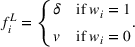

In a licensing TRQ game, an NE, denoted by A licensing TRQ system is well‐performing if 


Underutilization in a licensing TRQ system occurs when some license holders anticipate negative expected profits after obtaining the license and taking into account market uncertainties. This can indicate the high tariff rate and/or quota limit.
This upper bound coincides with the margin for the least cost‐efficient player who would import at a NE.
In a licensing TRQ system, underutilization occurs when some license holders anticipate negative expected profits due to market uncertainties. This can be a result of a high tariff rate and/or quota limit. To address this issue, it is crucial for the low quota rate δ to be small enough to encourage a certain percentage of players (i.e., α) to engage in imports. This upper bound coincide with the margin for the least cost‐efficient player who would import at an NE. On the other hand, overutilization takes place when the high tariff rate is not sufficiently prohibitive. To prevent overutilization, the high quota rate
FCFS TRQ SYSTEMS
Unlike the licensing system, FCFS systems are open to all importers. In a pure FCFS TRQ system (hereafter, FCFS) with parameters 
It is a common practice to register the quota status after customs clearance at the destination market. The time‐to‐market lead time, however, can be quite significant and logistical complexities can make the arrival times uncertain. Therefore, while willing to optimize, the players do not have control over the exact time of the arrival of their cargo to the destination market.
We assume that the arrival times of the players who decide to import are uniformly distributed within the quota period (we later relax this assumption in Section 9). Let The game associated with an FCFS TRQ system possesses a sequential NE.







Similar to licensing systems, in FCFS systems an NE, denoted by An FCFS TRQ system is well‐performing if 



Comparing with a licensing system, one can verify that for the same range of feasible values of δ to ensure no‐underutilization, the policymaker requires larger values for the high tariff rate 

LICENSING VERSUS FCFS
Thus far, we explained that a licensing system grants some players a preferential access to the market, whereas an FCFS system is open to all and competitive. We next compare the performance of these administration methods in terms of fill rate and the policymaker's expected revenues. Table 1 summarizes the main results.
Comparing TRQ administration methods.
Abbreviations: FCFS, first‐come, first‐served; TRQ, tariff rate quota.
System fill rate
The fill rate in a licensing (respectively, a FCFS) system with parameters Consider the FCFS and licensing administrations of a TRQ system. We have 


According to Proposition 3, the implementation of the FCFS TRQ system results in an equal or larger volume of imports compared to the licensing system, thereby leading to a higher fill rate. However, when an FCFS system has a strictly higher fill rate than its licensing counterpart, it means that the quota limit is exceeded at equilibrium. This situation arises because the profit function of both administration methods coincides when the total imports are less than or equal to the quota limit, but the FCFS system generates greater or equal profits compared to the licensing system. Note that the reverse of this statement does not necessarily hold, as both administration methods could potentially have the same fill rate above the quota limit. This can be explained by the fact that, in the licensing system, any unlicensed player faces the over‐quota tariff if they choose to import, whereas in the FCFS system, the high tariff rate is only applied probabilistically to a player if the total import volume exceeds the quota limit.
policymaker's revenue
The policymaker can potentially generate revenue from execution of TRQ systems through the collection of import tariffs. We first examine the policymaker's revenue in a licensing system. For 




In the FCFS system, each importer pays 



Consider the FCFS and licensing administrations of a TRQ system with 




Proposition 4 states that under an FCFS system, the policymaker's expected revenue at equilibrium is at least equal to that of the corresponding licensing system. This result directly stems from Proposition 3, which asserts that the volume of imports under the FCFS administration is at least as large as that under the licensing administration. Consequently, implementing an FCFS administration for a TRQ system can lead to higher revenue for the policymaker. However, any FCFS system resulting in higher expected revenue for the policymaker than its corresponding licensing system would violate the no‐overutilization property and therefore would not be considered well‐performing. As a corollary to Proposition 4, we can conclude that any FCFS system satisfying the no‐underutilization property can always be transformed into a licensing system without impacting the policymaker's expected revenue. Therefore, as much as total imports and the policymaker's revenue are concerned, a well‐performing FCFS administration is essentially equivalent to the corresponding licensing administration.
DUAL TRQ SYSTEMS
In the international trade of agricultural products, it can often be observed that licensing and FCFS TRQ systems coexist and it is permitted to import a product under either system. For example, the importation of certain categories of beef products to the UK and EU is regulated via both FCFS and licensing systems (see Section 10 for more details). In this section, we combine the licensing and FCFS TRQ systems (see Sections 4 and 5) and let them be active simultaneously. We call these 


In the dual TRQ system with parameters 


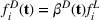



The game associated with a dual TRQ system possesses a sequential NE.
An NE in a dual TRQ system, denoted by 
A dual TRQ system is well‐performing if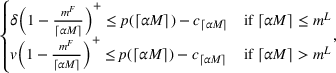

The conditions to prevent underutilization depend on the number of licenses issued. If the lower feasible bound on fill rate 


Superiority of dual TRQ systems
After presenting the dual TRQ system, we evaluate its performance in comparison to pure licensing and FCFS systems and identify the conditions under which it performs better than the pure systems. The expected revenue of the policymaker in the dual TRQ systems is


For any well‐performing TRQ system, administered via either a licensing or an FCFS method with corresponding NEs 



The above inequality would become strict if 


The optimal set of parameters for a dual TRQ system is 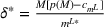



Given the total import volume at equilibrium, 





In a dual TRQ system with the optimal set of parameters, as indicated in Lemma 4, the fill rates of licensing and FCFS components satisfy 

Lemma 5 suggests that the key step in designing a superior dual TRQ system is to set the parameters in such a way that, when evaluated separately, the licensing component of the dual system is underutilized while the FCFS component is overutilized.
STOCK‐KEEPING OPTION
Depending on the trade agreements and regulations of the destination market, importers may be allowed to stock shipments in a
Considering the perishability of agricultural products, there is usually a time limit on the storage of shipments. Hence, we assume that the stock‐keeping option is available to importers only for a maximum of one quota period. In other words, if an importer decides to use the stock‐keeping option, he is allowed to delay the customs clearance only until the next quota period. The cost of holding a unit of cargo in the warehouse until the beginning of the next quota period is denoted by 

We assume that, at the beginning of each quota period, products are released into the market following a First In, First Out (FIFO) policy, that is, the stocked products from the previous quota period are given clearance priority over those arrived in the current period. If the FCFS quota is not filled upon the arrival of a player at the destination market, it is always more profitable for him to clear the cargo through customs immediately. Otherwise, the player can choose to (i) use his license (if he has one) and clear the cargo immediately or (ii) pay the over‐quota tariff and clear the cargo immediately, or (iii) keep the cargo in a bonded warehouse until the beginning of the next quota period. Note that any player who carries stock would still face the risk of being out of the FCFS quota in the subsequent period if the total volume of the warehoused goods exceeds the quota limit.
Given a strategy profile 


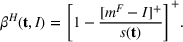
Next, we calculate the expected number of players, with or without licenses, who choose to use the stock‐keeping option upon arrival. Given strategy profile 











At the steady state, the following cases characterize the relationship between the total import volumes and the number of stocks kept in the warehouse: if if if if if


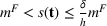





As Lemma 6 indicates, if the import volume is less than the FCFS quota, then no stock is kept at the steady state. When it matches the FCFS quota, then the total amount of goods kept in the warehouse can vary from zero up to 

The expected profit of the players under strategy profile 

The game associated with a dual TRQ system with stock‐keeping possesses a sequential NE.
The sequential NE algorithm in the Supporting Information gives an NE, 




In a dual TRQ system with and without the stock‐keeping option, we have


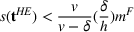

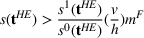
Proposition 7 indicates that the impact of the stock‐keeping option on the fill rate varies depending on the parameters of the system. The fill rate in the system with warehousing would be less than that in a system without warehousing if total import volume is relatively small, all importing players hold licenses, or when the system is pure FCFS (with zero licenses). The option to hold stocks results in a higher fill rate if it discourages license holders to use the warehousing option and thus more unlicensed players find it profitable to import by stocking their cargo in the warehouse.
The policymaker's revenue in the dual TRQ system with the stock‐keeping option can be calculated in the same manner as explained in Subsection 7.1. The revenue of the policymaker under the system with the stock‐keeping option would evidently be less than that of the base case if 

LOGISTICS CHANNEL SELECTION
In this section, we further extend the dual TRQ system with the stock‐keeping option by adding the
By choosing a faster logistics channel, a player can reduce the lead time and expedite his arrival to the destination market. However, this involves additional costs. Let 





We modify our earlier notation by letting 





















If the game associated with the dual TRQ system with logistics channel selection options possesses an NE, If for If for If 


Lemma 8 provides a comprehensive characterization of player arrivals at equilibrium based on their cost‐efficiency and license holding status. Part (a) states that if a player arrives at epoch 2, then all other players with larger indices, who are less or equally cost‐efficient and have the same license holding status, will also arrive at epoch 2. Part (b) asserts that if a player arrives at epoch 1, then all other players with smaller indices, who are more or equally cost‐efficient and have the same license holding status, will arrive at epoch 1. These observations allow us to construct an algorithm for finding NE upon their existence. By identifying the most cost‐efficient players who arrive in epoch 2, with and without licenses, we can determine the possible arrival patterns of the other players at an NE. Finally, part (c) establishes a necessary condition for stock‐keeping players. If any player keeps stocks until the beginning of the next period, the total arrivals in the quota period must be larger than or equal to the FCFS quota.
We next characterize the arrival patterns of players at equilibrium when the total import does not equal the FCFS quota limit.
In the game associated with a dual TRQ system with stock‐keeping and logistics channel selection option, if an NE exists such that 

As Proposition 8 indicates, when the FCFS component of the dual TRQ system is not exactly matched at equilibrium, then all arrivals occur at the late stage of the quota period. The only possible situation where players actually expedite their arrivals at equilibrium is when 

Proposition 8 reveals a crucial misconception in TRQ systems. While importers clear their imports at the start of the quota period to benefit from the lower in‐quota tariff, none of them have actually arrived at that time. This means that relying solely on customs data to analyze import arrivals can lead to misinterpretation, as the data only reflects the moment of cargo clearance rather than the actual arrival times. Recognizing this distinction is important for making tactical and operational decisions. For instance, this finding provides port authorities with valuable insights into importers' arrival at market entry points
We next show that in the latter case, NEs can always be found as the consecutive sets of most cost‐efficient players.
If the game associated with a dual TRQ system with a stock‐keeping option and logistics channel selection possesses an NE such that 
Lemma 9 provides a sufficient condition for the existence of NEs. This condition certainly holds if 




A CASE STUDY OF THE UK AND EU IMPORTED BEEF MARKET
In this section, we analyze the case of the UK and EU imported beef market in years 2018–2020, which constitutes a rich context for applying and validating our analytical findings.10 Historically, the red meat trade between the EU and the UK has mostly occurred within the European single market without any tariffs. The majority of the beef imports to the EU and the UK from third‐party countries originates from Australia, New Zealand, the United States, Canada, Brazil, Chile, Uruguay, and Argentina (Grainger, 2013). As members of the customs union, the UK and EU had collectively implemented several TRQs over the years to limit the export of beef from third‐party countries. The most significant ones are the FCFS TRQ system for grain‐fed beef, and a licensing TRQ system for high‐quality grass‐fed beef, also known as the “Hilton” quota. The quota periods are quarterly which start in July (Q1), October (Q2), January (Q3), and April (Q4) for each quota year. During the period of our study, the FCFS and licensing quota limits were 11,250 and 16,700 tonnes per quarter, respectively. The FCFS TRQ had a zero in‐quota tariff, and the over‐quota tariff was 12.8% of the import value of the goods, plus an additional 1414 to 3041 euros (depending on the specific product) per tonne. A license carried a 20% tariff on the import value (ADHB, 2019). The data show that multiple products are covered by both license and FCFS TRQ systems, which resemble the dual TRQ systems.11 Imported beef counts toward the fill rate only after the physical arrival of the cargo at the destination ports and is reported almost immediately thereafter.12
The most common type of beef imports is fresh/chilled products (as opposed to frozen products). Thanks to advancements in packaging technologies, most products in this category have a shelf life of around 20 weeks, which grants sufficient time for maritime transportation and storage in customs‐bonded warehouses if required. There are also multiple options for logistics channels. Although most agricultural products are shipped in temperature‐controlled container vessels known as reefer ships, there is also the option to transport them in refrigerated containers on regular container ships. Importers have the choice of transportation services with varying number of legs and transshipment stops along the way. In the case of imports from Australia, the transportation lead time is 4–6 weeks using maritime shipping.
Pattern and mixture of imports
Figure 1 depicts the weekly volume of customs‐cleared fresh/chilled beef, imported from Australia in quota years of 2018–2020.13 We focus on Australia, as an exporting country, due to its particularly long transportation lead times. We observe a significant increase in the volume of cleared goods at the start of each quota period which can be due to two possible reasons: either importers are arriving early to secure access to the FCFS quota, or the products that were stored in bonded‐warehouses in the previous period are clearing customs and entering the market at the start of the new quota period. According to Proposition 8, since the total arrivals surpass the FCFS quota, the sharp increase in the cleared imports at the beginning of the period is most likely due to arrivals in the previous period, rather than new arrivals in the current quota period. For example, the bulk of products are are imported in January 2019, arrived at their destination in December 2018, and were placed in bonded warehouses.
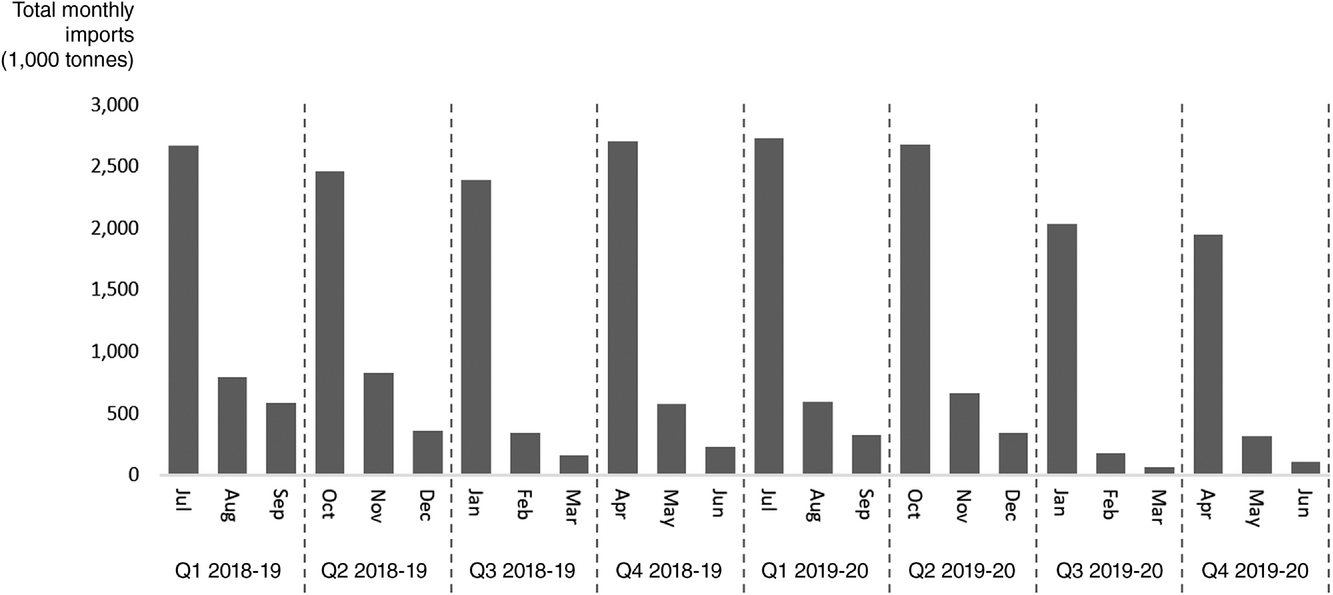
Pattern of imports: monthly imports of fresh/chilled beef to the EU and the UK from Australia.
Figure 2 depicts the mixture of quarterly imports by type of TRQ system used during the quota years 2018–2020. The average volume of imports per quota period was approximately 36,000 tonnes, which is about 8000 tonnes above the combined quota limit. This highlights the failure of TRQ systems in place to be well‐performing as characterized in Proposition 5. Due to its zero tariff, the FCFS quota is filled first. However, even though the over‐quota penalty is significantly higher than the license tariff, both over‐quota imports and underutilized licenses occur at the same time. This puzzling phenomenon can be explained by the findings provided in Section 7, which pertain to the random arrival of players with and without licenses in dual TRQ systems. Our explanation for underutilization of the licensing system is the early arrival of license holders in greater numbers and their ability to take advantage of the FCFS quota.
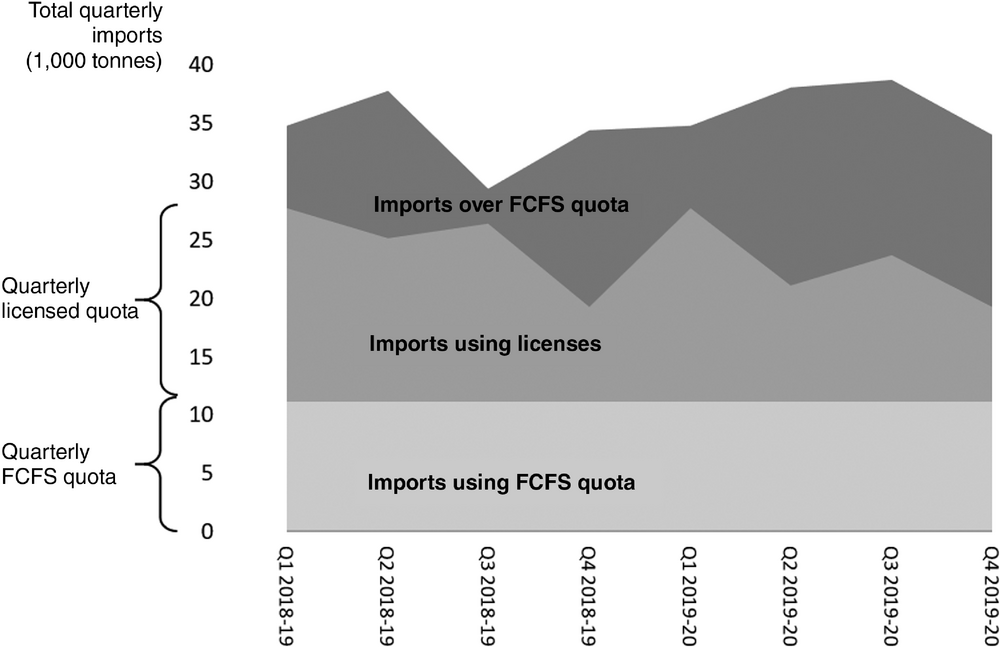
Mixture of imports: quarterly imports of fresh/chilled beef to the UK and EU from all third‐party countries compared with the licensing and FCFS quota limit.
Sensitivity analysis
We conduct a series of numerical experiments to evaluate the sensitivity of imports to the parameters of the TRQ systems discussed in the previous subsections. Using the publicly available data sources (see, e.g., ADHB, 2019), we can estimate the values of the key parameters to fit our case study. In the case of the UK and EU imported beef market, the total volume is split into 





We calculate the NEs in our numerical examples using the sequential NE algorithm in Supporting Information. Subsequently, we calculate the fill rates and policymaker's revenue as the Key Performance Indicators (KPIs) of the systems. In the status quo, the fill rate is approximately 1.2, indicating around 20% over‐quota imports. At the same time, the policymaker collects approximately 110 million euros and about 10 million euros is spent on warehousing. Next, we will conduct a series of simulations with various combinations of parameters to enhance the performance of the TRQ system. Figure 3 illustrates these results with the corresponding set of parameters in each case. We maintain the combined quota limit at 30,000 tonnes per quota period. Raising the tariff rates is an intuitive solution to curb excessive imports. However, in our simulation cases (I–IV) we keep the FCFS and license tariff rates constant at zero and 


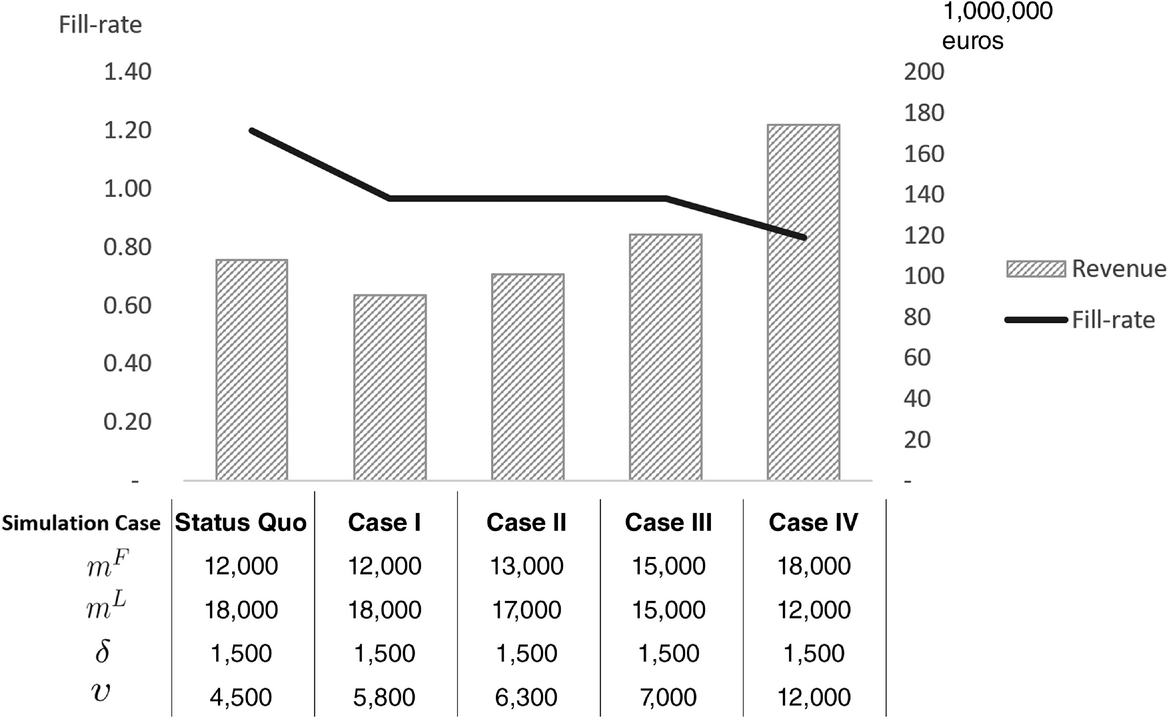
Equilibrium imports and policymaker's expected revenue under different combinations of parameters: comparison with the status quo.
CONCLUDING REMARKS
A TRQ system is a prevalent import control mechanism that enables policymakers to limit imports, regulate domestic prices, and grant preferential access to certain importers. TRQ systems were initially introduced to promote market access for agricultural products and strike a balance between free trade and protectionism. However, TRQ systems can create a range of strategic and operational challenges in global supply chains, particularly in terms of trade volume and patterns. In this study, we employed a game theoretical approach to examine the competitive behavior of strategic importers under TRQs systems in global agricultural supply chains. We examined how the parameters and administration methods of TRQ systems influence the import strategies of the players. We found that while licensing TRQ systems effectively limit the import volume, they tend to be underutilized. On the other hand, FCFS TRQ systems are susceptible to overutilization due to long lead times. We proved that dual TRQ systems, which combine both licensing and FCFS components, can be superior to either licensing or FCFS administration method in terms of fill rate and policymaker revenue. Our findings provide practical guidance for agricultural supply chains to revise their trade strategies (i.e., import decision under various administration schemes) and operational decisions (i.e., exercising an expedited shipping option and keeping stocks in customs‐bonded warehouses) by analyzing the logistical implications of dual TRQ systems and understanding their competition.
We incorporated logistical features paramount in the international agricultural supply chain into our analysis. The use of custom‐bonded warehouses, which allow importers to delay the customs clearance process for their cargo, is a common practice to avoid over‐quota tariffs. We examined the impact of stock‐keeping on importers' behavior and characterized the total expected warehoused goods as a function of total imports. We formulated the conditions under which the stock‐keeping option increases or decreases the TRQ fill rate. We also examined the choice of logistical channels and the possibility of expediting shipments for the importers. We found that while expediting shipments may be a viable strategy for importers in a one‐period game, the stock‐keeping option in multiperiod settings makes expediting transport unattractive at equilibrium. Our findings uncovered a notable misconception within TRQ systems—while importers clear their imports at the onset of the quota period to capitalize on reduced tariffs, they most likely have not arrived at that time. Relying solely on customs data for import arrival analysis can result in erroneous interpretations. Recognizing this distinction by policymakers is pivotal for making informed decisions at both the tactical and operational levels.
Finally, by focusing on the case of the UK and the EU imported beef market, we highlighted the practical implications of our study in real‐world TRQ systems and proposed ways to address the existing inefficiencies. Our analytical predictions were found to be consistent with historical customs data. While modifying the parameters of TRQ systems can control the expected fill rate at equilibrium in certain situations, they can still be unstable in response to other market uncertainties such as domestic production, which is particularly true for licensing systems. However, as our numerical examples show, the optimal policy is to combine the two types of TRQ systems into a dual system, increases the over‐quota tariff, and adjusts the ratio of FCFS quota limit and total licenses in the corresponding dual TRQ systems. Our analytical findings suggest alternative parameters that can smooth out fluctuations in import patterns, enhance expected revenue for policymakers, and ensure the well‐performing conditions and the optimal performance of TRQ systems. Our findings can assist policymakers in taking an analytical approach to the (re)design of TRQ systems while considering the crucial role of logistics.
We can highlight some directions for further research. The supply chains involved in international trade might be risk‐averse and thus might tend to import less than what our model predicts (which considers risk‐neutral players). Thus a potential direction for future research is to examine the impact of risk‐aversion among players on import levels. Another area of interest is the allocation of licenses to importers. While our analysis assumed that licenses are held by the most cost‐efficient players, in reality, allocations are based on importers' requests and may be arbitrary (through auctions, historical trade volume, etc.). A possible avenue for research in this area could be to investigate ways to optimize the allocation of licenses, in order to increase a country's access to a market while also ensuring fairness among players with varying efficiency levels, particularly the Small and Medium‐sized Enterprises (SMEs) and new entrants. Additionally, the possibility of transferring licenses among players (Hranaiova et al., 2006) is another avenue that could be explored. Furthermore, our model does not take into account the limited capacity of bonded warehouses, which poses additional challenges for importers seeking to incorporate them into their import strategies. These issues could be explored in future research.
Footnotes
ACKNOWLEDGMENTS
This research was supported by the joint funding of the Australia and New Zealand Academy of Management and the British Academy of Management. This research was also partially supported by a Social Research Platform Grant from La Trobe University. The authors appreciate the input provided by British Meat Processors Association, International Meat Trade Association, Meat & Livestock Australia, and Dr. Andrew Grainger, among others. The authors are grateful to the associate editor and two anonymous referees for suggestions that improved the paper.

2
It is not uncommon to see TRQ systems applied to nonagricultural products such as fish, glass beads and imitation precious stones, ferrosilicon, newsprint, and other products.
3
The condition on domestic prices ensures that imports are capped due to saturation of the market and not due to other factors, for example, a small number of importers or nontariff barriers.
4
The strict sanitary and phytosanitary import measures applied to agricultural products make Less‐Than‐Truckload (LTL) shipping risky due to noncompliance of co‐cargo owners.
5
6
7
The policymaker can allocate licenses directly, via auctions or historical trade data, etc., or indirectly by allocating an aggregate number of licenses to countries which are then distributed among the exporters.
8
This corresponds to the allocation of licenses via an efficient auction mechanism, which results in the winners being the most cost‐efficient players.
9
A dual TRQ system where the licensing tariff is smaller than the FCFS's tariff is separable into pure TRQ systems. The choice of zero tariff for the FCFS component is also without loss of generality.
10
11
For example, the product with the harmonized system code 0201300, namely, “fresh or chilled boneless meat of bovine animals,” can be imported under order number 094450 (licensed TRQ) or order number 092202 (FCFS TRQ).
12
13
References
Supplementary Material
Please find the following supplemental material available below.
For Open Access articles published under a Creative Commons License, all supplemental material carries the same license as the article it is associated with.
For non-Open Access articles published, all supplemental material carries a non-exclusive license, and permission requests for re-use of supplemental material or any part of supplemental material shall be sent directly to the copyright owner as specified in the copyright notice associated with the article.
