






Abstract
We consider a novel principal–agent model that captures some salient features of an agile software development project. Specifically, the project is technically complex, can be modularized via a set of independent stories which are developed in sprints, and has requirements that can change over time due to exogenous changes in business needs, technologies, or market conditions. In addition, given the iterative nature of agile development, our model also captures and analyzes the interaction between two types of learning effects, namely, viability learning and cost learning, which until our paper have been examined only individually in the literature. Our paper makes the following contributions to the literature: (i) We characterize an optimal contract for the principal in closed‐form and generate managerial insights on how the agent's incentive to work changes, and consequently how the optimal contracting terms offered by the principal change, depending upon the business environment. We show that the interaction between the two learning effects and need‐risk plays an important and yet unexplored role in influencing the dynamics in the optimal contract. (ii) Using the optimal contract as the benchmark, we examine the performance of time‐and‐material contracts that are popularly used in agile projects. (iii) We obtain an optimal contract for precedence‐dependent stories in which one story must be completed before starting another story. Overall, our results provide both prescriptive and qualitative guidance to firms outsourcing agile software development projects.
INTRODUCTION
For many software development projects, the functional and technical requirements of the project change over time in response to changes in the firm's needs, designs, technologies, and market trends. To respond to these changes quickly, firms often use agile methodology to execute their projects. We briefly explain some salient features of an agile software development project: The firm begins with a list of stories,
1
where each story is a short description of a desired functionality or deliverable. The firm asks the vendor to work on stories in time‐boxed increments commonly referred to as sprints. Each sprint may last for a few weeks depending on the project. The goal of a sprint is to turn a set of stories into programming codes that can be readily deployed by the firm. The vendor may fail to complete a story in a given sprint, depending upon the story's complexity (Rigby et al., 2016). In such a situation, two possible cases can arise: If the story continues to remain a high priority for the firm, she may ask the vendor to continue working on the same story in the subsequent sprint. If the story becomes a low priority due to changes in the firm's needs, she may abandon the story or equivalently, delay it for an indefinite period of time.
By decomposing the project into stories and focusing on high‐priority stories, the firm can take advantage of any evolution in technology or business needs that arise as development proceeds.
We now discuss a few examples of agile software development projects, which we have gathered from our interactions with project managers working in this area. Our first example is from a multinational telecom equipment manufacturer (firm) who was hired by a telecom operator in the United States. The operator believed that the demand for data would grow at a faster pace than that for voice and hired the firm to help expand its network capacity to handle large data. To save operational costs, the firm, in turn, hired a software development vendor who would do the labor‐intensive task of integrating the firm's proprietary technology with the operator's core network. The project was executed using agile methodology. The expected duration of the project was 18 months. The firm signed a time‐and‐material (T&M) contract with the vendor. Under this contract, the firm agreed to pay a fixed hourly rate for the number of hours that the vendor worked, on a sprint‐to‐sprint basis, subject to successful incremental delivery of stories. After spending 6 months on the project, the operator discovered that the demand for data (relative to voice) did not grow as per its expectation. The operator's priorities changed and pivoted towards expanding capacity for voice usage (relative to data). As a result, a large chunk of stories that initially served the purpose of boosting data capacity was reprioritized and many stories were put on hold.
The same manager also shared another example with us: The same firm was hired by a telecom operator in the United States to upgrade its 4G network to 5G. Again, to reduce costs, the firm hired an information technology (IT) vendor for software development and programming. The firm used a T&M contract and executed the project using agile methodology. The project experienced a major disruption due to the COVID‐19 pandemic, that is, as more people worked from home (especially using their older devices that operated on the 4G technology), the demand for services that used 4G technology surged. Serving this increased demand became tactically more important for the operator, relative to its strategic goal of rolling out an advanced 5G technology. The operator's needs changed, and stories that operated on the 5G technology were decommissioned to give priority to those on the 4G network.
Given the complexity of the agile approach to project management, as well as the wide variation in how agile is implemented in practice, it is challenging to formulate a tractable analytical model that captures all of the relevant aspects of agile. Therefore, our goal is not to capture all institutional details of agile projects but instead to study the optimal contracting given moral hazard in an environment characterized by some salient features. We capture the following three features: Every story exhibits a need‐risk capturing the possibility that the story which was originally a high priority for the principal (firm) can, at some point during its development, become a low priority due to exogenous reasons such as changes in business needs, designs, technologies, or market conditions. Every story also exhibits a technical risk in that it is a priori uncertain whether the agent (vendor) will succeed in developing it. Our model allows for a wide range of stories, from relatively easy tasks to complex undertakings. It is a common practice to design stories using the INVEST principle, which stands for independent, negotiable, valuable, estimable, small, and testable. Stories are designed to be independent so that the principal can always focus on the highest priority story at any given time without worrying about its dependency on other stories. The following quote (see Chapter 2, Cohn, 2004) from an influential agile practitioner, Mike Cohn,
2
confirms this point: As much as possible, care should be taken to avoid introducing dependencies between stories. Dependencies between stories lead to prioritization and planning problems … Ideally, stories are independent from one another. This isn't always possible but to the extent it is, stories should be written so that they can be developed in any order. Further, ScrumDesk, a prominent online agile consulting company, says the following
3
: As you probably know, a good story in agile is written to fulfill INVEST principle … The first is (and not by coincidence) Independent. The reason is simple. To track dependencies in your hundreds of stories backlog is a mess. A big mess. A task that is a highly potential waste. In our experience, 80–90% of stories could be rewritten into independent stories. Given this, for our main analysis, we assume that the stories in the given project are independent. Thus, the principal's optimal contracting problem becomes separable across stories and without loss of generality, we can solve it for any one story.
4
In Section 6.1, we extend our base model and consider two stories that are dependent in the sense that one requires completion of the other. Motivated by the iterative nature of agile, the agent can work on the same story again if he has failed to develop it (provided it remains a high priority for the principal), which opens the possibility of learning from past actions/outcomes. We consider two types of learning effects: (i) As the agent works on a given story, his cost of exerting effort decreases over time due to gains in experience. (ii) If the agent fails to develop a given story, he becomes less optimistic about the likelihood of developing the story in the future. We refer to the former as the cost‐learning effect and the latter as the viability‐learning effect. The two learning effects have been studied only separately in the existing literature (see Section 2).
Although the above features in our model are motivated from agile projects, our insights hold more generally for project management settings in which the project can be modularized into a set of independent tasks, and these tasks are subject to abandonment at short notice. For example, with the advent of digital labor markets such as Upwork, it has become possible for firms to outsource individual tasks to gig economy workers. Thus, our results provide guidance to firms on the prices offered to workers for executing various tasks.
At this juncture, we note that there are several other aspects of agile projects that our paper does not incorporate. We discuss two examples: (i) In some cases, the firm (principal) can have a long‐term relationship with a vendor, and there can be trust between the two parties. In contrast, the insights developed in our paper are relevant to firms that face moral hazard. (ii) The vendor can be composed of a team of developers who are cross‐functional and self‐organizing. That is, the team members can be of varied expertise and take an active role in managing stories, for example, deciding what constitutes a story, its estimation, and prioritization, in collaboration with other stakeholders of the project. Our results are applicable to projects in which the stories are given, that is, both the firm and vendor know what needs to be achieved in any given story, and both parties also know the complexity of completing the story. For example, before starting to work on any given story, it is common for the vendor to discuss the story with the firm to clearly understand the expectation. It is also common for the two parties to estimate the complexity of any given story (e.g., the expected amount of time that the vendor would take to complete the story).
We now briefly discuss our results. From our analysis of the optimal contract, we show that the agent's incentive to exert effort on a given story depends on which of the two learning effects is dominant, the viability‐learning effect or the cost‐learning effect. Further, which learning effect is dominant depends on the need‐risk of the story, its technical complexity, and the cost improvement that the agent gains from experience. For example, for a technically complex story that is challenging to develop, the viability‐learning effect is stronger relative to the cost‐learning effect, and the agent's incentive to shirk (relative to work) is also stronger. The presence of need‐risk weakens the viability‐learning effect and also weakens the agent's incentive to shirk. This observation is quite interesting and may seem counterintuitive. In particular, working on a story that has a high likelihood of being abandoned by the principal due to her changing needs could be risky for the agent, as he might not be compensated by the principal for that story (Bird and Bird Law Firm, 2020). Thus, one might believe that the agent would have a larger incentive to shirk on a story exhibiting a higher need‐risk. Contrary to this intuition, our analysis highlights that as the story's need‐risk increases, the agent's incentive to shirk decreases.
We also shed light on the dynamics in the optimal contract. If there is no learning and no need‐risk, the optimal contract reduces to a fixed‐price contract, that is, the principal offers a fixed price for completing a story. If there is learning (either viability learning, cost learning, or both) but no need‐risk, the optimal contract offers prices that are increasing over time. Finally, if there are both types of learning and need‐risk, the optimal prices can be non‐monotone in time. Thus, our modeling elements, that is, the two learning effects and the need‐risk, play an important and yet unexplored role in influencing the dynamics of the optimal contract.
Using the optimal contract as a benchmark, we also examine the performance of T&M contracts that are commonly used in agile software development. We show that the optimal contract can deliver substantial savings to the principal relative to the best T&M contract (i.e., one which minimizes the principal's expected cost within the family of T&M contracts), particularly if the principal operates in a moderate need‐risk business environment. For a low need‐risk environment, T&M contracts can fail to incentivize the agent to work initially since the agent may anticipate that the story would not be abandoned by the principal. For a high need‐risk environment, the performance of the best T&M contract can be close to that of the optimal contract. We shared our results with agile practitioners who motivated our paper. The project manager we interacted with was quite intrigued by our observation that the T&M contract does not work well for stories with low or moderate need‐risks. A part of his excitement was due to the fact that T&M contracts are widely used in agile software development projects. Providing a clear answer with respect to when and where T&M contracts are most cost‐effective is an insight the manager found very useful. Further, since our analysis also characterizes the best T&M contract, the manager responded by saying that one way the firm can operationalize the results from our paper is by categorizing stories based on their need‐risks and complexity and then using a tailored T&M contract (i.e., assigning a different hourly rate) for each category of stories. Overall, the manager found our work to be practically useful and validated its relevance to their practice.

LITERATURE REVIEW
We organize this section in two parts. We first review the economics literature in Section 2.1. We then review the project management and software development literature in Section 2.2. Given the vast literature on principal–agent settings and moral hazard, in particular, we restrict our focus to papers that are most similar to ours. We discuss how the problem studied in our paper is new and distinguishes itself from the literature.
Contributions to the economics literature
As discussed in Section 1, the principal faces a dynamic moral‐hazard problem that features two types of learning, that is, cost learning and viability learning, and need‐risk. We note that these two learning effects have been studied only individually in the existing literature.
One stream of papers studies viability learning in the context of experimenting with a new technology. For example, Bonatti and Hörner (2011) study dynamic moral hazard in a team of agents working on a project whose technical viability is a priori unknown. The agents update their beliefs on the project's viability as they repeatedly work and fail to complete it. In a departure from Bonatti and Hörner (2011), in which the incentive to delay emerges as an equilibrium outcome, Wu et al. (2014) assume this incentive as exogenous. The paper by Bonatti and Hörner (2011) has since been extended by Zhang (2016) and Halac et al. (2016) to principal–agent settings. Other papers that incorporate viability learning in experimentation/innovation include, but are not limited to, Bergemann and Hege (2005), Gomes et al. (2016) and Bonatti and Hörner (2017). Although the optimal solutions differ across these papers due to differences in their model settings, there is a common observation that the agent always has an incentive to procrastinate, that is, delay working. This is consistent with our optimal solution (see Theorem 1 and Corollary 1) if cost learning is not considered. Notably, unlike our paper, none of these papers incorporate cost learning and need‐risk.
The cost learning in our paper captures learning‐by‐doing benefits that the agent gains from past experience. There is a stream of literature that also incorporates similar learning‐by‐doing benefits in principal–agent settings. These papers differ in how they specifically model these learning benefits. Like us, there are papers that model learning‐by‐doing through a lower development cost; for example, in the context of IT projects, Demirezen et al. (2016) assume that the vendor's development cost decreases exponentially over time due to gain in experience. This cost structure is, in fact, a special case of cost learning in our paper. Demirezen et al. (2016) show that the effort levels first increase in the earlier stages of the project and then decrease. Alternatively, some papers model learning‐by‐doing through higher productivity or chance of succeeding. For example, Mehra et al. (2011) consider an employee of a firm whose productivity improves due to learning by doing on two related projects. Doraszelski (2003) constructs a simulation model for two firms competing in R&D where each firm's hazard rate for successful innovation is increasing in its past R&D effort and shows that a firm has an incentive to reduce its R&D expenditures as its knowledge stock increases over time. A common theme in these papers is that the agent has an incentive to be proactive early so that he can reap the learning benefits in the future. This insight is also consistent with our optimal solution (see Theorem 1 and Corollary 1) if viability learning is not considered. However, unlike our paper, none of these papers consider viability learning and need‐risk.
As discussed above, the existing literature has focused on only one type of learning effect at a time. Further, the way the two types of learning influence the agent's incentive to work is different. On the one hand, viability learning induces the agent to procrastinate, whereas, on the other hand, cost learning incentivizes the agent to be proactive. Our contributions are three‐fold: (i) Since our model incorporates both types of learning simultaneously, we solve a technically new problem. (ii) Although one might guess that the agent's incentive should depend on which of the two learning effects is dominant, we characterize the structure of the optimal contract in closed form and derive useful insights. For example, we show that, in the absence of need‐risk, the optimal contract possesses a single‐crossing property in that there exists a threshold


Contributions to the project management and software development literature
Our paper also contributes to the large and growing literature on project management and software development. Building upon earlier work by Kwon et al. (2010) and Chen et al. (2015), Dawande et al. (2019) consider a firm outsourcing a project with multiple tasks, where each task is executed by a different agent. Siemsen et al. (2007) explore the design of incentives when there are linkages among the tasks across different agents. In Shokoohyar et al. (2019), the payments to incentivize agents depend on the minimum effort among all agents. Similar to these papers, we also consider a project that involves multiple tasks. However, our model is different, considers only one agent, but is more general in the sense that it features dynamic moral hazard, need‐risk, and two types of learning. Arve and Martimort (2016) study a sequential screening problem in which the agent is endowed with private marginal costs. Iyer et al. (2005) study an adverse selection problem in which the agent has private information about his capability. In contrast to this adverse selection focus, our focus is on moral hazard. Simester and Zhang (2010) characterize an optimal contract for a single‐period moral‐hazard setting with need‐risk but without any learning effects. In contrast, we use a dynamic moral‐hazard framework that features two learning effects.
There are many papers that study the performance of practical contracting formats in software development. Dey et al. (2010) study the performance of fixed‐price, T&M, performance‐based, and profit‐sharing contracts for outsourcing software development under different problem settings. Gopal and Sivaramakrishnan (2008) empirically examine factors which lead a vendor to prefer a T&M over a fixed‐price contract. Zhang et al. (2018) investigate the performance of hourly rate and two‐part tariff contracts for procuring a service. Roels et al. (2010) investigate how the choice of contract type—fixed‐fee, T&M, and performance‐based—is driven by whether the output is more sensitive to the vendor's effort relative to the client's effort. Whang (1992) identifies a first‐best contract in a setting where the principal is better informed about the value of software, whereas the developer is more informed about its development cost. Using a co‐development framework, Demirezen et al. (2016) analyze the performance of an output‐dependent contract, which is further extended by Demirezen et al. (2020) to other contracting formats that can be either output dependent, effort dependent, or both. Motivated by practice, our paper also analyzes the T&M contract, but for a new software development setting that incorporates need risk and two types of learning effects. Further, in contrast to this literature, we not only characterize the best T&M contract but also obtain an optimal contract, which serves as a benchmark for evaluating the performance of the T&M contract.
We briefly discuss the literature that considers abandonment (or stopping) in project management settings. McCardle (1985) develops a dynamic programming model for technology adoption, in which the firm needs to decide between collecting more information on a technology with an unknown value or adopting/rejecting it. This work has since been extended to more general settings by Smith and Ulu (2012, 2017). More recently, McCardle et al. (2018) examine the trade‐off between working on an R&D project or searching for a new project. In a different context, Terwiesch and Loch (2004) study how many prototypes to build by comparing the expected benefit of an additional prototype to the customer with its corresponding cost. Kornish and Keeney (2008) consider a model where a firm needs to choose between two strains of an influenza virus with unknown effects or defer this choice. The main focus of these previous works is characterizing the optimal stopping decisions for settings in which there are no agency issues and no learning. Green and Taylor (2016) consider a project that requires two stages to be completed before realizing its benefit and characterize the optimal contract that features a soft deadline, probationary phase, and random termination. However, the authors do not consider need‐risk or either type of learning, which are the focus of our paper. Rahmani et al. (2017) consider a double moral‐hazard setting in which a client offers a two‐part tariff to a vendor, which influences how the two parties exert effort in the project. Their focus is on characterizing the optimal stopping policy given the specific contract format. Our model setting is different from Rahmani et al. (2017), that is, we consider a one‐sided dynamic moral hazard and incorporate need‐risk and two types of learning. In addition, our focus is different, that is, given a fixed stopping time, we are interested in designing an optimal contract.
MODEL AND PROBLEM FORMULATION
In Section 1, we briefly introduced the key features of our problem setting. We now formally describe our model. As discussed in Section 1, since stories are commonly designed to be independent, it is sufficient to focus on any one story for characterizing the optimal contract. The principal asks the agent to work on the story for a maximum of


In any period


Due to exogenous factors, a story which was originally a high priority for the principal at the beginning of period 1 can become a low priority at the beginning of some random time








Given the technical nature of software development projects (Rigby et al., 2016), it is not guaranteed that the agent will succeed in developing a given story. We follow the existing literature (Bonatti & Hörner, 2011; Halac et al., 2016; Zhang, 2016) in how we model the technical complexity of a story. We define






We let

Mathematical formulation of the principal's optimal contracting problem
To formulate the principal's problem, we first explain how the agent's belief on the story's viability and his cost of exerting effort evolves over time, given his past efforts and their outcomes.
Updating the belief on the story's viability
Define Given the past efforts








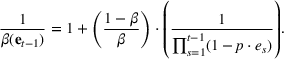
All proofs are provided in the Supporting Information of this paper. From Lemma 1, it is clear that the belief on W becomes smaller (more pessimistic) if the agent works and fails. In other words,



Updating the development cost
We assume that the agent's cost of exerting effort on the story is high initially and may decrease with time due to self‐learning or gain in experience. For fixed


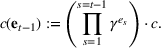


Development policy and contract format
For any t, if the story remains a high priority for the principal (i.e.,



Since the agent's efforts are private, the principal needs to offer a contract that can induce the agent to exert effort according to (6). In its most generality, the contractual terms offered by the principal to the agent in any period It is without loss of generality to restrict our attention within the family of contracts




Agent's payoff
Define



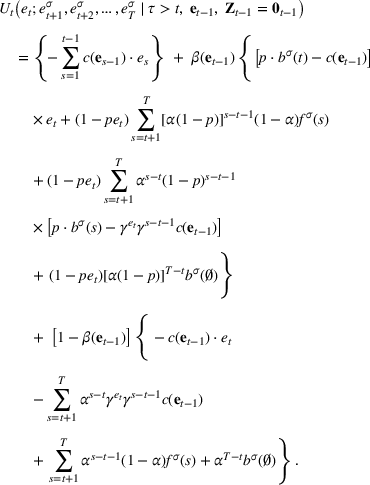













If the story becomes a low priority in period


For



Constraints
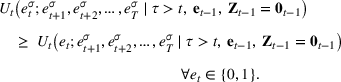
We are now ready to express the constraints in the principal's problem. First, we write the set of incentive compatibility (IC) constraints which ensure the following: For every period


For any









Principal's problem
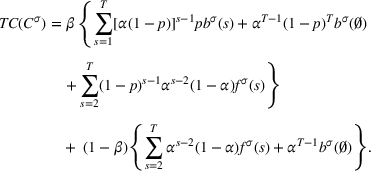
As the final step to formulate the principal's problem, we obtain the expected total cost to the principal from offering a feasible contract



SOLUTION OF PROBLEM

For any t, recall that the effort history





From (7), we note that, in any period t, the agent's expected payoff depends on the effort history


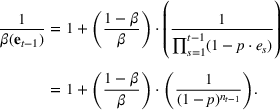
From (5), we note that Under any optimal solution of problem


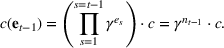


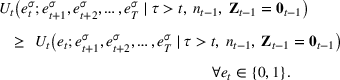



Proposition 1 demonstrates that the IC constraint in any period t corresponding to a mixed effort history




Using Proposition 1, problem







To characterize the optimal solution for The following contract solves problem

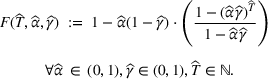



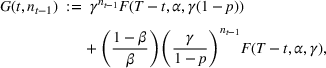







Note that


To understand Theorem 1 and build intuition, we first discuss two special cases in Section 4.1. In the first case, we assume that the story is known to be technically viable; that is,


Understanding the optimal contract when only one type of learning effect exists
Consider the case where




Consider now the case where


Characterizing the binding IC constraints also sheds light on how the agent's dynamic incentives evolve over time. Suppose that the agent has followed the recommended policy σ until period t; that is, if the agent has failed to deliver the story until this period and the story remains a high priority for the principal, the agent has exerted effort




If Given that the agent has followed the recommended development policy σ until period t, the agent has an incentive to deviate from policy σ (i.e., shirk) in period t if only the viability‐learning effect exists and has an incentive to follow the policy σ (i.e., work) in period t if only the cost‐learning effect exists.


In the above two cases, that is,


Understanding the optimal contract when the two learning effects interact
For any Assume that there is no need‐risk (that is,








Note that when there are both types of learning effects, as the agent works and fails multiple times, he becomes more pessimistic on the story's viability, while also experiencing a lower development cost. Unlike the special cases in Section 4.1, the agent's incentive to exert effort now depends on the relative magnitude of the two learning effects. In the absence of need‐risk, Proposition 2 characterizes the interaction between the two learning effects and explains how their relative magnitude dynamically evolves over time. Specifically, consider periods


Figure 1 illustrates how the threshold


The change in


Our next result explains how the interaction between the two learning effects changes with the level of need‐risk, which we recall from Section 3 is parameterized by Recall





Proposition 3 demonstrates the effect of need‐risk on






We next discuss the monotonicity of












Propositions 2 and 3 together deliver an important insight: The presence of higher need‐risk weakens the agent's incentive to deviate from the development policy σ recommended by the principal. We briefly discuss the intuition for this result. As discussed previously in Proposition 2, for periods


Finally, we investigate how the optimal contract given in (23) varies with time t. Recall Suppose that there are no learning effects (i.e., Suppose that there is no need‐risk (i.e.,


Proposition 4 reinforces the pivotal role played by cost learning and viability learning in influencing the dynamics in the optimal contract. To understand this result, suppose that there is no need‐risk. In addition, if there are no learning effects, then from part (a) of Proposition 4, the optimal bonus is constant over time. However, if cost‐learning and/or viability‐learning effects are present, part (b) of Proposition 4 shows that the optimal bonuses are backloaded across time. These two statements together show that the monotonic behavior of the optimal contract is purely driven by the two learning effects. To understand this behavior intuitively, note that the agent's effort history


Figure 2 illustrates the optimal bonus over time for an instance of problem


An illustration of the optimal bonus


Proposition 4 and Figure 2 together also allow us to segregate the importance of learning and need‐risk in the optimal contract. Part (b) of Proposition 4 and Figure 2 establish that the optimal bonus can be non‐monotone in t only if need‐risk is present; in other words, need‐risk is a necessary condition for the non‐monotonic behavior illustrated in Figure 2. However, need‐risk is not the only element that matters for the dynamics in the optimal contract. Part (a) of Proposition 4 shows that in the presence of need‐risk but without the two learning effects the optimal contract is time‐independent. Thus, it is the interplay between the need‐risk and the two learning effects that drives the dynamics in the optimal contract.
ANALYZING T&M AND FIXED‐PRICE CONTRACTS
In our analysis thus far, our focus has been on characterizing the optimal contract for the principal's problem

T&M contracts
In practice, the T&M contract is popularly used for outsourcing agile software development projects. Under this contract, the principal pays a fixed hourly rate for the number of hours that the agent worked on a story, subject to its successful delivery. Formally, the principal pays a fixed rate

While it is obvious that the optimal contract will always perform at least as well as any T&M contract, our goal in this section is to quantify the performance of the family of T&M contracts relative to the optimal contract. Interestingly, as the result below shows, the family of T&M contracts does not always provide a feasible solution for the principal. There always exist


Proposition 5 shows that if the need‐risk is lower than a threshold (i.e.,


In light of Proposition 5, we next focus on problem instances in which the family of T&M contracts is feasible for the principal, that is, it can induce the agent to follow the development policy σ. We first obtain the optimal T&M contract (i.e., the value of x which minimizes the principal's expected cost and induces the agent to follow σ). Then, we compare the principal's expected cost under the optimal T&M contract with her expected cost under the optimal contract.
To specify the optimal T&M contract, define Suppose that the following condition holds: Then the optimal rate under the T&M contract, which induces the development policy σ, is





As we discuss in the proof of Proposition 6, the condition in (29) ensures that the family of T&M contracts is feasible for the principal. If there exists t for which


Next, we define Δ to be the ratio of the principal's expected cost under the optimal T&M contract to the corresponding quantity under the optimal contract. That is,

By definition, Δ must be at least 1. To understand the magnitude of Δ, we consider the following numerical test bed: Let Assume that









We know that the expected improvement is trivially lower bounded by zero. The value of Proposition 7, therefore, lies in identifying conditions under which this bound is tight. Specifically, we show that for business environments in which the probability of succeeding is low and the firm's priorities change quite frequently, that is, the need‐risk is high, the performance of the T&M contract is provably near‐optimal. Figure 3 illustrates that as the need‐risk increases (i.e., as α decreases), the performance of the T&M contract becomes closer to that of the optimal contract.

An illustration of Δ as a function of α for different values of


Fixed‐price contracts
As described in Section 3, in each period, the agent either succeeds or fails in developing the story. Thus, if we look at the collective outcomes over, say, T periods, there are only two possibilities—the agent either succeeds in developing the story in one of the T periods or fails in each of the T periods. Thus, the agent could be offered an alternative and simpler contract that pays a fixed price, say

We next characterize the best fixed‐price contract, that is, the fixed‐price contract that minimizes the principal's expected cost. The optimal price b under a fixed‐price contract is




As discussed in Section 5.1, the family of T&M contracts may not always be feasible for the principal. In other words, it may fail to motivate the agent to exert effort in some cases, that is, when


We conclude this section with a few remarks of managerial relevance. It is well understood that the T&M contract and fixed‐price contract are easy to understand and implement in practice. The optimal contract, on the other hand, is substantially more complex due to several reasons. The optimal contract is dynamic in nature, that is, the price offered to the vendor is a function of the number of periods that the vendor takes to complete a given story. It may be more challenging for the vendor to understand the terms of such a contract. Further, it can be difficult to convince the vendor to agree to terms that are not fixed. Due to these reasons, such dynamic contracts are not typically observed in practice. In some business environments, the T&M contract is a feasible alternative to the optimal contract. In these environments, the fixed‐price contract will generally perform poorly compared to the T&M contract. If the probability of succeeding is low and the firm's priorities change frequently, the T&M contract can deliver a near‐optimal performance. However, when these conditions do not hold, the optimal contract can deliver substantial savings to the principal relative to the T&M contract. For business environments in which the T&M contract is not feasible, the choice between the optimal contract and fixed‐price contract is less clear. The fixed‐price contract is simpler to implement but significantly more expensive. Overall, our analysis suggests that firms should exercise caution when choosing among these contracts.
MODEL EXTENSIONS
We now consider relaxing two of the assumptions for the model presented in Section 3.
Precedence‐dependent stories
As discussed in Section 1, in agile software development, it is common to write stories so that they are independent of each other and can be developed in any order. While doing so is possible in most agile settings, sometimes a dependency between a pair of stories is unavoidable. For example, consider two stories, A and B, such that, for technical reasons, story B requires the infrastructure that is developed in story A; that is, the agent cannot start working on story B until story A is completed. We refer to the pair There exist instances of problem


Recall that if stories A and B are independent, their optimal contracts can be obtained from Theorem 1. Further, for any (independent) story, recall that, in every period, the IC constraint corresponding to one of the two effort histories, that is, one in which the agent worked in all the past periods, and another in which the agent did not work at all in the past, is always binding in the optimal contract (Theorem 1). In contrast, for precedence‐dependent stories, Proposition 9 shows that the IC constraint for the first story, that is, story A, can be nonbinding in some period


Cumulative effect of effort
In our base model, given the story's viability, the probability that the agent succeeds in completing the story in any given period t is Under the optimal contract, we have







If

We briefly explain the effect of cumulative effort on the agent's incentive to work. As we show in the proof of Proposition 10, the IC constraint for period 1 can be nonbinding. We recall that whether the agent's IC constraint is binding in a given period provides insights into his incentive to exert effort in that period. If the IC constraint is binding, then it is clear that the agent has an incentive to shirk, unless the principal offers him an appropriate contract. Similarly, if the IC constraint is nonbinding, then the agent has an incentive to work. In contrast to the case without cumulative effort, for which the agent's IC constraint is always binding in period 1, when effort is cumulative, the agent's IC constraint may be nonbinding in period 1. Thus, with cumulative effort, the agent has more incentive to work in period 1. Intuitively, the agent has a higher chance of completing the story in period 2 given that he has worked in period 1, which in turn, motivates the agent to work in period 1. This observation is consistent with the agent's behavior under cost learning, where the agent has an incentive to work in period 1 to benefit from a reduced development cost in the future periods.
CONCLUDING REMARKS
Motivated by our discussions with agile practitioners, in this paper, we have considered a setting that incorporates the following key features of an agile project that is outsourced by a principal (firm) to an agent: The project is technically complex and can be modularized via a set of independent stories. The stories are developed in iterations which allow for the possibility of learning over time and exhibit need‐risk in the sense that the firm's priorities for stories may change over time for exogenous reasons such as changes in design, technology, or market conditions.
We have assumed that the agent's effort in any given period is binary, that is, the agent either works or shirks. This assumption is mainly for analytical tractability. An alternative specification is to allow the agent's effort to be in the interval [0,1]. Both types of specifications are common in the literature; see, for example, Green and Taylor (2016) and Jerath and Long (2020) that use binary effort, and Bonatti and Hörner (2011) and Mehra et al. (2011) that use continuous effort. With binary effort, we assumed that the principal wants the agent to put in the highest level of effort (i.e., exert


In Section 6.1, we considered two stories that were precedence dependent. In addition to precedence, there can be other types of dependency between stories, for example, there can be learning (cost learning, viability learning, or both) across the stories. We believe that the insights from the paper would continue to hold in these more general settings. For example, consider two stories A and B, where B is developed only after A is completed. In addition, the agent experiences a lower development cost when working on B given that he has worked on A (i.e., there is cost learning across A and B). With this additional dependency via cost learning, the agent would have more incentive to work on A because of the benefits (i.e., lower development costs) gained from that work. However, if in addition to precedence dependency, there is also viability learning (but no cost learning) between stories A and B, it is not clear how the two types of dependency together influence the agent's incentives. On the one hand, precedence dependency would motivate the agent to work on A in order to get the chance of working on B and earning rent from both stories. On the other hand, with viability learning, the agent would be inclined to delay working on A, which in turn also affects his chance of working on B.
We conclude by noting two directions for future research: (i) While we analyzed the performance of T&M contracts, one can also use the optimal contract as the benchmark to study the performance of other contracting formats that are used in practice. (ii) We considered the software development vendor to be a single developer and assumed that the stories are exogenously specified. More generally, the vendor can be composed of a team of cross‐functional and self‐organizing developers who can endogenously decide stories and their optimal contracts.
Footnotes
1
The term “story” is synonymous with other similar terms used in practice including task, requirement, deliverable, functionality, or unit‐of‐work.
2
Emergn, an independent, multinational, ISO 9001 certified consulting firm, ranked Mike Cohn, former Scrum Alliance chairman, as the top influential person among more than 500 names considered in the survey; see  ).
).
3
Source:
4
While our focus on characterizing an optimal contract story by story is theoretically justified in the presence of independence, it is also consistent with the widespread use of modular contracting for agile projects. In modular contracting, the firm divides the project into several increments (commonly referred to as modules) that are independent, and easy to manage, test, and implement. Federal agencies commonly use modular contracting for acquiring services to upgrade their infrastructure and access new technology; see Larman and Vodde (2010) and Wrubel and Gross () for more details.
5
Source:
6
In Supporting Information EC.3, we extend our model and allow the principal to decide the stopping time T optimally based on her expected payoff.
8
9
The principal may ask the agent to work on multiple stories simultaneously if the stories are relatively small. In such a situation, paying the agent at a granular level based on the outcome of each story can be undesirable. In this case, the principal can aggregate multiple stories into a set and redefine the set as a story. Thus, the principal needs to offer different contracts only for stories (or a collection of stories) that are of reasonable complexity.
10
This can be easily verified in two steps: First, note that
References
Supplementary Material
Please find the following supplemental material available below.
For Open Access articles published under a Creative Commons License, all supplemental material carries the same license as the article it is associated with.
For non-Open Access articles published, all supplemental material carries a non-exclusive license, and permission requests for re-use of supplemental material or any part of supplemental material shall be sent directly to the copyright owner as specified in the copyright notice associated with the article.
