






Abstract
Online retailers have exposed their consumers to an increase of deceptive counterfeit products provided by third‐party marketplace sellers. Although leading online retailers commonly seek to enhance service transparency to consumers by providing fulfillment service information, such as inventory ownership (i.e., sold by) and order fulfillment (i.e., shipped by), their impact remains poorly understood, particularly in the context of when consumers receive deceptive counterfeit products. Drawing on signaling and attribution theory, we develop a series of six scenario‐based experiments to explore the impact of fulfillment service options in combination with deceptive counterfeits on consumer perception of product quality, blame, trust erosion, and repurchase intention across three different retailing contexts. Our results highlight the efficacy of fulfillment service information as a signal set in setting a priori product quality perceptions for the small and predominantly online retailer. Further, we find that consumers follow the premise of causal schemata to attribute more blame to the entity responsible for selling the product when they receive a counterfeit product. Our results show that while there is a significant decrease in trust for a small retailer or startup this decrease does not significantly differ between the fulfillment service configurations. Furthermore, the erosion in trust does not negatively impact repurchase intentions. However, for the predominantly online retailer and omni‐channel retailer trust erosion is higher when inventory ownership (i.e., sold by) and order fulfillment (i.e., shipped by) are associated with the online retailer than with a third‐party seller and subsequently negatively impacts repurchase intentions.
INTRODUCTION
Recent advances in online retailing have led to a proliferation of marketplace services in which online retailers present third‐party sellers’ products alongside their own, thereby increasing sales without incurring costs and risks traditionally associated with inventory ownership (Mantin et al., 2014; Ma, 2016; Rabinovich et al., 2011; Tian et al., 2018). For example, offering third‐party products allows Walmart.com and Amazon.com to offer a product assortment of 23 million and 332 million items, respectively (ScrapeHero, 2017). However, in stocking a virtual shelf‐space with an endless array of products via marketplace services, online retailers also effectively create a service supply chain triad by serving as a “bridge” (Li & Choi, 2009; Wynstra et al., 2015) between consumers and independent third‐party sellers. Consumers who visit such online retailers may be in direct contact with either the online retailer itself or third‐party sellers, thereby creating new online order fulfillment service configurations (Figure 1): a product could be (1) both sold and shipped by the online retailer, (2) sold by the online retailer but shipped by a third party, (3) sold by a third party but shipped by the online retailer, or (4) both sold and shipped by a third party.
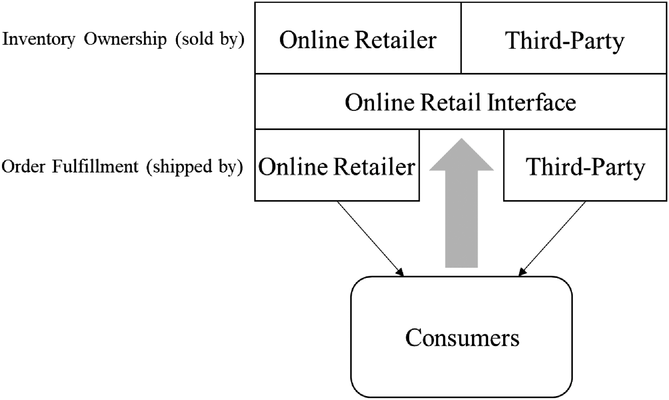
Online order fulfillment service options
By offering marketplace services, online retailers have also introduced additional supply chain security concerns to consumers, such as interorganizational fraud, in which suppliers deliberately sell counterfeit products (DuHadway et al., 2020). These products have increasingly infiltrated the electronics (IEC, 2014) and footwear markets (Incopro, 2018), among others, resulting in pervasive consumer complaints (Alaimo, 2018) and direct economic damage estimated at $18 billion in 2016 (U.S. Chamber of Commerce, 2016). Yet, firm initiatives remain largely reactive to security breaches and are often based on government regulations that more directly pertain to difficult‐to‐predict events with severe consequences (Closs & McGarrell, 2004; Williams et al., 2008). For instance, Amazon and eBay stopped selling fraudulent COVID‐19 prevention products only after a government order (Bloomberg News, 2020a). Moreover, technology‐driven solutions intended to improve information transparency (e.g., Closs & McGarrell, 2004; Sarathy, 2006) are often impeded by onerous costs, agency conflicts that may arise from information asymmetry (Bakshi & Kleindorfer, 2009), and unmanageable data volumes (Kraus & Valverde, 2014). While recent government‐led efforts to combat counterfeit products have resulted in a dramatic rise in seizures to $1.4 billion in 2018 up from $95 million in 2003 (Department of Homeland Security, 2020), these numbers are paltry when compared to the total international trade in counterfeit goods, which was expected to increase from $461 billion in 2013 to almost $1 trillion by 2022 (Frontier Economics, 2017). Although retail giants such as Alibaba.com and Walmart have begun to create industry initiatives (Bloomberg News, 2020b), solutions aimed at policing the bewildering permutation of goods and third‐party sellers “is a near‐impossible feat” (Chu, 2019).
Not surprisingly, an estimated 30% of online shoppers accidentally purchase fake products, even though 84% would never intentionally do so (MarkMonitor, 2018). Improving the overall transparency of information relevant to consumers may be particularly efficacious in allowing consumers to make a well‐informed purchase decision and to lower the risk of unknowingly receiving a counterfeit product (Sarathy, 2006). Consumers rely on the online retailer for information related to the parties responsible for both inventory ownership (i.e., sold by) and order fulfillment (i.e., shipped by). To address this information asymmetry, online retailers have increasingly enhanced their service designs by disclosing which parties are responsible for selling and shipping products (Figure 2). Surprisingly, these disclosures do not always match actual service processes, as retailers may commingle their own inventory with those of third‐party sellers to harness inventory‐pooling benefits (Weinstein, 2014; Williams, 2019). Counterfeit products procured by one third‐party seller can be used to fulfill orders placed with any other seller, including the retailer.
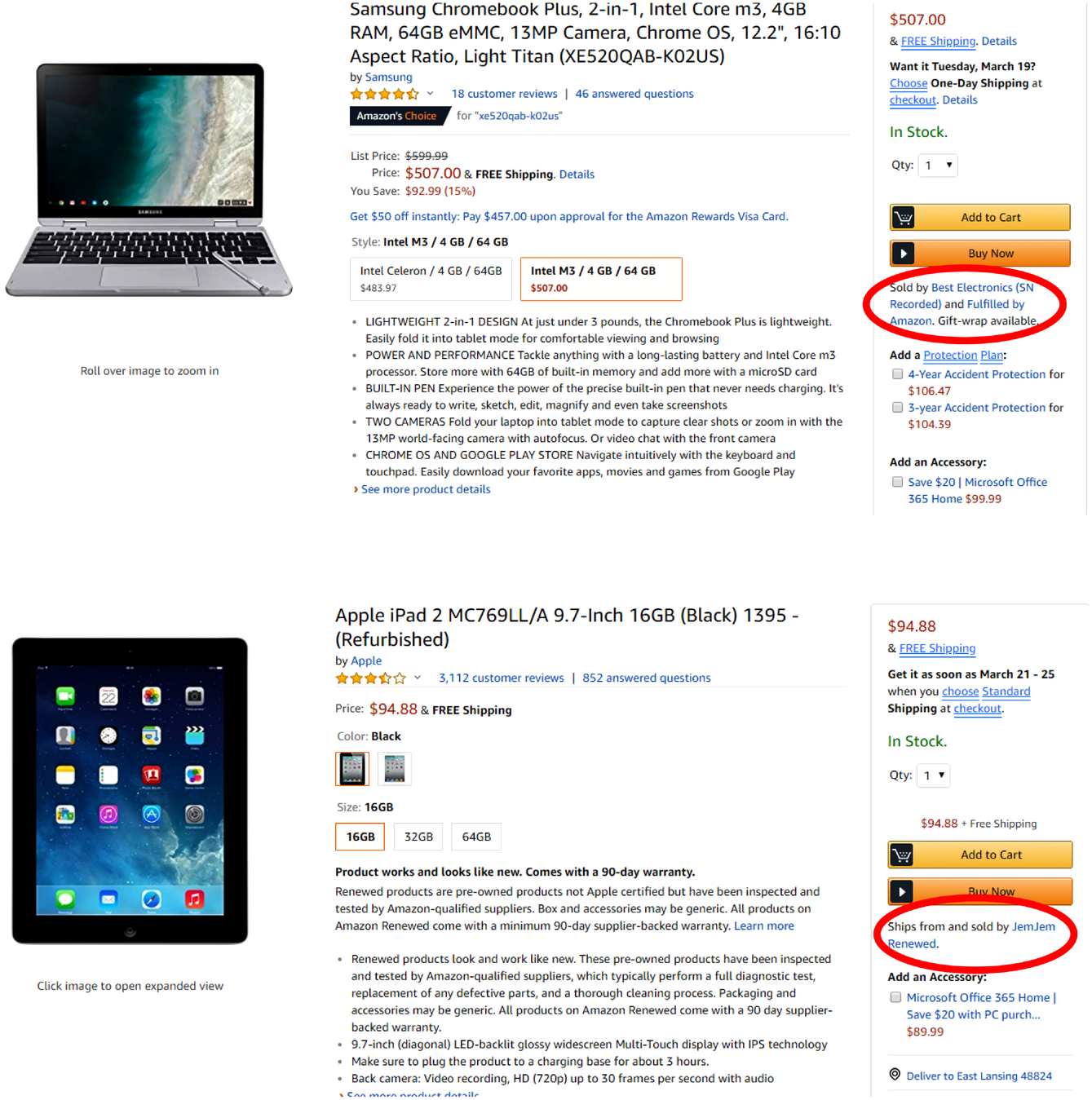
Examples of disclosure of fulfillment service information
Recent operations management literature has explored the effect of disclosing inventory availability in online retailing (e.g., Aydinliyim et al., 2017, Peinkofer et al., 2016, Rao et al., 2014). Although these studies have yielded valuable insights concerning how consumers respond to such information in an operations process, they do not explicitly examine fulfillment service‐related disclosures prior to a purchase (e.g., sold by and shipped by) and experienced outcomes after a purchase (e.g., counterfeit). Given the increased importance of service design (Goldstein et al., 2002; Ta et al., 2018), further investigation is warranted, especially within the context of a service failure (Field et al., 2018), such as the sale of a deceptive counterfeit product. Thus, in this study, we leverage insights from service operations management, marketing, and information systems to add to the service operations literature. Specifically, we focus on the following research questions: (1) How does disclosing order fulfillment service information, such as the actual seller and shipper, influence consumers’ product quality perceptions prior to a purchase? (2) How does disclosing order fulfillment service information regarding the specific seller and shipper affect blame, trust erosion, and subsequently repurchase intentions when a counterfeit product is received?
Drawing on signaling theory (Boulding & Kirmani, 1993; Connelly et al., 2011) and attribution theory (Kelley & Michela, 1980), we developed a series of six scenario‐based experiments (1A–C and 2A–C) that explore the impact of various online retail fulfillment service options in combination with receiving a deceptive counterfeit product on consumers. The first set of experiments (Experiments 1A–C) examines the efficacy of fulfillment service information (i.e., sold by and shipped by) as an intradimensional signal set comprising combinations of fulfillment process providers in setting a priori product quality perceptions. In addition, these experiments investigate the combined effect of signals that fall along
The second set of experiments (2A–C) adopts a mixed experimental design to explore the erosion effect of trust in the online retailer and subsequent repurchase intentions. Again, we use Experiment 2A as our baseline experiment controlling for any potential brand effects, whereas Experiments 2B and 2C are replications using real retailer names. Contrary to our predictions, results show that for a small retailer or startup (Experiment 2A), the negative effect on repurchase intentions does not significantly differ between the different inventory ownership (i.e., sold by) and order fulfillment (i.e., shipped by) configurations. However, for the large, well‐known retailers (Experiments 2B and 2C), trust erosion is higher when inventory ownership (i.e., sold by) and order fulfillment (i.e., shipped by) are associated with the online retailer rather than a third‐party seller.
The structure of this paper is as follows. We first provide a review of the relevant literature on information disclosure. We then introduce signaling theory and present the logic for our hypothesized effects regarding product quality perceptions, blame, and repurchase intentions. Next, we describe our experimental approach and report the findings from Experiments 1A–1C. Subsequently, we present the logic for our hypothesized effect regarding the erosion of trust in the online retailer and follow with our results from Experiments 2A–2C. We then present the theoretical and managerial implications and conclude with limitations and future research opportunities.
LITERATURE REVIEW
Addressing information asymmetry is central to improving supply chain security (Bakshi & Kleindorfer, 2009; Sarathy, 2006). Incorporating service operations designs that improve information transparency can improve buyers’ decision‐making processes and discourage exploitative acts by suppliers (Bakshi & Kleindorfer, 2009). Despite its importance, studies of information disclosure in online retailing within operations management are sparse and focus on disclosing information related to inventory. While Allon and Bassamboo (2011) investigated inventory availability, Aydinliyim et al. (2017) explored potential discount and Yin et al. (2009) and Park et al. (2020) considered display quantity. Although the provision of unverifiable inventory information generally does not influence consumer purchase decisions (Allon & Bassamboo, 2011), analytical models show that retailers may benefit from providing consumers with indicators of inventory scarcity (Aydinliyim et al., 2017; Yin et al., 2009). This conclusion is supported by empirical evidence of consumers’ psychological underpinnings when limited inventory is disclosed (Peinkofer et al., 2016). Limited inventory disclosure is connected with higher return rates (Rao et al., 2014) and with future sales (Cui et al., 2019), and lower daily sales (Park et al., 2020). Taken together, findings show that retailers may design their service models on the basis of inventory disclosure to influence consumers’ purchase decisions.
Scholars in marketing and information systems have also studied the influence of other information disclosures in online retailing, such as price (e.g., Dellaert et al., 2008), product (e.g., Kim & Lennon, 2008; Mallapragada et al., 2016), and online reviews (e.g., Kwark et al., 2014; Senecal & Nantel, 2004). Collectively, these studies suggest that consumers interpret information provided on an online retailer's website as signals indicating seller and product quality (Mavlanova et al., 2016), and trustworthiness (Urban et al., 2009; Wang et al., 2004; Wang & Emurian, 2005). Product quality and trustworthiness are particularly impactful in the online retail context, as buyers (i.e., consumers) and sellers (e.g., third‐party marketplace sellers) are typically unfamiliar with each other (Utz et al., 2009) and complete a transaction in which a product's quality cannot be evaluated until it is received (Pavlou et al., 2007). While building trust in an online retail setting is difficult (Naquin & Paulson, 2003), it remains a key goal for online retailers hoping to retain consumers and ensure future sales (e.g., Koufaris and Hampton‐Sosa, 2004; Reichheld & Schefter, 2000; Wang et al., 2004).
To influence and establish trust with consumers, online retailers can use information cues such as trust marks, objective source rating, investment in advertising (Aiken & Boush, 2006), brand, privacy policy, and money‐back guarantee (Lee et al., 2005). As online consumers cannot directly interact with products before purchase, they have difficulty distinguishing authentic products from counterfeits, which look similar but are offered at a lower price with lower quality (Cohen, 2015). Thus, online consumers are particularly vulnerable to unwittingly buying counterfeits and suffering the consequences (Dégardin et al., 2014), further undermining an online retailer's ability to build trustworthiness (Schlosser et al., 2006).
To address this concern, prior research has focused on investigating various online retail information cues that help consumers distinguish genuine from suspicious online retailers (Wilson & Fenoff, 2014) to combat the distribution of counterfeited products. For example, the use of advanced product presentation techniques, such as 360‐degree videos, reduces consumers’ perceptions of deceptions (Mavlanova & Benbunan‐Fich, 2010), and trust signals such as brand and reputation or privacy and security policies (Kim & Benbasat, 2006) increase consumers’ trust in online retailers (Mavlanova & Benbunan‐Fich, 2010).
To summarize, while research in other disciplines has examined the impact of website signals on consumers’ perceptions and behaviors, operations management research to date has largely been limited to investigating the signal of product availability. Importantly, service fulfillment information (e.g., identifying both sellers and shippers) establishes a clear chain of responsibility regarding inventory ownership and order fulfillment for products being sold through marketplaces (Knight, 2003), thereby allowing consumers to see which parties are responsible for different stages of service fulfillment (Lu et al., 2017). Exploring this method of online signaling will generate valuable consumer insights that can be used to enhance service design strategy for online retailing in operations management.
THEORETICAL FOUNDATION AND HYPOTHESES DEVELOPMENT
Signaling theory
To inform this research, we draw on the tenets of signaling theory (Spence, 1973). Signaling theory was first established in information economics, and explains the behavior of two parties under the assumption of information asymmetry (Spence, 1973), which refers to one party, the signaler, having more information available than the second party, the receiver. Signals can be used by the more informed party to mitigate this information asymmetry. A signal's effectiveness depends on its observability (Gulati & Higgins, 2003), or the extent to which the receiving party notices the signal (Connelly et al., 2011), and its credibility (Gulati & Higgins, 2003). A signal is thought to be credible if the sender experiences negative repercussions when a wrong signal is sent (e.g., loss of reputation, monetary loss; Boulding & Kirmani, 1993). Such repercussions can manifest in monetary or nonmonetary damages such as lost sales, negative word of mouth, or switching or returning a product (Kirmani & Rao, 2000; Rao et al., 1999).
In marketing, signaling theory helps explain how consumers evaluate product quality when information asymmetry exists (Kirmani & Rao, 2000), showing that consumers rely on various signals, such as brand image (e.g., Erdem & Swait, 1998), price (e.g., Dawar & Parker, 1994), and return policies (e.g., Abdulla et al., 2022; Rao et al., 2018). In the online context, extant research suggests that both fulfillment‐related information (Mavlanova et al., 2012) and inventory availability can serve as signals to consumers (e.g., Peinkofer et al., 2016; Rabinovich, 2004; Rabinovich & Bailey, 2004). Thus, we investigate how fulfillment service information impacts consumers’ sentiments and behaviors through the lens of signaling theory.
Two important theoretical tenets for our theorizing are intradimensional and interdimensional signal sets. Based on Paruchuri et al. (2020), signal dimensionality refers to the evaluative purpose of the signals. Intradimensional signal sets comprise signals along the
Although extant signaling literature has separately explored intradimensional (i.e., signal set pertaining to the same evaluative dimension; Plummer et al., 2016) and interdimensional (i.e., signals each pertaining to separate evaluative dimensions; Paruchuri et al., 2020) signal incongruency, the current context allows us to explore these signal incongruencies concurrently to further enrich signaling theory, with an emphasis on cognitive and behavioral intent outcomes (Drover et al., 2018). We first theoretically establish that inventory ownership (i.e., sold by) and order fulfillment (i.e., shipped by) constitute a signal set, owing to intradimensional signal (in)congruency along the dimension of responsibility. In addition, we theorize about the interdimensional signal incongruency of fulfillment service information signals (responsibility) and receiving a counterfeit product (capability), and the consequential attribution of blame. Experiments 1A–C test our first set of hypotheses and explore the validity of our theory for different retailers. We then shift our theoretical focus in Experiments 2A–C to the role of service operations signal sets for trust erosion when consumers receive a counterfeit product.
Hypotheses
Fulfillment service provider disclosures as quality signals
Online retailers know which entities the actual sellers and shippers of the products are while consumers are less informed and rely on information shared by retailers (Boulding & Kirmani, 1993). Thus, in line with signaling theory (Spence, 1973), this fulfillment information asymmetry causes significant uncertainty for consumers about a product's quality. Online retailers can leverage their websites to disclose the parties responsible for inventory ownership (i.e., the seller) and order fulfillment (i.e., the shipper) as a set of intradimensional signals to reduce the information asymmetry (Connelly et al., 2011, Spence, 2002). Although inventory ownership and order fulfillment constitute separate signals, they both fall within the evaluative dimension of responsibility, and consumers are likely to make inferences about product quality based on this signal set.
Prior to exploring the interplay of “sold by” and “shipped by” in the pre‐purchase signal set, we explore why consumers are expected to develop higher product quality perception when the party responsible for inventory ownership (i.e., the seller) or order fulfillment (i.e., the shipper) is the online retailer rather than a third‐party seller. 1 In general, a firm's credibility among consumers is built through its overall reputation (Fombrun & Shanley, 1990, Fombrun, 1996; Fan et al., 2016; Weiss et al., 1999; Zhang et al., 2016), which can be cultivated over time by delivering expedient and satisfactory resolutions of service problems (Mukherjee & Nath, 2007). Although many online retailers do not possess the general recognition enjoyed by larger retailers such as Amazon.com, they may nonetheless establish credibility through alternate means such as providing easily verified identity information. For instance, prior research shows that stakeholders use the reputation of a firm's founder to determine an overall firm reputation (Cohen & Dean, 2005). In comparison, third‐party sellers are often located in a foreign country or unidentified location, either have minimal reputation or lack a direct point of contact with customers, and operate in relative anonymity (Anderson, 2020). Thus, many consumers perceive third‐party sellers as less credible. In line with the premise of signal credibility (Gulati & Higgins, 2003), we expect that consumers develop higher product quality perceptions when the party responsible for inventory ownership (i.e., the seller) or order fulfillment (i.e., the shipper) is the online retailer rather than the third‐party seller owing to consumers’ recognition of the online retailer.
Extant literature suggests that consumers formulate seller credibility based on the length and quality of feedback history (Tadelis, 2016). Thus, online retailers are generally perceived by consumers as more credible than third‐party sellers. We argue that their commingled presentation in the same intradimensional signal set can result in intradimensional signal incongruence. Recent advances in signaling theory suggest that congruent signals tend to mutually reinforce each other, thereby corroborating signal quality to amplify their effects (Plummer et al., 2016; Stern et al., 2014). However, incongruent signals transmit conflicting information (Zhao & Zhou, 2011), and create ambiguity and obfuscate their respective intended effects (Gioia & Chittipeddi, 1991). In the current context, we argue that signaling the inclusion of a third‐party seller in the fulfillment service can adversely impact consumers’ inferred product quality due to interpretive ambiguity (Gioia & Chittipeddi, 1991) attributable to the juxtaposition of a lower credibility third‐party seller alongside the primary retailer. Moreover, we believe that the incongruent intradimensional signal set also suggests to consumers that the retailer is relinquishing responsibility of the aspect of the service process assigned to the third‐party seller. Therefore, we hypothesize:
Who do consumers blame for receiving a counterfeit product?
Understanding blame is particularly important for online retailers, as it explains to what extent an online retailer may be held liable for damages arising from selling counterfeit products—even if sold and/or shipped by third‐party sellers (Keshner, 2019; Sebok, 2003). Although the intradimensional signal set of inventory ownership and order fulfillment establishes consumers’ quality perceptions (as proposed in H1), it also presents targets of blame attribution when consumers receive a counterfeit product. We argue that receiving a deceptive counterfeit product constitutes a post‐purchase capability signal. Most importantly, the definition of deceptive counterfeit goods implies that consumers who purchased one did not do so intentionally. Subsequently, interdimensional signal incongruency emerges when the capability signal disconfirms expectations set forth by the signals of inventory ownership and order fulfillment (i.e., responsibility dimension signals), which results in interpretational ambiguity (i.e., how could this have happened?).
Moreover, intradimensional signal incongruity due to the responsibility of multiple entities in the service fulfillment process (i.e., inventory ownership and order fulfillment) further results in attributional ambiguity (i.e., who is responsible for the negative outcome?). Traditional tenets of signaling theory posit that signal salience is often established through its appearance, such as perceptual sensitivity (e.g., Helton & Warm, 2008) and pictorial illustration (e.g., Zhu et al., 2012). However, the salience of signals pertaining to a service operations process in an online marketplace transcends visual presentation, as consumers must rely on their basic understanding of the service process's temporal sequence in lieu of actual observation of products entering and leaving a warehouse. Thus, extant signaling theory and its nascent extension of interdimensional signal incongruity do not yet adequately inform this phenomenon. We utilize tenets from attribution theory to explain how consumers assign blame based on this signal set when receiving a deceptive counterfeit product.
Attribution theory reflects “the study of perceived causation” (Kelley & Michela, 1980, p. 458) and has been used to understand the causal attribution for product or service failures (Folkes, 1984; Harris et al., 2006; Pacheco et al., 2018; Richins, 1983) and blame (Weiner, 1985; 2000; Folkes, 1988). Attribution theory posits that consumers rationally process information and directly attribute outcomes to causes depending on temporal stability, controllability, and locus (Folkes, 1984; Weiner, 2000). Consumers confronted with negative and unexpected events tend to process information via received signals (Folkes, 1982; 1984; Wong & Weiner, 1981). Therefore, we expect that consumers will use and process the signal set provided on an online retailer's website regarding inventory ownership and order fulfillment to arrive at causal attributions of blame for receiving counterfeit products, thereby clarifying responsibility following negative outcomes.
Based on the premise of causal schemata, consumers will evaluate how “two or more causes combine to produce a certain effect” (Kelley & Michela, 1980, p. 471). The intradimensional signal set of inventory ownership and order fulfillment provides two potential causes for receiving a counterfeit product. Consumers become aware that the most direct line of interaction is the entity responsible for inventory ownership, which precedes order fulfillment in the fulfillment service process. For instance, for a product sold by a third‐party seller (regardless of the entity responsible for shipping the product), the third‐party seller would constitute the most direct line of interaction because it indicates inventory ownership. Thus, the consumer's perceived causal locus for receiving a counterfeit product would reside with the entity responsible for inventory ownership (i.e., sold by). Therefore, we expect consumers to attribute more blame to the “sold by” entity when they receive a counterfeit product. Formally stated:
The role of blame on the online retailer in determining repurchase intentions
A congruous intradimensional signal set provides unequivocal clarity regarding the causal locus for an outcome. A consumer who receives a counterfeit product experiences a capability failure that is in direct conflict with a priori product quality perceptions. The resultant interdimensional signal incongruity gives rise to interpretive ambiguity, negative perceptions, and behavioral intent (Gioia & Chittipeddi, 1991; Paruchuri et al., 2020). As the consumer attempts to rationalize this undesirable service outcome, the same fulfillment service‐related disclosures that were used to formulate a priori product quality perceptions once again become the basis for causal schemata (Kelley & Michela, 1980). Thus, interpretational clarity of the congruous intradimensional signal set (i.e., sold by and shipped by) allows the consumer to unambiguously assign blame to the responsible entity based on causal schemata (Kelley & Michela, 1980).
As we previously argued, consumers likely form the highest product quality perceptions when a product is both sold and shipped by the online retailer. In turn, the intradimensionally congruent signal set also unambiguously identifies the online retailer as the sole causal locus for service outcomes (Gioia & Chittipeddi, 1991; Kelley & Michela, 1980). However, the involvement of a third party in either stage of the fulfillment service potentially obfuscates the causal locus, as it establishes two entities (i.e., the online retailer and third party) as jointly responsible for service outcomes. The resultant interpretative ambiguity (Gioia & Chittipeddi, 1991) leads consumers to reassigning at least partial blame and negative behavioral intent from the online retailer to the third party. Taken together, we expect that consumers will have lower repurchase intentions due to higher blame attribution to the online retailer when the product is sold by and shipped by the online retailer than under any other fulfillment service configuration
2
. Therefore, we hypothesize:
METHODOLOGY
Experimental design
Electronics are highly susceptible to counterfeiting (Wilcox et al., 2009). In 2016, over $19 million in counterfeit computer parts were seized by the U.S. Customs and Border Protection (U.S. Custom and Border Protection Office of Trade, 2016). Hence, we selected a MicroSD card as the product for our research. To confirm that counterfeit MicroSD cards are sold online, we conducted a preliminary review of a leading online retailer's website of consumer reviews of MicroSD cards. We also reviewed the websites of multiple online retailers to explore different service design configurations that online retailers use to communicate to consumers which entity sells and ships the product (see Figure 2). Using these reviews and the guidelines of Rungtusanatham et al. (2011), we developed our experimental and common modules as well as the visual stimuli illustrating the different fulfillment service configurations. We also developed video stimuli identifying whether the MicroSD card is authentic or counterfeit. 3 Ensuring our stimuli closely emulate what online shoppers would experience in the real world improves the validity of our results and conclusions (Lonati et al., 2018). 4 Finally, in Appendix A in the Supporting Information we report our pretest that was conducted to establish that our manipulations were valid.
Experimental procedures across all six experiments
We employed the following procedures in all six experiments. We recruited participants for all experiments from Amazon Mechanical Turk (MTurk) via CloudResearch (Litman et al., 2017). Prior research has validated that MTurk samples are of high quality (Kees et al., 2017), and MTurk samples have been used in prior operations management research (Abbey et al., 2017; Cantor & Jin, 2019; Dixon et al., 2017; Jiang et al., 2017; Tokar et al., 2016). Following established procedures (e.g., Peinkofer et al., 2022), we used the following qualification filters in CloudResearch (Litman et al., 2017): participants must be located in the United States, must have at least 100 approved HITs at an approval rate of 96%–100%, 5 and must be excluded if they have participated in one of our prior experiments related to this study. Further, we used Pro Features to block participants with suspicious geocode locations and duplicate IP addresses. We note that CloudResearch added an additional Pro Feature called “Block Low Quality Participants” which was introduced just as we collected our data for Experiment 2C.
We randomly assigned all participants to an experimental condition and monetarily compensated them for fully completing the experiment. An attention check was administered at the end of the experiments. Additionally, Experiments 1B–2C included an instructional manipulation check question 6 at the beginning of our experiment (Oppenheimer et al., 2009). In line with our pretest, we assessed the validity of our experimental manipulations with two‐way contingency table analyses. Our manipulations worked as intended in each of our six experiments. Further, we included an open‐ended question unrelated to the study for which nonsensical answers are flagged as either potential bot or low‐quality responses (Abbey & Meloy, 2017). Responses from participants who failed the attention check, manipulation checks, nonsensical input to our open‐ended question, and outliers were removed to ensure high data quality (Abbey & Meloy, 2017). Finally, to further enhance the validity of our experiments and to rule out the potential impact of extraneous factors, we followed the recommendation by Bachrach and Bendoly (2011) and conducted Hawthorne checks (Adair, 1984). We observed no experimental condition impacts on our three supplemental measures 7 in any experiment. Table 1 summarizes all experimental procedures and provides an overview of the respective samples.
Summary of experimental procedures
EXPERIMENT SET 1
Experiment 1A
We used the fictitious retailer name Unlimited.com and the fictitious MicroSD card brand ACE to control for potential brand effects. Hence, the contextual setting of Experiment 1A mimics a small or startup retailer (named Unlimited.com) that is not widely known among a large consumer base. This setting allows us to establish baseline effects that are free of preconceived biases against more well‐known retailers (e.g., Amazon.com). In addition, recent increases in demand for online retailing—in part driven by the COVID‐19 pandemic—have resulted in a proliferation of online storefronts from both smaller retailers (Wertz, 2018) and startups (e.g., Yohn, 2020).
Manipulations
Experiment 1A constitutes a 2 (sold by: online retailer vs. third‐party seller) × 2 (shipped by: online retailer vs. third‐party seller) × 2 (order: sold by/shipped by vs. shipped by/sold by) × 2 (product: authentic vs. counterfeit) between‐subjects design. We include the experimental levels of “order” to control for the order in which the “sold by” and “shipped by” entities are presented, and “product” to properly assess the manipulation of the counterfeit conditions. We included “order” in all our analyses as a covariate, and our results show that the order factor is not significant. An example of the experimental scenarios and manipulations is included in Appendix B in the Supporting Information.
Measures
Experiment 1A tests two unrelated models. The measure for product quality was adapted from Sprott and Shimp (2004), and was measured with a three‐item, 7‐point Likert scale.
For our second model, we limited our data to the counterfeit experimental conditions. The outcome variables of interest were blame on the online retailer, blame on the third‐party seller, and repurchase intention. The two blame variables were adapted from Griffin et al. (1996) and measured with two‐item, 7‐point Likert scales. These measures assess how much blame consumers attribute to the respective parties involved in the service fulfillment. Repurchase intention was assessed using a set of three 7‐point semantic differentials adopted from Hui et al. (2004). It gauges the extent to which a consumer intends to make future purchases with an online retailer. Appendix C in the Supporting Information provides a summary of the scale items used throughout this research. Convergent and discriminant validity was achieved, and the supporting CFA results and correlation matrix are reported in Appendix D in the Supporting Information.
We performed a CFA using Mplus and extracted the factor scores for our constructs (e.g., Calantone et al., 2017). In turn, the factors scores rather than the average of each construct's scale items were used in our analyses. Factor scores are preferred over item averages because factor scores reflect the weighted aggregate of each construct's scale items, whereas the latter assumes all items are equally weighted (Aiken & West, 1991; Edwards & Wirth, 2009).
Analysis and results
For our analysis we used PROCESS macros, which are regression‐based and have been utilized in recent operations management research (e.g., Abbey et al., 2015; 2017; Cantor & Jin, 2019). H1 was tested with PROCESS Model 1 using 20,000 bootstrap samples (Hayes, 2013), which tests the theorized interaction between “sold by” and “shipped by.” For our empirical testing, “sold by” and “shipped by” are defined as 1 when the seller is the online retailer and 0 when the seller is a third party, respectively. To control for the presentation order of “sold by” and “shipped by,” we included “order” as a covariate. Table 2 summarizes the regression results.
Experiments 1A–1C: PROCESS Model 1 results
In support of H1, there is a significant positive interaction between “sold by” and “shipped by” with
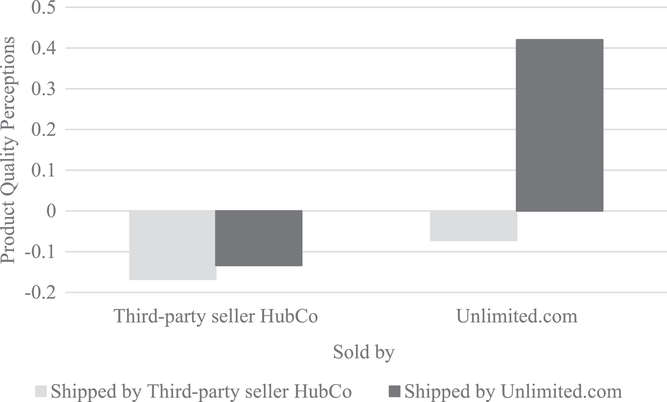
Experiment 1A (Unlimited.com): Interaction of “sold by” and “shipped by” on product quality perceptions
H2 tests whether consumers attribute more blame to the “sold by” or “shipped by” entity when receiving a counterfeit product. Thus, we limited our data set to the counterfeit experimental conditions and considered only the six experimental conditions where the relevant blame measures were collected for both the retailer
We conducted paired‐sample
Experiment 1A (Unlimited.com): Paired sample
In addition to the six conditions included to test H2, we integrated two additional conditions: (7) sold by the online retailer and shipped by the online retailer, and (8) shipped by the online retailer and sold by the online retailer. We ran PROCESS Model 4 (Hayes, 2013) using a multicategorical predictor where “sold by the online retailer and shipped by the online retailer” was the reference group to test H3. Blame on the online retailer was specified as the mediator, and repurchase intention was the outcome variable. We included “order” as a covariate to control for whether sold by or shipped by was listed first or second. Table 4 summarizes the regression results.
Experiments 1A–1C: PROCESS Model 4 results
Table 5 provides an overview of the construction of the conditional indirect effects. All else equal, our results show that blame on the online retailer significantly mediates the relationship between “sold by online retailer and shipped by third party” and repurchase intention (effect size = 0.159, CI [0.073, 0.266]; see Table 5), indicating that consumers have higher repurchase intentions owing to less blame on the online retailer when the product was “sold by online retailer and shipped by third‐party seller” than when it was “sold by online retailer and shipped by online retailer.” The indirect effect for “sold by third party and shipped by third party” (effect size = 0.299, CI [0.159, 0.447]; see Table 5) is also significant, showing that consumers have higher intentions to repurchase from the online retailer when the product was “sold by third‐party seller and shipped by third‐party seller” than when the product was “sold by online retailer and shipped by online retailer.” Finally, the indirect effect for “sold by third party and shipped by online retailer” (effect size = 0.271, CI [0.138, 0.423]; see Table 5) is also significant, supporting the notion that consumers have higher repurchase intentions when the product was “sold by the third‐party seller and shipped by online retailer” than when the product was “sold by online retailer and shipped by online retailer.” Thus, H3 is supported.
Construction of indirect effects (Experiments 1A–2C)



Experiment 1B (Retailer B) and Experiment 1C (Retailer C)
Experiment 1A involved a fictitious retailer name—representing a retailer that has no or low familiarity among a large consumer base, such as a small retailer or startup—and a fictitious MicroSD card brand. This approach allowed us to follow best practices for experimental methods by controlling for potential brand effect. Controlling for such external factors leads to achieving high internal validity at the expense of external validity (Bachrach & Bendoly, 2011; Gravetter & Forzano, 2006). Thus, while Experiment 1A allowed us to truly assess the causality between our manipulations and dependent variables of interest, it limited generalization of our findings. To provide more insights and external validity, we replicated our experiment using two actual retailers. To protect and mask the identity of the two retailers, we use Retailer B (Experiment 1B) and Retailer C (Experiment 1C). 9 Retailer B is a large international retailer operating predominantly online with a grocery chain that is not under its main brand, along with a few experimental physical locations under its main brand; Retailer C is a large, international omni‐channel retailer. Both retailers operate a marketplace service. However, Retailer B is widely recognized as a leader and pioneer in online retailing, whereas Retailer C's online operations have only recently experienced dramatic growth. Also, the overall perception among consumers remains relatively low for Retailer C in comparison to Retailer B. In addition to the MicroSD card used in Experiment 1A, we included boots from a leading luxury global footwear brand in these two replication experiments. To mask the identity of the brand we use the name ABC boots. 10
Manipulations
Experiments 1B and 1C each constitute a 2 (sold by: Retailer B (C) vs. third‐party seller) × 2 (shipped by: Retailer B (C) vs. third‐party seller) × 2 (category: MicroSD card vs. ABC boots) × 2 (product: authentic vs. counterfeit) between‐subjects design. Since we ruled out any ordering effect regarding whether sold by or shipped by is presented first in Experiment 1A, we followed the practice of Retailer B and always listed the sold by entity first followed by the shipped by entity.
Measures
We included the same measures for product quality perception, blame on the online retailer, blame on the third‐party seller, and repurchase intention as in Experiment 1A. Also, as we used real retailers and a branded product, we included several control measures that are summarized in Table 8 in Appendix C in the Supporting Information. In line with our prior experiment, we established convergent and discriminant validity for our measures. The supporting CFA results and correlation matrices are reported in Appendix D in the Supporting Information.
Analysis and results
We replicated the analyses we conducted in Experiment 1A. Table 2 summarizes the regression results from PROCESS Model 1 (Hayes, 2013). For Retailer B, our results show a significant positive interaction between “sold by” and “shipped by” with
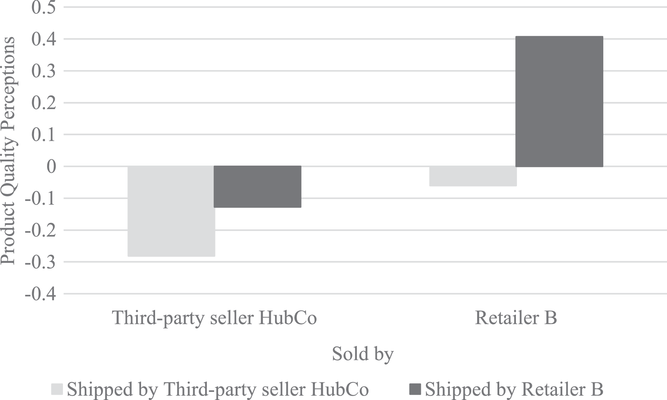
Experiment 1B (Retailer B): Interaction of “sold by” and “shipped by” on product quality perceptions
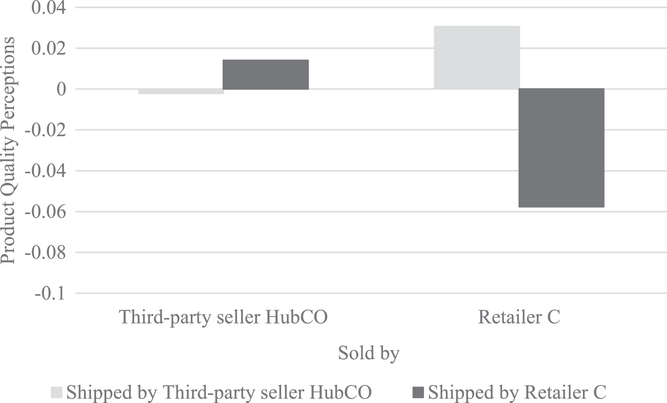
Experiment 1C (Retailer C): Interaction of “sold by” and “shipped by” on product quality perceptions
Table 6 summarizes the results of the paired‐sample
Paired sample
Table 4 summarizes the regression results and Table 5 shows the construction of the indirect effects used to test H3. For Retailers B and C, our results show that, all else equal, consumers receiving a counterfeit product that was signaled as “sold by Retailer B (C) and shipped by third‐party seller,” “sold by third‐party seller and shipped by third‐party seller,” or “sold by third party and shipped by Retailer B (C)” have higher repurchase intentions, due to less blame on the online retailer, than when it was signaled as “sold by Retailer B (C) and shipped by Retailer B (C).” Thus, H3 is supported for Retailers B and C.
Experiments 1A–C: Discussion
Our first important finding is that online retailers’ disclosure of the fulfillment service information (i.e., sold by and shipped by) acts as an intradimensional signal set through which consumers establish quality perceptions, depending on the responsible entities. Online retailers disclose this information to reduce information asymmetry and intend for this disclosure to have a generally positive effect, similar to disclosure of product‐related information. Our finding indicates that consumers do not evaluate the signal set holistically. Instead, consumers discern and formulate their perceptions of product quality on the basis of which entities are responsible for inventory ownership and order fulfillment (i.e., online retailer and third party). This finding suggests that even when using a marketplace service, consumers expect higher levels of quality when online retailers have some responsibility in the fulfillment process.
The findings from Experiments 1A–C apply to both small retailers or startups that are unfamiliar to a large consumer base (Experiment 1A), and established and reputable retailers (Experiments 1B and 1C). However, an online retailer's disclosure of the fulfillment service information (i.e., sold by and shipped by) does not function as a quality signal set for an established and less reputable omni‐channel retailer (Experiment 1C). In that contextual setting, consumers may perceive product quality to be equal to or even of lower quality than when a third‐party seller is involved in the inventory ownership and order fulfillment process. This finding suggests that consumers with negative predispositions toward an established retailer might render the effectiveness of the quality signals of inventory ownership (i.e., sold by) and order fulfillment (i.e., shipped by) as void.
Although online retailers seek to reduce information asymmetry by providing an intradimensional signal set designating responsible parties involved in a service triad, doing so creates ambiguity for consumers in terms of who is ultimately responsible when a counterfeit product is received (i.e., interdimensional signal incongruity; Gioia & Chittipeddi, 1991). Our second finding indicates that attribution theory plays a significant role in assigning blame when multiple parties are involved in interdimensional incongruities. Consumers receiving a counterfeit product attribute more blame to entities of inventory ownership (i.e., the seller) than those of order fulfillment (i.e., the shipper), regardless of the order in which the information is disclosed to consumers. This finding links the causal schemata premise of attribution theory (Kelley & Michela, 1980) to the emergent signal (in)congruency literature. When an entity is signaled as being responsible for all activities leading up to the interdimensional signal conflict, the intradimensionally congruous signal set unequivocally presents a blame target to the signal receiver. When multiple entities are signaled as being responsible for different activities leading to an interdimensional signal conflict, the receiver draws from the temporal sequence of activities to dispel intradimensional signal incongruency, thereby identifying one entity as the perceived causal locus for blame. In this study, the intradimensional signal set of sold by and shipped by helps to signal the entity most directly responsible for inventory ownership (i.e., sold by), which precedes order fulfillment (i.e., shipped by), allowing consumers to clearly assign blame for receiving a counterfeit product. The fact that this finding held for all three retail contexts (Experiments 1A–1C) further corroborates the robustness of our theoretical predictions.
Our third finding illustrates the importance of intra‐ and interdimensional signal (in)congruency in conjunction with causal schemata for the attribution of blame. For small retailers or startups (Experiment 1A) as well as established retailers (Experiments 1B and 1C), consumers appear to assign more blame to the online retailer when the responsibility signal set showcased intradimensional congruity (i.e., the counterfeit product was sold by and shipped by the online retailer), which aligns with our predictions. Altogether, this result indicates that the role of causal schemata in establishing expectations and dispelling ambiguities associated with a multi‐party intradimensional signal depends on the level of signal (in)congruity. In other words, temporal sequence of inventory ownership and order fulfillment appear to jointly influence blame assignment on the online retailer when consumers receive a counterfeit product (i.e., experience interdimensional incongruous signals).
Although we have established that interdimensional signal incongruence results in negative consumer repurchase intention for the specific item involved in the transaction, questions remain concerning the scope of damage. Specifically, trust in a retailer is among the most important determinants of a retailer's long‐term relationship with its consumers (e.g., Koufaris & Hampton‐Sosa, 2004; Mukherjee & Nath, 2007; Reichheld & Schefter, 2000; Wang et al., 2004). Building trust with consumers is a key goal for online retailers hoping to retain consumers and ensure future sales (e.g., Koufaris & Hampton‐Sosa, 2004; Reichheld & Schefter, 2000; Wang et al., 2004). However, receiving a counterfeit product might erode a consumer's trust in the online retailer, which can detrimentally affect online retailers. Thus, understanding how receiving a counterfeit product is
EROSION OF TRUST IN THE ONLINE RETAILER IN DETERMINING REPURCHASE INTENTIONS
Another important negative repercussion relevant to receiving a counterfeit product is the loss of trust in the online retailer. Building on H1, if the retailer provides intradimensionally congruent responsibility signals (i.e., both sold and shipped by the online retailer), consumers receiving a counterfeit product will experience more erosion of their trust in the online retailer owing to the large interdimensional signal incongruity between the responsibility signal set and capability signal (Paruchuri et al., 2020). However, if the online retailer signals lower product quality through an intradimensionally congruent responsibility signal set (i.e., the products are both sold and shipped by the third‐party seller), then consumers who receive a counterfeit product will experience less erosion of their trust in the online retailer because of the lower interdimensional signal incongruity between the responsibility signal set and capability signal (Paruchuri et al., 2020). Similarly, when mixed signals are sent (i.e., products are sold by the online retailer and shipped by third party or sold by third party and shipped by the online retailer) consumers will experience interpretive ambiguity (Gioia & Chittipeddi, 1991), which should also lead to lower trust erosion than when the product was both sold and shipped by the online retailer due to lower interdimensional signal incongruity (Paruchuri et al., 2020).
Importantly, trust has emerged as a key element to understanding this behavior (Fukuyama, 1995; Wang & Emurian, 2005), especially pertaining to online retailing (Gefen, 2000; Kollock, 1999; Schlosser et al., 2006). Although prior research has identified trust as an antecedent to other relational outcomes such as loyalty (Reichheld & Schefter, 2000; Sirdeshmukh et al., 2002) or commitment (Garbarino & Johnson, 1999; Tax et al., 1998), it has also been established that trust is a robust predictor of consumer behavior (e.g., Eastlick & Lotz, 2011; Gefen, 2000; Wakefield et al., 2004). Specifically, high levels of trust are associated with positive behavioral outcomes, and low levels of trust with negative behavioral outcomes (Schoenbachler & Gordon, 2002). In addition, trust in a retailer leads to positive behavioral intentions, such as inquiries about and purchases of a product (Gefen, 2000). Thus, a higher erosion of trust in the online retailer when the product is both sold and shipped by the online retailer will result in lower purchase intentions than if the product was sold by and shipped by any other fulfillment service configuration. Thus, we posit:
Experiment 2A
Design
We applied a pre/post experimental design for Experiments 2A–C to assess the within‐subjects effect regarding
Manipulations
Experiment 2A constitutes a 2 (sold by: online retailer vs. third‐party seller) × 2 (shipped by: online retailer vs. third‐party seller) × 2 (product: authentic vs. counterfeit) mixed design. To control for potential brand effects, we used the fictitious retailer name Unlimited.com and the fictitious MicroSD card brand ACE, which mirrors our approach from Experiment 1A.
Measures
The measures of interest were trust in the online retailer and repurchase intention. The scale for trust in the online retailer was adopted from Sirdeshmukh et al. (2002) and was measured with four 7‐point semantic differentials. This measure captured consumers’ perceptions of the respective retailers’ capability and reliability. Appendix C in the Supporting Information provides a summary of the scale items. In line with our prior experiments, we established convergent and discriminant validity for our measures. The supporting CFA results and correlation matrices are reported in Appendix E in the Supporting Information.
Analysis and results
PROCESS Model 4 (Hayes, 2013) was used to test H4, which focuses on testing whether the difference in repurchase intentions based on the various configurations of the “sold by” “shipped by” signal set due to trust erosion in the online retailer is significant. We used a multicategorical predictor where “sold by online retailer and shipped by online retailer” was the reference group and limited our data to the experimental conditions where participants received a counterfeit product. We used a difference score for trust in the online retailer (
Experiments 2A–2C: PROCESS Model 4 results
Experiment 2B (Retailer B) and Experiment 2C (Retailer C)
To provide more insights and more external validity, we replicated Experiment 2A using the two actual retailers used earlier: Retailer B (Experiment 2B) and Retailer C (Experiment 2C).
Manipulations
Experiment 2B and 2C each follow a 2 (sold by: Retailer B (C) vs. third‐party seller) × 2 (shipped by: Retailer B (C) vs. third‐party seller) × 2 (category: MicroSD card vs. ABC boots) × 2 (product: authentic vs. counterfeit) mixed design. We used the retailer names Retailer B and Retailer C, the fictitious MicroSD card brand ACE, and ABC boots, consistent with our approach from Experiments 1B and 1C.
Measures
The outcome variables of interest were trust in the online retailer and repurchase intention. In addition, we included the same control variables as in Experiments 1B and 1C. Appendix C in the Supporting Information provides a summary of the scale items. In line with our prior experiments, we established convergent and discriminant validity for our measures. The supporting CFA results and correlation matrices are reported in Appendix E in the Supporting Information.
Analysis and results
We replicated the analysis we conducted in Experiment 2A. Hence, PROCESS Model 4 was used with 20,000 bootstrap samples (Hayes, 2013) and a multicategorical predictor with “sold by Retailer B (C) and shipped by Retailer B (C)” as the reference group. The regression results are summarized in Table 7 (Panels B and C), and Table 5 summarizes the construction of the indirect effects used to test H4. For Retailer B, our results show that, all else equal, consumers receiving a counterfeit product that was signaled as “sold by Retailer B and shipped by third‐party seller,” “sold by third‐party seller and shipped by third‐party seller,” or “sold by third party and shipped by Retailer B” have higher repurchase intentions, due to a lower erosion in trust in the online retailer than when it was signaled as “sold by Retailer B and shipped by Retailer B.” Thus, H4 is supported for Retailer B.
For Retailer C, our results show that, all else equal, the change in trust does not significantly mediate the relationship between “sold by online retailer and shipped by third party” and repurchase intention (effect size = 0.059, CI [–0.003, 0.148]; see Table 5), indicating that consumers have equal repurchase intentions when the product was sold by Retailer C and shipped by third‐party seller as when it was both sold and shipped by Retailer C. However, in line with Experiment 2B, a significant indirect effect for “sold by third party and shipped by third party” (effect size = 0.069, CI [0.006, 0.153]; see Table 5) and “sold by third party and shipped by Retailer C” (effect size = 0.065, CI [0.004, 0.143]; see Table 5) is observed, showing that consumers have higher repurchase intentions in each of these scenarios than when the product was both sold and shipped by Retailer C. Taken together, H4 is only partially supported for Retailer C.
Experiments 2A–C: Discussion
We find that the level of incongruity between different signal dimensions (i.e., interdimensional signal incongruity) strongly contributes to the erosion of consumer trust, which then affects consumers’ intentions to make repeat purchases from established online retailers. Contrary to our predictions, our results show that for a small retailer or startup (Experiment 2A), repurchase intention does not vary significantly across different responsibility signal sets (i.e., configurations of sold by and shipped by). However, our results do show a significant erosion of trust in the online retailer following receiving a counterfeit product, regardless of inventory ownership and order fulfillment. In contrast, trust erosion for large and well‐known online retailers (Experiments 2B and 2C) is higher when the retailer rather than a third‐party seller is responsible for both inventory ownership (i.e., sold by) and order fulfillment (i.e., shipped by). Indeed, this finding is in line with insights gleaned from Experiment 1, suggesting that consumers perceive generally higher levels of product quality when established retailers are involved in the fulfillment process. Consumers might expect products both sold and shipped by large and well‐known online retailers to be authentic, whereas products sold and shipped by third‐party sellers might raise more consumers’ doubts about their authenticity. Collectively, these insights support our theoretical predictions that consumers show more (less) negative sentiments when the interdimensional signal incongruency is larger (smaller). More importantly, these results also show that consumer response to interdimensional signal incongruence is more nuanced than current theoretical prescription.
IMPLICATIONS FOR THEORY, PRACTICE, AND FUTURE RESEARCH
Theoretical implications
This research leverages the unique setting of online marketplaces, in which retailers, third‐party sellers, and consumers form a service triad, to develop and test a unifying theory examining the simultaneous presence of both intradimensional and interdimensional signal incongruity. Whereas the emergent signaling conflict literature largely focuses on either intradimensional or interdimensional signal sets (e.g., Plummer et al., 2016; Paruchuri et al., 2020; Stern et al., 2014), to our best knowledge this is the first study to examine both types of signal conflict concurrently and explore their interactions. By drawing on causal schemata from attribution theory (Kelley & Michela, 1980), we assessed whether and how interpretational ambiguity stemming from an intradimensionally incongruity signal set is rationalized by the signal receiver to saliently formulate perceptual and behavioral responses. In doing so, we also reveal how consumers interpret and make sense of receiving a deceptive counterfeit product from an online retailer's marketplace. More specifically, this study makes three key contributions by explaining: (1) how and why the fulfillment service information (i.e., sold by and shipped by) serve as quality signals, (2) how consumers interpret intradimensional (in)congruity as well as interdimensional signals of incongruity when receiving counterfeit products, and (3) how consumers’ interpretations subsequently shape their behaviors in terms of blame attribution, trust erosion, and repurchase intentions.
With regard to the first contribution, we draw on recent advances in signaling theory to explain how consumers interpret the signal set of inventory ownership (i.e., sold by) and order fulfillment (i.e., shipped by) depending on different fulfillment service configurations (i.e., intradimensional (in)congruency). Although prior research explored the disclosure of inventory availability as one signal (e.g., Allon & Bassamboo, 2011; Aydinliyim et al., 2017; Peinkofer et al., 2016; Park et al., 2020), we align with Mollenkopf et al. (2022) and extend the theory by articulating the effect of intradimensional signal (in)congruency in the operations and supply chain management literature. As the popularity of online retailing continually increases, especially amplified by the ongoing COVID‐19 pandemic (e.g., Yohn, 2020), it is critical to gain a greater theoretical understanding of how service operations signals are interpreted by consumers.
With regard to the second and third contributions presented above, we extend signaling theory (e.g., Plummer et al., 2016; Paruchuri et al., 2020; Stern et al., 2014) with the premise of causal schemata from attribution theory (Kelley & Michela, 1980) to explain
We contribute to the supply chain security literature by showing the importance of matching operational processes to intradimensional signal sets. Prior research has called for supply chain partners to establish a clear chain of custody to ensure the authenticity of products flowing through a distribution channel (e.g., DuHadway et al., 2020). Our findings show that consumers not only saliently process such signals, but they also use them to attribute blame and modulate trust in an online retailer; a responsibility signal set that consumers use to determine product quality is further used to identify the causal locus of a negative service outcome. That is, signal sets that retailers provide to reduce information asymmetry regarding online marketplace service fulfillment processes are also used by consumers for other evaluative purposes. Understanding consumers’ salience when they receive deceptive counterfeit products shows that online retailers operating marketplace services should: (1) explicitly reduce information asymmetry pertaining to fulfillment service provision, and (2) more proactively prevent and detect the infiltration of counterfeit products (e.g., Guin et al., 2014). The quest for a low‐cost product assortment may have potentially positive operational impact, but consumers’ negative reactions to marketplace security failures may exert greater impact on both immediate sales and the online channel of distribution as a whole.
Finally, our research contributes to theory by developing an understanding of how consumers interpret service fulfillment information and how such information disclosure influences consumer behavior. Thus, we adopt a consumer‐centric approach and generate consumer insights to develop supply chain management strategy (Esper & Peinkofer, 2017). At a time of growing online marketplaces (Tian et al., 2018) and the pressing issue of deceptive counterfeits (Department of Homeland Security, 2020), we enhance the dialogue on information disclosure within online retailing in operations management research by focusing on the disclosure of service fulfillment information (i.e., inventory ownership and order fulfillment). Hence, we contribute in the sense of Kukla (1990) in that generating and answering new empirical problems are a key scientific endeavor.
Managerial implications
One of the most significant benefits retailers hope to reap through online marketplaces is virtual expansion of consumer choice through enlarged product assortments without increased inventory ownership. Managers must be aware that in creating this service, the information retailers provide to increase service fulfillment transparency (i.e., sold by and shipped by) also influences how consumers perceive product quality beyond pictures, descriptions, and specifications provided on web pages. In other words, the perceived quality of a product is affected by disclosing the parties jointly responsible for providing a product to be sold and shipped to consumers, as consumers have higher expectations for the online retailer than for third‐party sellers. Therefore, retailers must be aware that the service fulfillment signal set they present on their online interface creates what consumers expect in terms of both the service and product outcomes. We caution retailers, however, that this effect appears to rely on an individual retailer's general reputation. Retailer involvement in service fulfillment as positive signals of quality is true only if the retailer is either well‐established and reputable or a small retailer/startup. The opposite holds if the retailer is well‐known for low prices rather than quality. Thus, the provision of a service fulfillment signal set must be judicious and contingent upon a retailer's own reputation. In the case of small retailers or startups, providing such fulfillment service information might be beneficial to entice consumers to make a well‐informed purchase decision that can translate into the first step in establishing a relationship with consumers.
Additionally, retailers operating online marketplaces may also commingle their own inventories with those of third‐party sellers to harness inventory‐pooling benefits (Kaziukenas, 2020; Weinstein, 2014), thereby blurring the distinction between sold by an online retailer vis‐à‐vis a third‐party seller when both are shipped by the retailer. Unfortunately, this practice also inadvertently allows counterfeit products procured by a third‐party seller to be sold to consumers even when they choose “sold by” the retailer. Therefore, retailers urgently need greater inventory controls to harness the inventory benefits of their online marketplaces. Managers must be aware that consumers severely punish retailers when they receive counterfeit products under the “sold by and shipped by online retailer” condition; across all retailers, consumers attribute more blame to online retailers, which subsequently lowers their purchase intentions. Consumers not only trust established retailers less after receiving counterfeit products from them, but they are also less likely to make repeat purchases. Consequences are especially severe for reputable retailers. These managerial insights indicate that retailers operating online marketplaces must have strict procurement policies in place for third‐party sellers, especially if they wish to harness inventory‐pooling benefits. Indeed, some manufacturers have taken this matter into their own hands by requiring retailers to allow only authorized dealers to be third‐party sellers. Yet, that standard is not uniform. Consequences may not be as dire for small retailers or startups, as consumers appear to be more “forgiving” as trust in these online retailers is not adversely impacted. However, managers of small retailers or startups should not adopt a laissez‐faire approach to managing their online marketplace services, as consumers still hold them responsible (i.e., blame attribution) when receiving counterfeit products.
We note that most consumers in our experiment who received a deceptive counterfeit product clearly intend to eschew the retailer altogether in their subsequent purchases. It is striking that this effect applies to both established retailers, and to a lesser extent, small retailers and startups. Consequently, as consumers who seek authentic products become less likely to repurchase from these online retailers, their enduring customers are likely to be intentional buyers of counterfeit products who prioritize price over product authenticity (Furnham & Valgeirsson, 2007). Over time, those retailers risk becoming a marketplace of sellers of counterfeit products to consumers who seek them; simultaneously, authentic products’ sellers as well as brand owners and manufacturers will leave those sales channels particularly prone to the infiltration of deceptive counterfeits. Amazon experienced this in recent years, when brands such as Nike and Birkenstock officially cut ties with the retailer due to continued infiltration of counterfeit products (Levy, 2016; Zimmerman, 2020).
Collectively, our findings show that consumers process information presented to them by the retailer in both intended and unintended ways. Whereas the service fulfillment signal set largely achieves the online retailer's goal of alleviating information asymmetry to boost consumer confidence in quality, it is further used by consumers to saliently attribute negative perceptions and reactions in the event of receiving a deceptive counterfeit. These consequences offer a strong caution to online retailers to ensure that their pursuit of operational benefits associated with online marketplaces does not compromise their supply chain security. By transmitting signal sets to consumers concerning the specific roles of providers in a fulfillment service triad, online retailers are implicitly making operational promises: consumers expect products sold and shipped by the retailers to possess higher quality beyond what is described on the retailers’ websites. Commingling inventories increases the likelihood of compromised supply chain security, where retailers self‐sabotage by sending counterfeit products to consumers who intended to purchase from the retailer's own inventory. For retailers it is particularly important to safeguard their own supply chains, and online retailers could aim to clearly separate their own inventories from third‐party sellers’ inventories. For instance, Walmart's fulfillment service only operates out of one warehouse (Kaziukenas, 2020), which allows for a distinct separation of inventory. If such an arrangement is too costly, online retailers could instead establish extensive vetting and authentication processes in addition to regular product quality checks to identify counterfeit products from third‐party sellers affiliated with their online retailers’ distribution systems before these potentially hazardous products reach consumers’ hands.
Limitations and future research
When employing experimental research methods, researchers trade internal validity for external validity. Although our approach aligns with our research goals and allowed us to test our developed theory, future research could implement a different methodological approach to build on our insights. Furthermore, our research was limited to exploring the signals of fulfillment service and the capability failure of receiving a counterfeit product. However, our theoretical arguments might have wider applicability and thus, could help explain how consumers respond to other online retail failures, such as defective products or late deliveries, or disclosure of fulfillment service information including the product brand manufacturer. Also, it would be interesting to explore how a signal set consisting of several operational online signals (e.g., service fulfillment and inventory availability information) influence consumers’ perceptions and behaviors. Additionally, while we integrated two different product categories as a control variable in our research, we did not formally theorize or test for the potential difference of the effects. Future research could explore the potential boundary conditions of different product categories by developing and testing the derived middle‐range theory. Additionally, we explored the mechanisms of blame and trust erosion individually. Future research could unify and reconcile these two theoretical mechanisms by exploring their serial or sequential mediation. Finally, researchers could explore the efficacy of different “tools” that online retailers can use to mitigate the negative repercussions from consumers. For instance, researchers could explore how empowering consumers to make more salient choices can be addressed by disclosing other information such as the third‐party's location or seller authentication from the product manufacturer or retailer (downstream) or the implementation of artificial intelligence and blockchains (upstream; Sularia, 2020). This direction could be fruitful for interdisciplinary research where, for instance, operations management scholars could collaborate with scholars from other disciplines, such as criminal justice.
Footnotes
ACKNOWLEDGMENTS
We thank the departmental editor, senior editor, and two anonymous reviewers for their constructive feedback and guidance throughout the review process.
1
Although some manufacturers/brand owners sell directly through online retailers such as Amazon, they usually proactively collaborate with online retailers by providing detailed product specifications and promotional marketing material, effectively maintaining a virtual storefront within the online retailer's marketplace (i.e., second party). For instance, whereas Samsung product listings contain “From the Manufacturer” information on Amazon, Nike and Birkenstock product listings do not. Commonly, consumers must choose between either the online retailer (i.e., first party) or a fully independent (i.e., third party) seller.
2
As the online retailer is not involved in a “sold by and shipped by a third party” service configuration, it is obvious that blame for the online retailer should not be higher than in a “sold by and shipped by the online retailer” configuration.
3
Using a virtual reality (VR) camera, we recorded two videos from the viewpoint of the consumer with a 180° view. In the videos, the consumer runs a MicroSD card test on their phone to determine whether the card is authentic or counterfeit.
4
On our post‐experiment questionnaire, numerous participants commented that they or people they know have unknowingly purchased counterfeit products.
5
6
Participants were exposed to the following instructional manipulation check (cursive text was adapted by the authors to contextualize the instructional manipulation check) (Goodman et al.,  , p. 223): “This study is about
7
In line with Bachrach and Bendoly (2011), we selected three supplemental measures that were related to our research context but not perceived as being critical to our research question. In line with Ta et al. (), we asked participants to rate the importance of the following three measures: (1) “Ensuring on‐time delivery of the order,” (2) Ensuring damage free delivery of the order, and (3) Receiving free shipping on the order.
8
9
We conducted a pretest with 40 participants from MTurk (age = 35.18, 20% female, median income $50,000–$59,999, and at least 87.5% indicated some college education) to identify any potential differences in terms of loyalty and product quality perceptions of these two retailers among consumers. We designed a within‐subjects experiment so that each participant rated both retailers and the order of retailers presented to participants was counterbalanced to control for potential ordering effects. Paired‐sample
10
We selected ABC boots because they are from a different product category and prone to counterfeiting. In addition, their anti‐counterfeiting measures allowed our experiments to manipulate whether the participant received an authentic or counterfeit pair of boots.
References
Supplementary Material
Please find the following supplemental material available below.
For Open Access articles published under a Creative Commons License, all supplemental material carries the same license as the article it is associated with.
For non-Open Access articles published, all supplemental material carries a non-exclusive license, and permission requests for re-use of supplemental material or any part of supplemental material shall be sent directly to the copyright owner as specified in the copyright notice associated with the article.
