






Abstract
In business‐to‐business (B2B) markets, salespeople often act as market‐makers, connecting customers with suppliers while collaborating with other salespeople to form a complex network of relationships. The authors propose that in such a relationship network, the salesperson's social capital, or “who they know,” and transaction efficacy, or “what they do,” have direct and interactive effects on performance. To test the proposed model, the authors use a transaction‐level dataset from a large brokerage firm in the residential construction materials industry. The dataset spans 3 years, enabling authors to observe changes in network structure and model the interplay between social capital and transaction efficacy and their impact on performance. They find that while a salesperson's social capital has a direct effect on performance, these effects are contingent on the salesperson's transaction efficacy. With these results, the authors establish that the joint consideration of the salesperson's network position and transaction efficacy are important determinants of salesperson performance.
INTRODUCTION
The role of social capital in enabling salesperson performance in business‐to‐business (B2B) markets is a critical area of importance for managers and scholars alike. Common wisdom and managers’ mental models focus on why it is important for salespeople to “know the right people” to build relationships with customers, suppliers, other salespeople, and key channel partners. Indeed, extant research has corroborated results for the importance of social capital (Gonzalez et al., 2014). These studies surmise that social capital accrues to salespeople through their repeated interpersonal interactions and relationships with other individuals and that performance increases via improved access to information, responsiveness, and increased flexibility and adaptability, among others (e.g., Ahearne et al., 2013; Bolander et al., 2015; Gonzalez et al., 2014). However, social capital is a necessary but insufficient driver of superior performance, as it is also contingent on the activities performed by the salespeople or “what they do.”
Specifically, salespeople need additional complementary technical capabilities to operate confidently, a concept called transaction efficacy (e.g., Jia, 2016; Sohoni et al., 2011). It represents the technical/tradecraft knowledge related to facilitating the exchange or the “what they do” aspect of being a salesperson. In a typical sales context, this translates to domain‐specific efficacy 1 that enables the salesperson to execute transactions efficiently and effectively in the social network of relationships they manage. We explore how these two competencies, social capital, and transaction efficacy, jointly drive salesperson performance.
Research on networks in the sales context has gained prominence (e.g., Bolander et al., 2015; Gupta et al., 2019). Indeed, this research points toward a richer understanding of the integrated value of social and transactional capital (Burt, 2000) and aligns with the consensus in theories of economic sociology on the social embeddedness of economic activity (Granovetter, 1985). Specifically, social capital is tied to a network location and enables the salesperson to observe and be an integral part of information flow and access in the firm. Such a high‐level structural understanding of the system endows salespersons with an ability to develop expertise and knowledge on best practices related to identifying and cultivating relationships. However, a network actor's ability to create value and convert social capital to performance improvements depends not only on the network characteristics but also on the individual's tradecraft skills, that is, their transactional efficacy (e.g., Ahearne et al., 2013; Bolander et al., 2015).
Transaction efficacy demonstrates the salesperson's ability to construct the most appropriate deal for their customers by meeting their needs and understanding the internal processes needed to finalize the transaction. In this way, transaction efficacy complements their structural understanding of the networked sales environment. We build on past research (e.g., Bolander et al., 2015) to demonstrate that salespeople build social capital through repeated, sustained network interactions. Such social capital interacts with their domain‐specific skillset to improve performance. In other words, salesperson transaction efficacy is an important moderating mechanism of how social capital affects performance.
To study this phenomenon, we investigate B2B salespeople who play a crucial role in identifying and matching customers to suppliers, thereby creating interpersonal relational systems that form the basis of exchange markets. In such contexts, a salesperson (often referred to as a trader) facilitates transactions by purchasing products from a supplier and then selling them to an end‐user customer, thus creating the market. We investigate a typical B2B context in which salespeople facilitate transactions between multiple customers and suppliers while also engaging with other salespeople, creating a theoretically interesting network comprising numerous parties and stakeholders. In this setting, we study the role of social capital related to (a) embeddedness, the position of the salesperson in the network, (b) density, the strength of relationships between salespeople, and (c) structural holes, the presence of interpersonal gaps in the salesperson network. We consider two aspects of transaction efficacy related to (a) customer focus, which is measured as the salesperson's relative focus on customers versus suppliers, and (b) transaction variety, which is measured as the number of payment types handled by the salesperson. The former is external‐focused and relates to market expertise; the latter is internal‐focused and relates to process expertise. In addition to directly impacting salesperson performance, transaction efficacy imposes constraints on how well the salesperson can leverage their social capital for better performance. Therefore, we investigate how the effect of a salesperson's social capital, or who they know, on performance is moderated by the elements of a salesperson's transaction efficacy or what they do.
To test our model, we gathered sales transaction data from a large North American B2B brokerage firm in the residential construction material market. Our dataset includes nearly 30,000 transactions over 3 years, enabling us to capture heterogeneity over time and across individuals. We estimate the impact of the proposed theoretical variables on salesperson performance using a first‐order autoregressive model with fixed effects and account for potential endogeneity in the key theoretical variables using Gaussian copulas. We test several alternative formulations of the model and find consistent results. Overall, the results indicate that customer focus weakens the positive impact of embeddedness, strengthens the positive effect of density, and mitigates the negative effect of structural holes. In contrast, transaction variety strengthens the positive effect of embeddedness. Thus, with these results, we establish the importance of jointly considering network and salesperson characteristics.
This research offers several significant contributions. First, we demonstrate the role of a salesperson's transaction efficacy as a crucial individual‐level factor that moderates the impact of their social capital on performance. Jointly considering the elements of social capital and transaction efficacy allows us to integrate the structural network perspective, that is, the network structure is driving actor/node level outcomes, with an individualistic perspective, that is, the individual is driving outcomes based on their characteristics (Mariadoss et al., 2014). Second, we elaborate on transaction efficacy as comprising two aspects: external market‐focused expertise, captured as customer focus, and internal process‐focused expertise, captured as transaction variety. In so doing, we uncover the relative importance and impact of a salesperson's external market‐focused expertise and internal process‐focused expertise, both of which are important in their ways and have different impacts on salesperson performance when combined with social capital originating from the trader network. Third, we study a transaction network instead of an advisory network or self‐reported network, which are powerful but limited in significant ways due to subjective biases in reporting. Fourth, our data span over 3 years and account for changes in the trader network structure due to hiring and attrition, which moves the broader network literature beyond its usual static conceptualization. Fifth, we contribute to the emerging literature on sales platforms by studying the role of networks in such settings and the constraints imposed on social capital by the characteristics of the actors on these platforms.
We describe the conceptual background and develop research hypotheses in the following section. Then, we outline the methodology, analysis, and summarize the results. Finally, we conclude with a discussion of our research's theoretical and managerial implications.
CONCEPTUAL BACKGROUND
Context
In a traditional sales context, a salesperson sells a mix of products and services to their customers. In a brokerage/market‐making context, such as those with two‐sided B2B platforms, the salesperson is an intermediary who connects multiple customers and suppliers. In such scenarios, the salesperson is often referred to as a trader (or broker). For example, residential real estate agents act as brokers or traders, connect buyers and sellers, provide services and counseling to whichever party they represent, and earn a commission on successful transactions. In addition to market‐making activities, traders attempt to arbitrage information asymmetry between customers and suppliers and discrepancies in demand and supply to earn profit.
In many B2B markets, traders play a crucial role in market‐making by purchasing products from suppliers and finding customers, enabling markets to function more efficiently. A trader takes the physical title of the goods in this context and assumes significantly more risk than other types of “broker” transactions. 2 If a customer cannot be found for that product, the trader carries the financial risk that manifests as an inventory carrying cost that eventually decreases profit. Traders can either facilitate a transaction by themselves, that is, by playing a lone wolf or collaborating with another trader in the firm. In a collaborative setting, one trader would bring the end user (customer), the other trader would bring the supplier, and vice versa, sharing the earned profit. Such a “teaming” or collaborative selling arrangement incentivizes salespersons to act in the firm's best interest (e.g., Kouvelis & Shi, 2020). Over time, salespersons accumulate a transaction portfolio through a mixture of the lone wolf and collaborative transactions, developing an intrafirm salesperson network through repeated transactions. We demonstrate these multiple scenarios in Figure 1. While extant research has focused on dyadic systems (e.g., Chen et al., 2016; Ebrahim‐Khanjari et al., 2012), complex multiparty platforms like the one we describe are gaining prominence in practice and merit scholarly attention (e.g., Dong et al., 2015; Wuyts et al., 2004).
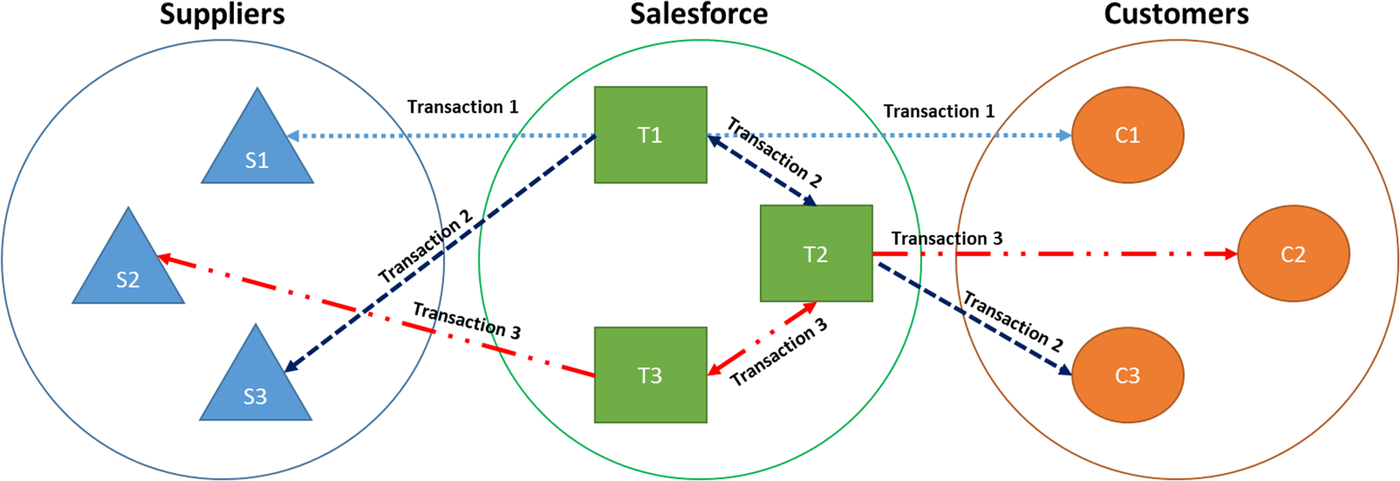
Illustration of the types of transactions on the trading platform
As depicted in Figure 1, salesperson T1 plays a dual role by acting at the behest of supplier S1 and customer C1 for Transaction 1. However, for Transaction 2, salesperson T1 represents supplier S3 and deals with salesperson T2, who represents customer C3. Thus, Transaction 2 creates a trading relationship between salesperson T1 and salesperson T2. For Transaction 3, salesperson T3 represents supplier S2 and deals with salesperson T2, who represents customer C2, creating a relationship between salesperson T3 and T2. Based on this illustration, three types of salespeople emerge. Salesperson T1 is a supplier and a customer representative, salesperson T2 is an exclusive customer representative, and salesperson T3 is an exclusive supplier representative.
A salesperson depends on other salespeople to execute a transaction in collaborative selling, thus creating interdependence. Through these transactions, salespeople engage with others and acquire information, improving their performance. Social network theory provides a robust lens to study such interactions from a structural perspective. A salesperson's position in such a network can endow them with social capital, improving their performance (Gonzalez et al., 2014). As salespeople transact with others on this network, we surmise that the social capital generated based on improved information flows and strengthening trust leads to improved performance. However, social capital accrued from the network is necessary but insufficient for improved performance. How a salesperson plans and executes a specific transaction is critical in how their social capital influences performance. Therefore, we propose that the impact of social capital on performance is impacted by the salesperson's transaction efficacy (Leigh et al., 2014).
As salespeople engage in transactions repeatedly in the market‐making process, they develop the ability to complete transactions effectively and efficiently, that is, gain transaction efficacy. Prior research has envisioned the role of self‐efficacy in sales performance (Krishnan et al., 2002), with recent demonstrations of techno‐efficacy or salesperson's belief in the use of technology tools to achieve their sales tasks (Rayburn et al., 2021). We extend these notions of efficacy to the level of the transaction. We quantify transaction efficacy using two distinct aspects: (1) a salesperson's external‐focused market expertise related to effectively managing customer needs and demands, that is, customer focus, and (2) a salesperson's internal process‐focused expertise that enables them to navigate the internal transaction process efficiently within the organization, that is, transaction variety. These two aspects of transaction efficacy (customer focus and transaction variety) capture a salesperson's capability and know‐how regarding transaction matchmaking.
Next, we summarize the literature concerning the role of social capital and then develop hypotheses concerning the impact of social capital and transaction efficacy on performance. Then, we elaborate on the moderating effects of transaction efficacy on the relationship between social capital and performance.
Theory and hypotheses
As opportunities to observe trading on exchange platforms continue to emerge, researchers have begun to rely on structural theories of social networks to investigate these phenomena (e.g., Dong et al., 2015). These studies have leveraged a rich tradition on networks’ structural properties and their influence on important outcomes such as innovation and interfirm relational characteristics. For example, interconnections in the network neighborhood and the level of involvement with those connections affect performance in the sales context (Ahearne et al., 2014; Bolander et al., 2015). While the structural stream in network research focuses on the overall patterns of relational ties, the relational stream of network research focuses on the similarity in characteristics of actors involved in the tie or individual‐level characteristics (for a review, see Kilduff & Brass, 2010). While complex dynamics of multiparty interactions in channel relationships have been theorized in other contexts, such as channels (e.g., Wuyts et al., 2004) and key account management (Gupta et al., 2019), these are yet to be applied to a two‐sided platform sales context.
We develop our theoretical framework by marrying the structural and relational network perspectives. We base our work on the extant literature in these two streams and propose how salesperson transaction efficacy might explain networks’ role in the sales context. We draw on existing research on the impact of social capital on sales performance, and we present a review of existing work in Table 1. As seen from the review table, in addition to aspects of social capital, various characteristics, such as competitive intelligence (Ahearne et al., 2013), market intelligence (Hall et al., 2017), political skill (Bolander et al., 2015), and functional backgrounds (Gupta et al., 2019), have been considered. Our key contribution is in studying the impact of the salesperson's social capital on performance, in addition to the direct and moderating impact of the salesperson's transaction efficacy on performance.
Literature review of studies in sales applying social network perspective
Salesperson social capital and performance
While calls to explore the role of networks have been raised (e.g., Buhman et al., 2005; Dong et al., 2015), there is a limited understanding of how networks influence the sales process precisely. The extant literature has investigated the role of sales advice networks (Ahearne et al., 2013), formal and informal networks (Gonzalez et al., 2014), and the influence of middle managers’ social capital (Ahearne et al., 2014) in the sales literature. Researchers have also focused on salespeople's social network ties with other salespeople, managers, or representatives from various functions within the firm (e.g., Ahearne et al., 2013; Gonzalez et al., 2014; Gupta et al., 2019). While self‐reported relationships capture the respondents’ perceptions, they do not necessarily capture the underlying network based on their actions. We capture the ties between salespeople using transaction records, which indicate a tangible relationship between the traders who have participated in the transaction and engaged with each other in a relational sense. Thus, we extend the sales literature by introducing a transaction‐based network and exploring its effects on salespeople's performance.
Relational ownership is one crucial issue in the trading context, such as the one we explore. A salesperson “owns” the relationship with either the supplier or customer within the firm as soon as a transaction occurs, thereby becoming the primary conduit for those external parties within the firm's trading structure. Due to this, other salespeople cannot use that supplier or sell to that customer without the focal salesperson's permission. Such a scenario is analogous to a real estate context. Other agents in the firm cannot poach customers or suppliers that the focal agent manages, as poaching of customers/suppliers is prohibited. Thus, successfully closing transactions may depend on other salespeople who have the “first right” on a particular customer or supplier, further cementing the importance of collaborating with other salespeople and the salesperson's network position.
Social capital accrued by a salesperson is assessed based on three aspects of a salesperson's position in the network, the direct connections of a focal salesperson in the network (embeddedness), the overall pattern of interconnections between salespeople (density), and the connection pattern among other salespeople in the focal salesperson's immediate neighborhood (structural holes). These three aspects of social networks have been conceptualized as the critical aspects of network structure (Gulati, 1999; Swaminathan & Moorman, 2009) and are highly relevant in our context. Figure A in the Supporting Information provides a visual representation of these three network characteristics and explains how these vary with the addition or deletion of connections between network participants.
Embeddedness
The access to network information is based on a salesperson's direct connections to other salespeople within the network and captures their level of involvement (Friedkin, 1991). The higher the embeddedness, the more efficiently the salesperson can access information from other salespeople (e.g., Ebrahim‐Khanjari et al., 2012). Embeddedness endows the salesperson with increased information reach (Wang et al., 2017), as they can directly access other salespeople, avoiding information distortion during information relay. Thus, a salesperson's embeddedness captures their information reach, enabling them to find suitable partners for executing transactions. It also reduces information search costs and signals quality to other salespeople, increasing their performance. Thus, we propose: The higher a salesperson's embeddedness, the higher the salesperson's performance.
Density
Salespersons are part of a community of connected salespeople, so it is important to look at the interconnectedness among salespeople in the focal salesperson's neighborhood, a notion captured by density. Density captures the extent to which the salesperson's network neighborhood is interconnected and provides a glimpse of how deeply salespeople are in the proximity of a focal salesperson bond with each other. A high level of interconnectedness in the salesperson's neighborhood indicates efficient information dissemination (Swaminathan & Moorman, 2009), elevates the ability to verify information (Gupta et al., 2019; Wang et al., 2017), and reduces the likelihood of opportunistic behavior (Antia & Frazier, 2001) because of the increased ease of enforcement of group norms and monitoring (Rowley et al., 2000). Thus, as density increases, it facilitates a more efficient and consistent information flow, building trust and improving efficiency, positively impacting salesperson performance. Therefore, we posit: The higher a salesperson's density is, the higher the salesperson's performance.
Structural holes
The presence of structural holes means that other salespeople in the network are connected to the focal salesperson but are not connected with each other. Thus, structural holes allow the focal salesperson to act as a connector, broker, and intermediary between salespeople. Such brokering facilitates information richness, where unique information flows may be accessible to the individual, bridging the structural hole. However, in a network where a salesperson is already brokering transactions between customers and suppliers, additional bridging activities might not be beneficial because they might create cognitive resource constraints on the salesperson. In addition, with increasing structural holes, salespeople may be seen as self‐serving and seeking individual benefits rather than collaborative outcomes, representing a dark side concern (Bizzi, 2013). The absence of structural holes implies network closure, where many salespeople are interconnected. Such closure facilitates equal access to information, consistency in information flows, reduced competition (e.g., Gulati & Gargiulo, 1999), and increased salesperson trust. Thus, structural holes indicate a lack of closure and trust (e.g., Coleman, 1988), likely decreasing a salesperson's performance. Stated formally: The higher a salesperson's structural holes, the lower the salesperson's performance.
Salesperson transaction efficacy and performance
Salespersons acquire knowledge through their interactions, activities, and professional experiences. Developing this knowledge improves the salesperson's tradecraft expertise, allowing them to achieve better outcomes (e.g., Boud et al., 1993). They acquire external knowledge and network handling expertise through ties with others in the network and transaction‐level knowledge (transaction efficacy) through the repeated market‐making activity of matching customers with suppliers. This transaction efficacy is significant in platform‐based operations where online communication is the predominant mechanism to resolve conflicts (e.g., Tsay & Agrawal, 2004). As the participant experience plays a critical role in the platform's success, it becomes imperative for salespeople to develop their technical/tradecraft know‐how and processes (e.g., Hong & Shao, 2020). We explore two perspectives of transaction efficacy: (1) customer focus, that is, external‐focused market expertise, and (2) transaction variety, that is, internal‐focused process expertise.
Customer focus
On platforms wherein salespeople can represent customers, suppliers, or both, salespeople may develop a preference for being a one‐sided specialist or two‐sided generalist. This type of orientation occurs in many two‐sided B2B markets (e.g., Chakravarty et al., 2014) and customer‐to‐customer markets (e.g., the residential real estate market). We gauge such orientations through the concept of customer focus. The higher the measure, the higher the salesperson's focus on representing customers relative to suppliers, that is, being more of a one‐sided specialist. Thus, customer focus captures the salesperson's market‐facing knowledge. Customer focus also relates to customer centricity, which has gained prominence in marketing and sales research and has been shown to improve firm performance (Habel et al., 2020; Lee et al., 2015). In a traditional sales context, research shows that salespeople who are flexible in taking the customer's perspective (Schmitz & Ganesan, 2014) and are customer‐oriented are often better at closing deals, developing long‐term relationships, and improving sales performance (Habel et al., 2020).
We expand on this principle and conceptualize customer focus as how a salesperson is well‐versed in executing the transaction from the customer side (e.g., Crecelius et al., 2019; Lee et al., 2015). A salesperson who frequently acts as a customer representative in a transaction becomes well‐versed in handling the customer side of the transaction. Customers have different needs and varying requirements regarding the quantity, quality, and timing of product delivery. A customer might also require various products from more than one supplier, requiring a diverse set of salespeople. While a supply‐side focus might allow the salesperson to develop product expertise, in a two‐sided B2B platform with highly commoditized products, we propose that this benefit is muted, as demand‐side expertise will be the key market‐making differentiator.
Specifically, we posit that a stronger customer focus will allow a salesperson to accumulate stronger customer knowledge stores (J. L. Johnson et al., 2004), providing them with expertise to meet customer needs and requirements. This learning is quite sticky and helps a salesperson provide better guidance and customer consultation. Overall, a salesperson will gain experiential knowledge by frequently handling the customer‐end of the transaction, will show more expertise in representing the customers in transactions, and be better able to anticipate the steps required to smoothen the trade (Schmitz & Ganesan, 2014), thereby improving performance. A higher customer focus gives the salesperson more expertise in anticipating customer needs and guiding their purchases. Thus: The higher a salesperson's customer focus is, the higher the salesperson's performance.
Transaction variety
Transaction variety indicates the salesperson's internal‐focused process expertise in their market‐making activities. In our context, transaction variety captures how a salesperson uses various transactional financing and contract types (i.e., payment terms, discounts) as a market‐maker. Such transactions may substantially differ from one another and capture a salesperson's knowledge about the complexity of the firm's internal contractual processes. For example, a salesperson might negotiate upfront payment terms for a particular deal or negotiate for longer payment terms and discounts. 3 On the one hand, such transaction variety represents the salesperson's deal‐making capabilities to match customer needs (i.e., offering credit to customers). On the other hand, it captures the complexity of managing customer relationships and the challenges of navigating internal operations with nontraditional transaction types.
Worryingly, sales research has established that as portfolio complexity and breadth increase, salesperson performance decreases due to added stress and reduced satisfaction (J. S. Johnson & Sohi, 2014). As transaction variety increases, the salesperson will also be more cognitively burdened by the intricacies of learning to construct a wide range of deals. Consequently, as transaction variety increases, a salesperson is also less likely to know each option in great detail (Quelch & David, 1994), leading to costly mistakes and rework, causing a reduction in their motivation in dealing with such an increase in transaction variety. An elevated transaction variety might indicate a salesperson who is too much of a generalist with little expertise in any given transaction type, affecting performance.
A salesperson's knowledge based on transaction variety might also be transient. This is because a salesperson is likely to encounter some transaction types infrequently. Moreover, the applicability of different payment terms aligned with the transaction process might change based on market conditions or customer influence/power, limiting the salesperson's direct benefits, that is, performance. These customers are potentially riskier to the salesperson if they require longer payment terms or a larger purchase discount. In other words, high transaction variety indicates a salesperson dealing with a challenging sales environment, as salespeople often resort to nontraditional transaction varieties to entice customer purchases. Increasing transaction variety can also lead to stretched‐out negotiations, lower customer satisfaction, and lower performance (e.g., Jones et al., 2005). Therefore, we propose The higher a salesperson's transaction variety is, the lower the salesperson's performance.
Interaction between social capital and transaction efficacy
Economic action is embedded in the social fabric that binds individuals; hence, economic outcomes are contingent on individuals’ characteristics and knowledge (Granovetter, 1985). Recent research has shown that characteristics of network actors will act as limiting factors in how they translate network capital into performance (e.g., Srinivasan et al., 2018). Thus, we surmise that a salesperson's transaction efficacy will influence the impact of a social network's structural characteristics on a salesperson's performance. As salespeople leverage their network to achieve better performance, they are subject to the advantages and constraints of the knowledge captured by their activities, that is, their transaction efficacy. While social capital endows a salesperson with information as a resource, its impact on performance is dependent on the salesperson's transaction efficacy, an individual characteristic.
There is a critical difference between the two aspects of transaction efficacy. Customer focus is expertise not readily identifiable or verifiable by other salespeople in the network, as traders do not publicly share their order books. In contrast, transaction variety is visible to salespeople connected to the focal salesperson directly but not to those not connected directly. Therefore, how these two aspects of transaction efficacy interact with network characteristics should vary. Further, as different aspects of the network facilitate interactions between salespeople differently, we expect the forces driving the interacting effect of transaction efficacy and social network position to operate differently, which we elaborate next.
Interaction of embeddedness, customer focus, and transaction variety
Embeddedness indicates a salesperson's information reach in the network, with more centrally located salespeople being privy to more information flows and more able to observe others (e.g., Grewal et al., 2006). Thus, such salespeople enjoy more information access with lower search costs (Gupta et al., 2019; Wang et al., 2017) while transacting on the network. Customer focus captures how a salesperson specializes in dealing with the customer side of the transaction and hence their external‐focused market expertise. As embeddedness increases in the salesperson network, increasing customer focus might amplify their one‐sided specialization.
While increasing customer focus and embeddedness might seem lucrative for a salesperson, it can also restrict the focal salesperson from realizing new opportunities through limited access to suppliers and new customers. As a salesperson's customer focus increases, they lose their ability to engage with other traders as the supply‐side provider and become more entrenched with a set customer base. Consequently, they also become efficient in managing the limited, redundant information. However, it would be more challenging to introduce new products/services (i.e., upselling and cross‐selling) to customers as there would be a lack of novel information flowing into the network, thereby muting the positive effects of embeddedness (e.g., Rindfleisch & Moorman, 2001).
Further, as customers are prized assets, a higher customer focus combined with increased embeddedness can lead to the perception of increased competitiveness and make social comparisons salient (Brown et al., 1998; Festinger, 1954), thereby increasing professional envy, reducing trust among salespeople, causing other salespeople to be more challenging while negotiating with the focal salesperson, or altogether avoid dealing with such a salesperson to alleviate their envy (Tai et al., 2012). Such social comparison, envy, perception of the competitive environment, and reduced trust likely undermine the collaborative nature of marketing‐making activities required in a salesperson trading network (Maloni & Benton, 2000). Therefore, we propose that as customer focus increases, that is, salespersons become increasingly focused on only one side of the exchange, the positive effect of embeddedness on performance is weakened.
Concerning transaction variety, the focal salesperson knows the intricacies of deal‐making and satisfying unique customer needs. However, as we argued earlier, increasing transaction variety also increases effort complexity, dependency, and risk, negatively impacting salesperson performance. Interestingly, this negative impact on salesperson performance can be attenuated with increasing embeddedness. As embeddedness increases, it represents the direct connectivity of the focal salesperson with other salespeople. Consequently, the focal salesperson's know‐how gathers attention, and they need to spend less effort finding collaboration opportunities. Their increasing internal transaction process‐focused expertise becomes more highlighted in the community, attracting other salespeople to the focal salesperson for their expertise, reducing the focal salesperson's time and effort, and garnering the focal salesperson's reputation of being a deal closer (Chakrabarty et al., 2010). In addition, other salespeople may want to lean on the know‐how of the focal salesperson as the expert in transaction variety, thereby bringing more complex deals to the focal salesperson and giving the focal salesperson more opportunities to engage with other salespeople and increasing their power in negotiations, thus improving the focal salesperson's overall performance. Thus, The positive effect of embeddedness on performance is weaker as customer focus increases. The positive effect of embeddedness on performance is stronger as transaction variety increases.
Interaction of density, customer focus, and transaction variety
Density captures the overlap among salespeople in the focal salesperson's network neighborhood (Swaminathan & Moorman, 2009). An increase in density represents increasing interconnections between the salespeople. While it results in the presence of redundant information, it facilitates more effortless information flow (Wang et al., 2017), enforcement of group norms, and development of interpersonal trust (Rindfleisch & Moorman, 2001). As salespeople communicate with each other more effectively in a dense network, there is a higher inherent trust that acts as the lynch‐pin, providing more credibility to a focal salesperson's knowledge and expertise based on higher customer focus and transaction variety and not just network position, thereby giving them more expertise power (Maloni & Benton, 2000). As salespeople in a dense network enjoy equal access to information flows, they attribute the expertise in dealing with customers and the transaction process of a focal salesperson to their self‐ability rather than to their advantageous network position. This, in turn, provides increasing returns for salesperson's differentiation based on transaction efficacy.
Increasing transaction efficacy combined with increasing density gives increasing options to the focal salesperson to choose other salespeople as collaborative partners, opening up opportunities as market‐makers. Such increased availability of trading partners and transaction efficacy should allow a focal salesperson to appropriate a more significant portion of the pie created in the transaction based on the “equity principle” (Jap, 2001), thereby increasing their performance. Therefore, we propose the following: The positive effect of density on performance is stronger as customer focus increases. The positive effect of density on performance is stronger as transaction variety increases.
Interaction of structural holes, customer focus, and transaction variety
On the one hand, structural holes in a salesperson's network capture the abundance of opportunities to enjoy exclusive information access benefits based on nonredundant and unique information. On the other hand, an increasing presence of structural holes also represents a need for closure near the focal salesperson representing noncohesive subgroups low in trust due to limited exposure (Ahuja, 2000; Zaheer & Bell, 2005). As stated earlier, increasing structural holes in the salesperson's neighborhood represent a lack of trust that undermines collaboration, reduces information flows, and reduces salesperson performance. As the salesperson's customer focus and knowledge about transaction variety increases, other salespeople not directly connected to the focal salesperson due to more structural holes have no way of knowing about such expertise first‐hand. If they do get to know through another intermediary, they will be skeptical and wary of the focal salesperson's expertise due to a lack of trust and may discount the focal salesperson's expertise.
As we argued earlier, transaction variety is directly observable to other salespeople in the network, whereas customer focus is not. Given this, as customer focus increases, it captures the one‐sided specialist positioning of a salesperson that is not easily verifiable by other salespeople. With increasing customer focus combined with increased structural holes, the trust deficit among salespeople should amplify, as they attribute the knowledge and performance gains of a salesperson to their advantageous network position (Kwon et al., 2020) rather than their customer focus, increasing professional envy and jealousy and amplifying the negative effect of structural holes on performance.
When salespeople exhibit high transaction variety, they have taken on more complex transactions and selling environments. Unfortunately, when combined with increasing structural holes, it takes away the opportunity of other salespeople to observe the focal salesperson as the process expert, preventing them from building a persona that could have helped overcome the trust deficit based on the presence of the structural hole. In addition, they might negatively attribute the focal salesperson's expertise based on transaction efficacy to exploiting their advantageous network position (Kwon et al., 2020), further undermining trust, creating professional envy, and exacerbating the adverse effects of structural holes on the salesperson's performance. Therefore, we propose that The negative effect of structural holes on performance is stronger as customer focus increases. The negative effect of structural holes on performance is stronger as transaction variety increases.
METHODOLOGY
Data
We obtained the data for this study from a large B2B commodity trading firm specializing in residential construction materials: lumber, panel products, seconds and surplus, fencing, and shingles, among others. The firm has more than $100 million in annual sales and services, 3000 customers, and 2000 suppliers across North America. We obtained access to internal sales invoices for 3 years, giving us 25,985 completed transactions. The average profit earned by a trader in a quarter is $268,780. 4 During this period, the firm employed a total of 74 traders. Across the 3 years, the salespeople serviced 981 suppliers and 1611 customers. Each sales invoice provided us with critical information concerning the nature of the transaction that allowed us to develop our measures.
We obtained three critical aspects of every transaction: product‐level characteristics, trader‐level characteristics, and financial characteristics. Regarding product characteristics, for each transaction, we identified the product category, quantity sold, total sales price, total profit (for the specific transaction), supplier identification, and the end customer's identification. Next, regarding salesperson‐level characteristics, each invoice identified the buy‐side salesperson (supplier representative) and the sell‐side salesperson (end customer‐side representative). For a lone‐wolf transaction, these fields are listed as the same individual. Last, each transaction included details on the specific payment terms negotiated between the customer and the salesperson and standard credit terms 5 .
Construction of salesperson networks
Our observation window spanned 36 months. Using each invoice in the sample, we identified ties among two salespeople on either side of the transaction. When the same salesperson was on both sides of the transaction, there was no network tie, and the transaction would contribute to a self‐tie. Then, we formed rolling time windows of 3 months each across the sample observation window of 36 months. This approach allows us to capture the notion that the ties, once created, continue to be active links of information and act as relational binds (Tuli et al., 2010) shortly, but at the same time, it also allows us to account for the changes in social capital over time. Thus, for constructing the network of transaction ties, data window1 comprises month1, month2, and month3, and data window2 comprises month2, month3, and month4. Repeating the procedure gave us 34 time windows of network data. We calculated the social capital measures for the 34 overlapping time windows. 6 See Figure B in the Supporting Information for a visual illustration of the transaction network.
Variable measures
Salesperson performance
We capture salesperson performance as the focal salesperson's profit in thousands of dollars aggregated quarterly. While we use the term profit, in essence, this is the arbitrage gained by the salesperson in market‐making, that is, exploiting the difference between the sell side and the buy side. It is important to note that profit for a transaction can be negative, as salespeople may sell inventory that they have taken possession of, for a loss, in market‐making.
Embeddedness
We use degree centrality to capture the full impact of influence and information reach in the network (Gonzalez et al., 2014; Grewal et al., 2006). Following extant research (e.g., Swaminathan & Moorman, 2009), we measure embeddedness (EM) as the number of salespeople the focal salesperson has engaged with on the platform during the 3 months.
Density
The measure of density captures the extent to which a salesperson's neighborhood is interconnected or ties those salespeople connected with a focal salesperson have with one another (Gonzalez et al., 2014; Gupta et al., 2019). We estimate network density (DE) as the ratio of the number of ties in a salesperson's network to the maximum possible number of ties: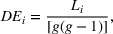
Structural holes
Following a standard approach, we operationalize structural holes through the constraint measure (Gonzalez et al., 2014; Mallapragada et al., 2012), such that a higher constraint indicates an absence of structural holes. The higher the constraint is, the fewer the structural holes (Burt, 1992) and the lower the opportunity to develop new relationships. We measure structural holes as follows: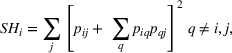
Customer focus and transaction variety
To calculate customer focus, we first count the number of transactions the salesperson executed as a customer representative (CT_CUS_TRN) and then as a supplier representative (CT_SUP_TRN). Then, we calculate customer focus (CF) as the following ratio:
We measure transaction variety (TV) as the number of distinct types of payment contracts executed by salespeople until the focal period. We use the number of contracts a salesperson has relied on to gauge their know‐how about executing deals on the platform.
Control variables
We included several control variables in the model to account for potential alternative explanations. First, we accounted for salesperson experience by including the salesperson's work experience duration from their profiles measured in days. Next, several salespeople preferred to act as lone wolves by working on both the customer and the supplier side without collaborating with other salespeople. We labeled this “self‐orientation” and accounted for this behavior. We measured “self‐orientation” as the proportion of transactions wherein the salesperson acted as a lone wolf. Finally, salespeople may handle multiple products while transacting, which might affect their performance. To account for this, we included the number of products the salesperson has traded over the 3‐month window to control any product variety's impact.
We report descriptive statistics of our data sample in Table 2.
Correlations, means, and standard deviations
a('000) indicates that the reported data for profit are in the thousands. Unit of analysis is trader‐quarter.
Model specification
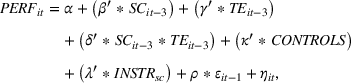
We specify the impact of the theorized variables on salesperson performance as follows: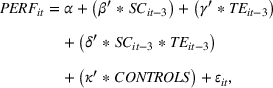


Next, we recognize that there could be persistence in the dependent variable—performance as gauged through profit. However, as profits from one period do not have a conceptual linkage with profits from the previous period, we model this through an autoregressive error term. Thus, we specify the error 


Next, while we account for time‐invariant unobserved heterogeneity across salespeople using a fixed‐effects estimation, we acknowledge that time‐varying unobservables could be correlated with the social capital and transaction efficacy variables, thereby creating a bias in the coefficients. We follow recent applications (e.g., Atefi et al., 2018; Datta et al., 2017; Gielens et al., 2018) that account for the potential endogeneity bias using Gaussian copulas (Park & Gupta, 2012) and use them in our estimation. Compared to classical instrument‐based approaches that partial out exogenous variation in the endogenous regressors, the copula approach uses a control function that specifies the endogenous regressor and the error as being jointly distributed. The endogenous regressor is assumed to have an exogenous component that is nonnormally distributed, conceptually similar to the “exclusion” restriction in the instrumental variable approach. Given that the error is normally distributed, the variation due to the endogenous regressor can only be identified if the regressor is nonnormally distributed (Papies et al., 2017). To check for this, we used the Shapiro–Wilk and Shapiro–Francia tests to check normality. Both tests rejected the null hypothesis that the focal variable was normally distributed (see Table A in the Supporting Information for details).
We constructed the copulas for each of the social capital variables (embeddedness, density, and structural holes) using the approach specified in Park and Gupta (2012) as follows:






RESULTS
Model selection
We estimated alternative models for benchmarking our model specification. First, we estimated Equation (4) as a standalone equation with a fixed and random‐effects specification. After this, a Hausman test indicated that a fixed‐effects specification has a better fit. Following this, we estimated all the equations using a fixed‐effects specification.
We began with a baseline model in which we only included the control variables (M1). Then, we estimated a second model in which we added the theoretical variables (M2). We then estimated the complete model (M3) as specified in Equation 4, including the interactions between social capital and transaction efficacy. Our primary model lagged the network capital measures by three months (one quarter) before using them as regressors in Equation (4). We argued that a lag period of 3 months makes the most sense, as salespeople often experience performance reviews every quarter. Any changes they make to how they function would only impact their performance at the end of the quarter from a practical perspective.
Further, as the average number of transactions per salesperson over 3 years was 17.43 (approximately one every 2 months), a shorter period than a quarter would not pick up sufficient variation in the social capital measures, which are calibrated based on network structure. However, as there is no traditional way to establish that a 3‐month lag makes perfect sense, we also relied on empirical data to validate this feature of the empirical model. Consequently, we estimated Equation (4) using a 1‐month and 2‐month lag of the social capital measures. Model fit criteria indicated that model M3 (Bayesian Information Criterion (BIC) = 12,304.84) with a 3‐month lag outperformed models M1 (BIC = 15,545.86), M2 (BIC = 12,293.66), M4 (BIC = 13,697.60), and M5 (BIC = 12,876.63; see Table B in the Supporting Information). Next, we discuss the results from model M3, the estimates of which are presented in Table 3.
Impact of social capital and transaction efficacy on salesperson performance with first‐order autoregressive error
*p < 0.10, **p < 0.05, ***p < 0.01; one‐tailed hypothesis testing.
Hypotheses testing
Table 3 presents the results from the fixed‐effects model presented in Equation (4). We find that embeddedness (β = 1.37, p < 0.01) and density (β = 315.88, p < 0.01) have a positive effect on trader's performance, whereas the presence of structural holes has a negative effect on salesperson performance (β = −390.99, p < 0.01), supporting H1–H3. For the impact of transaction efficacy on salesperson performance, we find support for the positive main effect of customer focus (β = 471.31, p < 0.01), confirming H4. Concerning the impact of transaction variety on performance, H5 is not supported (β = −20.77, p > 0.10); therefore, we cannot confirm a negative main effect of transaction variety.
We proposed the interaction effects between social capital and transaction efficacy in H6a,b‐‐H8a,b. With respect to embeddedness and transaction efficacy, we find that customer focus (β =−2.48, p < 0.05) and transaction variety (β = 0.15, p < 0.01) moderated the impact of embeddedness, confirming H6a and H6b. For interactions involving density, we find that only H7a for the interaction with customer focus is supported (β = 5110.87, p < 0.01), but not transaction variety (H7b). Concerning interactions with structural holes, we find support for H8a for the interaction with customer focus (β = −4443.93, p < 0.01) but not for transaction variety (H8b).
With respect to control variables, we find that experience (β = −0.15, p < 0.01) and product expertise (β = 5.93, p < 0.10) have statistically significant effects on salesperson's performance.
Robustness checks
For the primary model, we treated the salesperson's persistent performance as reflected in a first‐order autoregressive structure for the error term of Equation (4). In doing so, we assumed that any carryover in the salesperson's performance was not of interest, as the performance was gauged through profit, not sales. As we account for time‐invariant unobserved heterogeneity at the salesperson level with a fixed effect and capture time‐varying determinants of performance with the endogenous theoretical variables, any leftover variation was treated as an error.
As an alternative formulation for robustness analysis, we estimated a model by including the lagged dependent variable as a regressor, thus removing the autocorrelation in the error term. This would imply that past performance would be a predictor of future performance. However, the inclusion of the lagged dependent variable as an additional regressor, while soaking up the impact of any remaining time‐varying unobservables, introduces endogeneity bias as the lagged regressor will be correlated with the error term. Following the standard approach, we instrumented lagged performance with its second difference and estimated a two‐stage least squares model (e.g., Tuli et al., 2010). The results from this model are presented in Table 4. The results about the theoretical variables remain consistent when compared with those in the primary approach.
Impact of social capital and transaction efficacy on salesperson performance (lagged performance as regressor)
*p < 0.10, **p < 0.05, ***p < 0.01; one‐tailed hypothesis testing.
As an additional caveat, we also considered product expertise as part of transaction efficacy, capturing the experience of a salesperson in dealing with different product types and categories. We specified interactions between product expertise and the three network characteristics to check whether it moderates the relationship between social capital and performance. We did not find support for any of these interactions, and our hypothesized model's results remained consistent. Perhaps the reason for such a finding is that in our context of a B2B commodity firm, where products are commodities and are not differentiated, product expertise does not provide an additional benefit to a salesperson when acting as a market‐maker.
CONCLUSION
Two‐sided B2B markets are becoming increasingly common with the rise of inside sales strategies and technology platforms (Borah et al., 2021). In these contexts, salespeople facilitate market‐making by matching customers and suppliers by working with and through an interconnected network of salespeople. Given this, we explore a salesperson's social capital role, or “who they know,” combined with their transaction efficacy, or “what they do” in driving performance. We surmise that the effect of social capital on performance is moderated by transaction efficacy. Transaction efficacy allows us to account for salesperson expertise on customers and contractual processes. Our results indicate an intriguing interplay between social capital and transaction efficacy that explains differences in salesperson performance. While social capital captures the network‐side information gathering by the salesperson through who they know, transaction efficacy captures the salesperson's tradecraft and expertise in what they do. Therefore, joint consideration of social capital and transaction efficacy allows us to show that network and individual characteristics have a complex interplay. While social capital provides salespeople access to resources, transaction efficacy moderates how salespeople benefit from social capital, in addition to its effect on performance.
Theoretical contributions
Our research contributes to two streams of literature: sales and buyer–seller relationships. We contribute to the emerging literature on how social networks might influence performance in the sales domain. While the main effect of social capital is well established, the factors that might mitigate or amplify how social capital translates into performance remain underresearched. We investigate and resolve the tension in the competing influences of our two forces of social capital and transactional efficacy. In this way, we contribute to the broader networking capabilities literature by demonstrating the complex interplay between their social and domain capabilities. We characterize the former, with a multidimensional view of social capital, as an information flow process and the latter, with transaction efficacy, characterized as market and process expertise. Such consideration allows us to combine the structural network perspective with an individual perspective in our conceptualization, establishing the importance of an individual salesperson's characteristics. Two salespeople having similar structural network positions might derive different outcomes based on their transaction efficacy. More interestingly, we find that what they do can limit and enhance the relationship between who they know and their performance.
We also enrich the extant sales literature by exploring a unique platform‐based network environment of salespeople. Herein, we conceptualize the relational network as the operational environment in which the transactions come to fruition and, as a result, also incorporate transaction efficacy as a moderating influence on network effects (Burt, 2000). We conceptualize transaction efficacy as external market‐focused expertise, captured by customer focus, and internal process‐focused expertise, captured by transaction variety. Our results show that the moderating effect of transaction efficacy, as captured by customer focus and transaction variety, varies based on different network characteristics under consideration. Such simultaneous consideration of external market‐focused expertise and internal process‐focused expertise allows us to compare the relative and combined importance of these two types of salesperson expertise. While customer focus is important, especially in dynamic markets, transaction variety addresses the crucial importance of the internal process‐focused expertise of a salesperson when it comes to closing deals and engaging with other salespeople in their organization. Both elements are essential to a salesperson's success. Additionally, while customer focus benefits the focal salesperson, transaction variety, in contrast, benefits both the focal trader and the other salespeople in their network, providing a unique benefit to the entire organization.
Furthermore, our results shed light on a more complex role of social networks than that proposed in prior literature. Calibrating changes to network structure over multiple periods allows us to account for both stickiness and deterioration of social capital over time and capture the interplay between social capital and transaction efficacy. By coding network structure changes over time, we move beyond the dominant approach of using static snapshots of networks in organizational research and answer calls to expand network research (e.g., Gupta & Saboo, 2021). Accounting for changes in the network also allows us to model the interdependencies among salespeople and explore the interplay of social capital and transaction efficacy. Based on these results, social capital can be both a boon and a bane based on the context.
Concerning our contribution to research on buyer–seller relationships, we show that the complex structure of multiparty interactions on B2B platform‐based trading markets creates new opportunities for studying buyer–seller relationships (e.g., Wuyts et al., 2004). As large‐scale two‐sided platforms take hold in many industries, automated algorithms are increasingly the mainstay for managing transactions. However, there are many B2B contexts (e.g., Chakravarty et al., 2014), such as ours, where salespeople bring value beyond automated buyer–seller matching. Two‐sided platforms require salespeople to manage relationships on the buyer and the customer side, resulting in a complex set of previously unexplored relationships. As the network of transactions is more complicated in selling scenarios such as ours, conventional theories of mutual interdependence among parties may not be sufficient to develop a nuanced view of the context (Gupta et al., 2019). We build on existing theories of social capital to show that by capturing the overall characteristics of the network, we could model these interdependencies more accurately. While social capital has its benefits (shortcomings) for a salesperson, these benefits (shortcomings) can be further amplified (controlled) based on the salesperson's relationship portfolio with customers or suppliers. Thus, we enrichen the perspective of buyer–seller relationship management in the context of B2B platforms and demonstrate the importance of salespeople managing their complete set of stakeholders: customers, suppliers, and other salespeople.
Managerial implications
Our findings offer several vital insights into sales management and operations. Sales managers must foster an intrafirm climate that promotes teamwork, internal development, and mentorship for their salesforce. Our results show that customer focus and transaction variety play an essential role in translating the benefits of a strong network. Thus, developing incentive structures (Bommaraju & Hohenberg, 2018) that reward partnership and diverse collaboration between salespeople would be recommended. Additionally, fostering a social environment where salespeople can come together outside their work and get to know each other can develop bonds that facilitate collaboration (Gupta et al., 2019) and increase network density and embeddedness. Such an increase in network density is especially beneficial for salespeople with a higher customer focus, enabling them to enjoy higher profits. Further, collaboration opportunities outside the workplace can help salespeople develop gratitude toward other salespeople who help them, thereby giving rise to cognition‐based trust (Badrinarayanan et al., 2020).
However, an intriguing finding from our research is that this organizational climate needs to be constructed with care to ensure a salesperson's development if transaction efficacy needs to be improved. Salespeople only work with key relational partners they might relate to, and having structural holes in their neighborhood may negatively affect the salesperson's performance output. Such a negative impact is further exacerbated when the salesperson's transaction efficacy increases. We caution managers that there are two possible reasons for the amplifying effect of high structural holes and transaction efficacy. First, envy and jealousy could start hurting the collaborative nature of engagement. Another possible reason is the excessive cognitive load of managing too many relationships (Gupta et al., 2019) due to the simultaneous brokerage of suppliers, customers, and other salespeople on two‐sided platforms, suggesting that too much brokerage is bad for salesperson performance. Further, a market‐making context that exhibits a dense network structure seems to provide a strong basis of trust on which salespeople can freely engage, taking advantage of each other's expertise and providing relational support.
Therefore, sales managers need to carefully monitor the nature of networks in their organization while not losing sight of an individual salesperson's progress to affect the individual positively. As with any other network context, having a macro‐view of network structure while not losing focus on the micro‐view of individual salespeople is critically important. One suggestion for sales managers is to develop a formal mentorship program with highly embedded salespeople in the trader network. These individuals should be incentivized to build and nurture the intrafirm sales network, especially fostering collaborative relationships. Such an approach will mitigate the potential ill‐effects of competition between salespeople and encourage them to be more cooperative in facilitating transactions. Another suggestion is that managers may be better served by creating informal team structures with highly embedded salespeople forming the center instead of a completely open sales floor. Such a structure can help drive the performance of salespeople who are grouped with the highly embedded salesperson, thereby improving the entire group's performance.
From a salesperson's perspective, our results highlight the benefits and dangers of operating in scenarios that provide a context for network building. Our results concerning transaction efficacy highlight the importance of domain expertise above and beyond the role of building networks. Salespeople need to learn to manage their internal transaction toolkit and their skills in navigating their intrafirm network. Therefore, salespeople cannot hope to obtain a free ride based on their social capital; they need the domain expertise captured by transaction efficacy to power their way through this intrafirm network.
Limitations and directions for future research
As with any research, our study has several limitations, which we believe offer opportunities for future research. We focused on transaction networks instead of those based on advice or friendship. Transaction networks are grounded in tangible engagements and get around the issues arising from perceptions and weak relationships, common in advice and friendship networks. However, as transaction networks are purely based on economic engagement, they may not be entirely conducive to fostering social engagement, particularly in scenarios where the transactions are small or of limited engagement. While these issues do not characterize the transactions in our sample, we believe that collecting complementary data related to social relationships might help shed additional insight into how other social relations might play a role in transaction networks.
We focused on one B2B market wherein all the salespeople operated on one platform and interacted with the universe of buyers and sellers. This allowed us to control the peculiarities of the macro‐environment but limits the generalizability of our findings to some extent. We take solace in the notion that many B2B markets are structured very similarly to ours when facilitating transactions (e.g., Borah et al., 2021; Chakravarty et al., 2014). Nevertheless, we note that a more comprehensive study of other platforms might be warranted. Moreover, as new forms of marketing organizations take shape, it becomes imperative to study how the temporal dynamics of forming and dissolving ties in networks might be affected (e.g., Gupta & Saboo, 2021; Wathne et al., 2018). Additionally, as salespeople in our B2B context dealt with commoditized products where product expertise offered little differentiated value, perhaps more work is needed to explore more complex selling scenarios where salespeople deal in the sales of specialized products and services.
As with any observational research, we cannot make any causal inferences about the role of networks in organizational settings. Future research could study policy changes to identify exogenous variation in key network characteristics and quantify the causal impact of networks on performance. For example, such opportunities might arise in multi‐national companies where foreign governments often impose additional rules on how local subsidiaries might operate when managing B2B relationships (e.g., Grewal et al., 2013). Finally, we believe that B2B platforms are here to remain a dominant organizational mode and that complex relational structures will be ubiquitous due to their importance and flexibility on these platforms. We hope that our research offers inspiration to scholars interested in this domain.
Footnotes
1
Self‐efficacy, an individual's belief that he/she is capable of performing a task and achieving enhanced outcomes (Bandura,  ), can be domain‐specific that is concentrated on certain particular areas of activity (e.g., Bandura, 1997; Schmitz & Ganesan, 2014). Relevant domain‐specific self‐efficacy has been shown to play a role in salesperson performance (e.g., Schmitz & Ganesan, 2014). Extant treatments pivot on self‐efficacy as an internal psychological trait that individuals bring to the job or situation (e.g., Bandura, 1997). Here, we depart from these perspectives and advance the notion of a domain‐specific efficacy that derives from an individual's domain‐specific experiential learning.
2
Compared to a typical real estate agent that works on commission of the sale but does not actually purchase the property from the sellers, but simply acts as an agent working on behalf of the seller.
3
A B2B standard is the classic 1%10 net 30, where the customer receives a 1% discount if the invoice is fully paid within the first 10 days. If not, the balance is due within 30. Individual traders manage these specific payment terms regarding duration (30, 60, 90 days, etc.) or discount (1% to 3% is usually most common).
4
As an illustration, consider a transaction where the product is purchased from a raw materials supplier for $100 and then eventually sold to a customer for $112. Total profit, or margin, would be $12. If it was a transaction where the salesperson represented both parties, then the profit accrues to them in total, that is, $12 goes to that salesperson. However, if it is a collaborative sale, the profit is split between the two salespeople (e.g., $8 to the customer‐side salesperson, and $4 to the supplier‐side salesperson).
5
Details about the entire set of credit terms are available from the authors upon request.
6
We subsequently also test time windows that are nonoverlapping, that is, data window1 comprises months 1–3, data window 2 comprises months 4–6, and so forth. The results were consistent across the two specifications, but given the strong theoretical basis for why the overlapping windows reflect the persistent role of network ties and social capital, we used the overlapping windows in our primary analysis.
7
We capture customer focus as customer‐side specialist expertise of a salesperson, as it represents their differentiation in the context of B2B two‐sided platforms as supplier side emphasis might be easily discounted as products are commoditized. Therefore, we create a ratio measure instead of a count measure as a ratio measure represents a stronger test of our theory. Count measure will only capture customer‐sided or supplier‐sided expertise and would not allow us to account for the relative importance. We thank an anonymous reviewer for the suggestion.
8
As an alternative, we specify a model where we include lagged effect of performance instead of a serially correlated disturbance term, the results were consistent.