






Abstract
We study the impact of three well‐known inventory allocation mechanisms, including proportional, linear, and uniform, on the ordering behavior of retailers serviced from a central distribution center. Based on the allocation mechanism, retailers may have an incentive to adjust (either inflate or deflate) their orders to gain a more favorable allocation, a behavior that may reduce allocation efficiency from a system perspective. We find that while all three mechanisms are centrally optimal under common knowledge of local demands, only the uniform allocation incentivizes retailers to set orders truthfully. Consistent with theory, our experimental results show that using proportional or linear allocation results in larger and more frequent order adjustments, with the degree of strategic ordering being largest under the linear mechanism. Across all mechanisms, order adjustments decrease both allocation efficiency and local retail profits. While uniform allocation results in smaller and less frequent adjustments overall, it may not be feasible to implement in more general settings. Hence, we propose and test a new mechanism, tailored uniform, that leverages the uniform principle while overcoming some practical limitations. It provides more flexibility by allowing for differences in the allocated quantities among retailers, while still providing no incentive for order manipulation. The tailored uniform mechanism performs similarly to uniform in terms of order adjustments, and further increases allocation efficiency when retailers have heterogeneous demands.
Keywords
Introduction
Manufacturers, central purchasing departments, and digital platforms often pool inventory to service downstream demand needs at their internal retail or fulfillment locations. Inventory pooling combined with centralized procurement has the well‐known benefits of lower product acquisition and distribution costs, and lower inventory investment through reduced safety stock levels. However, a key problem for any integrated distribution system is how to allocate pooled inventory across downstream partners when the quantity available either exceeds or falls short of total demand. For example, one of the world's largest dairy companies, originated as a cooperative of farmers in Western Europe, currently services a mix of own and retailer specific brands of fresh dairy products. These products are distributed mainly through centralized, brand specific distribution centers which pool inventory to service local retailers. As retailers observe local market demand, each places orders to the distributor who attempts to allocate inventory accordingly. The distributor struggles to know what allocation scheme is best when there is a mismatch between order requests and available supply. Should they allocate proportionally to each retailer's order, equally split any shortages or excess inventory, or match order quantities for some retailers but not others?
This allocation problem arises in a variety of industries, including fashion apparel, consumer electronics, semiconductor manufacturing, and automotive, where demand uncertainty is high, lead times are long, and inventory is staged at a central distribution center (DC) before being deployed to internal retail sites once demand needs are known. The choice of allocation method becomes particularly challenging when the central distributor (often in concert with a demand planner or procurement manager) must rely on downstream partners to self‐report local demand needs. While information asymmetry among different firms within a supply chain is well documented, similar issues also arise within a firm (Anand and Mendelson 1997). Although some demand information, such as historical sales and future promotion plans, might be more visible within a firm, important information (including interactions with customers, information on new accounts, local trends, and unexpected or recently canceled orders) may continue be difficult for a central planner to see (Oliva and Watson 2011). To support truthful sharing of information, it is important to understand how rules of engagement, such as an inventory allocation mechanism, may incentivize unintended behavior. This concern was raised by the fresh dairy company that motivated our research. More specifically, their current approach of allocating inventory in strict proportion to retail orders might be encouraging retailers to order more or less than their true needs. The perishable nature of their products and low profit margins inherent to their industry make lateral transshipments infeasible, putting additional pressure on allocating inventory appropriately upfront. When there is information asymmetry among supply chain levels, how does the choice of allocation mechanism influence incentives and managers’ ordering behavior? Do some mechanisms inadvertently encourage downstream managers to misreport their demand needs while others do not?
These questions have been explored analytically in the context of decentralized supply chains where the distributor and retailers operate as separate firms. Using game theoretic models, Cachon and Lariviere (1999b,c) show that a broad class of capacity allocation mechanisms can induce retailers to inflate their orders when shortage is anticipated in order to gain a more favorable allocation. Less is known about ordering behavior in integrated distribution systems, such as the dairy cooperative, where the distribution center and downstream retail locations are managed internally. In such integrated systems the total cost, both underage and overage, is shared among members (as e.g., in Fiestras‐Janeiro et al. 2011, Zhang et al. 2018). Furthermore, such distribution systems often follow a “push” strategy where all inventory is allocated downward to the retail locations (e.g., Lim et al. (2020) examine such a system used by a major online fashion retailer in Asia). However, because the central planner does not have access to local demand information, they must rely on retail orders to inform his allocation decision (see also Özen et al. 2008). This implies the possibility that retailers may receive either less or more than they ordered, depending on the total quantity of order requests relative to available inventory (as in Xu et al. 2020), and hence, may have an incentive to either inflate or deflate their needs. Compared with interactions across firms, the possibility of retailers receiving more than they requested may seem somewhat surprising. However, this is a direct implication of using a push strategy, and it is commonly seen when excess inventory is more effectively handled at the local level (e.g., through markdowns or local disposition options) or when there is no opportunity to keep stock at the location where the allocation of joint orders take place (e.g., an online platform without physical warehouses).
Recent experimental evidence in the traditional context of capacity rationing suggest strategic ordering is less evasive than standard economic theory predicts (Chen and Zhao 2015, Chen et al. 2012, Cui and Zhang 2017). Motivated by these results, we take a similar behavioral view of the allocation problem within an integrated distribution system. It is possible that an integrated system may incentivize less order manipulation as retailers balance the risk of experiencing overage and underage by neither inflating nor deflating their demand needs. On the other hand, retailers may be less able to anticipate their allocation quantity as the discrepancy between what they order and receive could go in either direction. This increased uncertainty could cause the effect of allocation mechanisms on ordering behavior to differ from that seen in prior behavioral research.
Within this context, we consider three allocation mechanisms that are relevant for integrated distribution systems:
We first develop an analytical model that describes these settings and show that, in the special case of common demand knowledge, all three allocation mechanisms maximize total profit. However, under information asymmetry, only the uniform mechanism incentivizes retailers to order their known demand. Based on these theoretical results, we generate predictions that we test using behavioral experiments to assess the magnitude and impact of order manipulation on allocation efficiency under each mechanism. We find that allocation mechanisms have a significant impact on both the likelihood and magnitude of retailers’ order deviations from true demand. Consistent with theory, the uniform allocation mechanism increases the probability that retailers order their true needs and results in higher system profits. The proportional and linear mechanisms result in larger misreporting, with the degree of misreporting being largest under the linear mechanism. Our experimental results additionally suggest that retailers do not benefit from being strategic under the proportional and the linear mechanisms, as their own profits are also reduced. Identified behavioral regularities, such as ordering being influenced by prior outcomes (e.g., the deviation between quantity ordered and received) and order manipulation not being directionally in line with the probability of facing inventory shortage vs. surplus (based on one's demand), remain consistent across all three allocation mechanisms.
Motivated by these results, and because the simple uniform mechanism may not be desirable when retailers are heterogeneous, we propose a new,
The rest of the paper is organized as follows. After reviewing the related literature (section 2), we introduce a normative model that forms the basis of our hypotheses (section 3). The design of the behavioral experiment is next presented, results are analyzed and implications for theory are discovered (section 4). We then extend our analysis to ad hoc explore behavioral regularities across mechanisms (section 5) and introduce a tailored application of the uniform allocation principle (section 6). Last, we offer final conclusions (section 7).
Literature Review
Within the supply chain management literature, our work is related to two main streams: capacity allocation and information sharing. We first review the literature on capacity allocation mechanisms and ordering decisions, considering both analytical and experimental studies. We then turn to literature related to information sharing in supply chains, focusing on research exploring the associated behavioral issues.
The issue of capacity rationing in a supply chain is well‐studied in the analytical supply chain literature. Cachon and Lariviere (1999c,a) examine how capacity allocation mechanisms affect retailers’ orders and supply chain performance when the supplier has limited capacity and retailers have private information about their optimal stocking levels. They find that truth telling is not an equilibrium under any Pareto allocation mechanism (e.g., proportional or linear), but that a manipulable mechanism (not truth inducing) may lead to higher capacity and larger profits for all supply chain members. Hall and Liu (2010) extend this work to multiple products, considering joint capacity allocation and production scheduling decisions. Cachon and Lariviere (1999b), in a two period setting with two retailers, find that linking a retailer's current allocation to his previous sales rate (“turn and earn” allocation) does not guarantee coordination. Retailers may sell more, but this may not translate to higher profits in equilibrium. Lu and Lariviere (2012) extend this analysis to an infinite horizon game with multiple retailers and find a richer set of equilibria. “Turn and earn” allocation in this case may reduce order variability seen by the supplier, as retailers absorb more local demand fluctuations. More recently, Chen and Thomas (2018) investigate the impact of inventory allocation mechanisms (e.g., proportional, linear, uniform and greedy) on service‐level agreement compliance in a multiple‐retailer, finite‐horizon setting, but assume that retailers’ orders are not affected by the allocation mechanism. Karabuk and Wu (2005) study the capacity allocation problem within a firm and explore bonus payments schemes that align incentives. More recently, Xu et al. (2020) investigate the optimal ordering and inventory reallocation decisions of a platform based on retailer demand information sharing, and propose a punishment mechanism to encourage truthful sharing. We focus instead on the potential of allocation mechanisms as a tool to align incentives and encourage retailers to report their true demands. Liu (2012), Cho and Tang (2014), and Li et al. (2017) study equilibrium predictions of a capacity allocation game when retailers do not operate in independent markets but rather compete for demand.
In contrast to this theoretical literature, there is limited work that explicitly considers and experimentally estimates behavioral factors in an allocation game. Chen et al. (2012) study whether retailers are perfect optimizers who can infer what course of action their opponents will choose (i.e., follow Nash equilibrium assumptions) or exhibit bounded rationality. They consider the case of complete information, capacity shortage, known demands, and proportional allocation. To maximize profit in this setting, a retailer should order the maximum allowed quantity. However, experimental results reveal that retailers do not inflate orders this much. A model of bounded rationality is presented, based on the quantal response equilibrium, to explain the observed ordering behavior. Cui and Zhang (2017) propose a cognitive hierarchy model where decision makers engage in different levels of strategic thinking to explain retail order behavior in a similar setting. Chen and Zhao (2015) consider demand uncertainty and incomplete information about the demand of the other retailer. They show that when the critical ratio is sufficiently low, placing an order that equals demand is the Bayesian Nash equilibrium. Their experimental study shows that the standard Nash theory also exaggerates retailers’ tendency to order their true demand. While these papers consider proportional allocation in a single period, a few laboratory studies have examined other types of allocation mechanisms involving multiple periods. Chen et al. (2019) study experimentally “turn and earn” allocation and find that retailers strategically and systematically order more than predicted by standard theory, while Pekgün et al. (2019) investigate a forecast accuracy‐based inventory allocation policy and its effect on buyers’ strategic communication of order forecasts. All these papers focus exclusively on one allocation mechanism and the case of a supplier rationing capacity when there is (the possibility of) supply shortage. We consider instead a setting where retailers are collectively responsible for both the under‐stocking and over‐stocking costs of the system. We extend the allocation mechanisms studied and examine their relative performance, focusing on the impact of the allocation mechanisms on ordering behavior. Also, our experimental results refute the extreme theoretical cases of either always or never ordering true demand, and show that retailers are strategic and manipulate their orders across a variety of allocation mechanisms when faced with the risk of inventory shortage
When retailers place orders to a central system that implements the inventory allocation, they effectively reveal information about their local demands. There is a growing number of descriptive studies on the issue of whether information shared within a supply chain is truthful and to what extent. Özer et al. (2011) and Özer et al. (2014) study forecast information sharing in a single supplier–single manufacturer context where the manufacturer shares his private information about stochastic demand with a supplier who sets capacity. Spiliotopoulou et al. (2016) study the credibility of forecasts in a multi‐retailer setting similar to ours where retailers form a pooling coalition and share common inventory. Retailers share their demand forecasts with the central planner who sets inventory based on the received reports. Similar to our setting, they consider an integrated supply chain, that is, the central warehouse has no profit margin and all inventory is allocated to retailers after demands become known, proportionally to their demands. However, they focus on the demand forecast sharing game and how it informs the supplier's chosen inventory level. We focus instead on an allocation game that occurs after inventory is set, when local demands remain private knowledge. This raises new issues concerning the strategic ordering of retailers who have an opportunity to influence the inventory they receive through the orders they place, and potentially reduce allocation efficiency.
Hyndman et al. (2013) study the role of demand information sharing and pre‐play communication for simultaneous capacity decisions in a two‐firm supply chain. Inderfurth et al. (2013) and Sadrieh and Voigt (2017) study experimentally the impact of information sharing (and trust) on contract design and supply chain coordination in principal‐agent settings. More recently, Schiffels and Voigt (2021) study information sharing in a similar two‐firm supply chain, and compare supply chain performance under capacity reservation and wholesale price contracts. Özer et al. (2017) study how the form of information provision (type of assistance process from a supplier to a customer) may affect its trustworthiness, the trust in the information provided, and the resulting channel performance. Johnsen et al. (2020) and Ma et al. (2021) look at the role of verbal communication and the role of gender, respectively, on the level of trustworthiness of and trust in the information shared in a supply chain. We focus on the trustworthiness of the orders placed by the retailers in an integrated setting with a set inventory level, and examine how this is affected by the allocation mechanism.
Our work also adds to the growing literature in behavioral operations that studies supply chain interactions using laboratory experiments. For example, researchers have recently used this approach to examine ordering behavior in multilocation inventory systems (e.g., Feng and Zhang 2017, Ho et al. 2010, Zhao et al. 2020), fairness concerns (e.g., Cui and Mallucci 2016, Katok et al. 2014), contract design (e.g., Kalkanci et al. 2011, Zhang et al. 2015), and supplier trustworthiness signaling (Beer et al. 2018). Ours is the first to look at strategic ordering in a pooling setting, and examine the impact of allocation mechanisms on ordering behavior.
Theory Development and Hypotheses
Consider a coalition of 
As the selling season approaches, each retailer gains more knowledge of their local demand. For simplicity, we assume each retailer knows their local demand (realization
We denote by 

The timing of events is as follows (see also Figure 1):
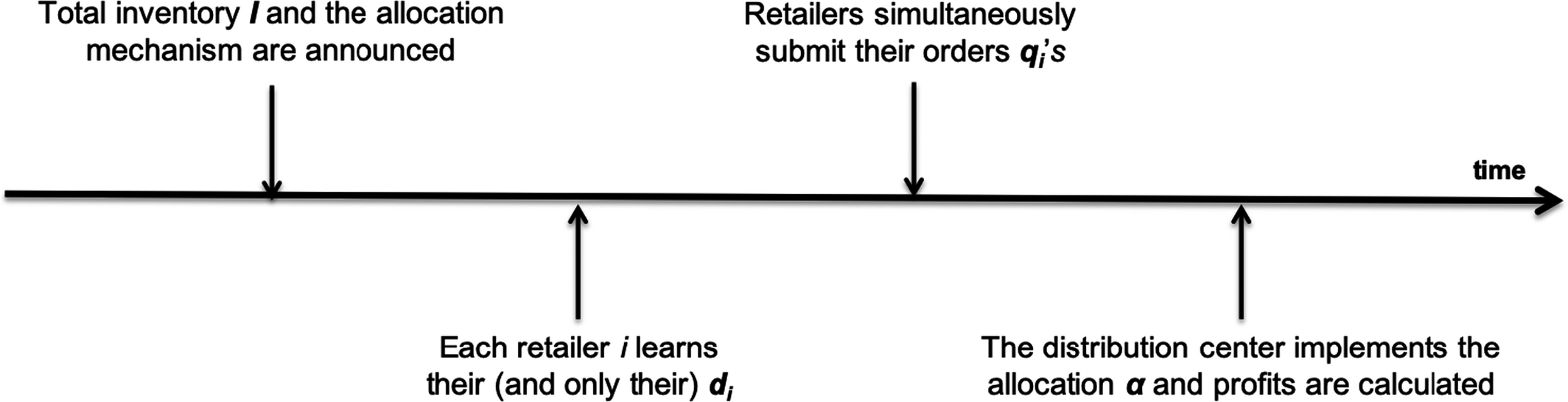
The Timing of Events in the Inventory Allocation Game
The DC announces the total inventory level ( Each retailer Retailers simultaneously submit their orders ( The DC fills orders according to the announced allocation mechanism and retailers’ profits are realized.
Allocation Mechanisms and Efficiency
We next formally define possible allocation mechanisms used by the DC, and evaluate their efficiency in allocating inventory in the special case where retail demand information is common knowledge (i.e., retailers’ orders are set equal to their realized demand). We focus on the family of allocation mechanisms for capacity rationing first proposed by Cachon and Lariviere (1999c). In line with our setting, these mechanisms are adjusted slightly to ensure that total inventory is assigned to retailers even when it exceeds total demand (i.e., 
The first, and perhaps the most intuitive, mechanism is the proportional allocation where each retailer receives a percentage of his order. We denote by 
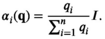
Consider, for example, a setting with two retailers and total inventory of 100 units. If retailer 1 and retailer 2 order 

In contrast, linear allocation gives each retailer his order minus (plus) a common quantity when total orders exceed (fall below) available inventory.

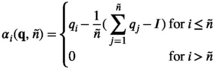


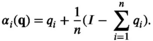
In our previous example, the sum of the two orders (140 units) exceeds available inventory (100 units). Under the linear mechanism, retailer 1 is allocated 

The third mechanism is a uniform allocation where retailers receive roughly the same quantity, subject to some conditions. Specifically, no retailer receives more than ordered when total orders exceed total inventory and no retailer receives less than ordered when the reverse is true.

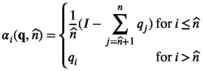


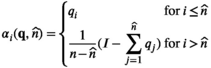


Applying the uniform allocation mechanism in our example, since both retailers ordered more than 

Relationship between Retail Orders and Allocation Quantity

Notes
Two retailers and total inventory of 100 units.
We next evaluate the efficiency of these three allocation mechanisms. An allocation mechanism is efficient when it maximizes system profits (i.e., sum of retailer profits) subject to the total inventory being allocated to retailers. Before analyzing the performance under information asymmetry, we consider a special case where allocation is based on retail demand (i.e., common knowledge), which serves as benchmark.
Proportional, linear, and uniform are efficient allocation mechanisms under common knowledge of retail demand.
The proof of this and all other propositions are provided in online Appendix A.
Unlike the case of ordering and allocating a resource under demand uncertainty (e.g., see Cachon and Lariviere 1999c) where an optimal allocation mechanism needs to be increasing and individually responsive (i.e., a retailer who orders more receives more unless the retailer has been allocated all of capacity), in our setting excluding wastage is a sufficient condition for optimality. Then, in the special case of common knowledge of demand information, all three allocation mechanisms exclude wastage, and therefore are optimal. That means that there are no unsold units when total demand is equal to or higher than total inventory and there is no locally unsatisfied demand when total demand is lower than total inventory. In other words, no retailer faces a shortage while at the same time another retailer faces a surplus (i.e., it cannot be that
While all three allocation mechanisms are efficient under common knowledge, they result in different profit allocations across retailers. For example, when there is inventory shortage, the linear mechanism may assign zero inventory to retailers with low demand, resulting in zero profits for those retailers (Cachon and Lariviere 1999b). Hence, in some cases it may not satisfy individual rationality constraints for all retailers (Kemahlioğlu‐Ziya and Bartholdi III 2011). The uniform allocation, on the other hand, favors retailers with low demand in case of inventory shortage, but favors high demand retailers in case of inventory surplus, which may raise fairness concerns.
Ordering Strategy and Hypotheses
We next move to the main case of information asymmetry, and turn our attention to whether the allocation mechanisms will incentivize retailers to place an order equal to their realized demand. To answer this question we use the concept of dominant strategy equilibrium (Fudenberg and Tirole 1991). A dominant strategy for a retailer maximizes his expected profit irrespective of the ordering strategy of the other retailers and therefore a dominant equilibrium is robust to incomplete information about the other retailers’ demand distribution or possibly irrational ordering strategy.
We define the ordering strategy of retailer 



We are interested in strategies where retailers order their true needs in a dominant equilibrium (

Setting orders equal to realized demand
The uniform allocation mechanism, in contrast, controls for this tendency. When the uniform mechanism is employed and there is inventory shortage, retailers can increase their allocation by placing an order above their demand only when they belong to those that receive an allocation equal to their final order (recall example in Table 1 with retailer 2 ordering 40). Thus, by placing a final order above their realized demand, retailers will receive additional units that they cannot sell. The retailers that receive an allocation lower than their final order (as retailer 1 in the same example) cannot increase their allocation by ordering more. Similarly, when there is inventory surplus in the system, retailers can reduce their allocation by ordering less only when they are among the ones who get a quantity equal to their final order. In this case, placing an order lower than the realized demand results in lost sales and hence lost profits for the retailers. This leads to the following result. 1
Setting orders equal to realized demand
In contrast to these normative results, prior behavioral research suggests decision makers in such strategic games follow a continuum of strategies (Chen and Zhao 2015, Özer et al. 2011, Spiliotopoulou et al. 2016), with actual behavior deviating from standard equilibrium predictions due to different goals or cognitive limitations toward strategic reasoning (Chen et al. 2012, Cui and Zhang 2017). In terms of cognition needed to understand the allocation mechanisms, it can be argued that both the proportional and linear allocation mechanisms are quite intuitive and simple to understand. However, actually determining the optimal response is complex under these mechanisms (Cachon and Lariviere 1999c), since the optimal order quantity for a retailer depends on their beliefs about the ordering strategy of the other retailers. In reality, these beliefs will depend on subjects’ ability for strategic thinking (e.g., on their reasoning level as suggested by Camerer et al. (2004)). In contrast, under the uniform mechanism the form of the optimal strategy is not dependent on the order strategies of other retailers and so decoupled from a lack of knowledge on how others’ strategies are formed. As the reasoning requirements under uniform allocation are lower, we conjecture that subjects will deviate less from the normative prediction of ordering their true demand. Based on the normative predictions above, and the behavioral implications of the three allocation mechanisms, we formulate the following hypotheses:
Retailers’ order deviation from true demand (i.e., 
Retailers less often order a quantity different than their demand(i.e.,
Hypotheses 1a and 1b are related to the
While ordering one's demand guarantees allocation efficiency under all cases, order manipulation may in some cases result in inventory wastage/shortage at individual retailers. Hence, we last hypothesize that the proportional and linear mechanisms that introduce incentives for order manipulation will lead to lower allocation efficiency on average. In other words, we conjecture that the lower the quality of the demand information the allocation decision is based on, the lower allocation
Allocation efficiency is higher under the uniform mechanism compared with (a) the proportional and (b) the linear allocation mechanisms.
Experimental Design and Results
We conducted controlled laboratory experiments to test our hypotheses. Subjects took on the role of a retailer and played the inventory allocation game as described in section 3. We developed three treatments, one for each allocation mechanism. Anticipating high heterogeneity in order strategies at the individual subject level (which we ad hoc explore in section 5), we used a within subjects experimental design to reduce results noise. A within‐subject design generates observations of how orders vary across treatments while controlling for individual attributes, allowing for more powerful econometric techniques. The major weakness of within‐subject design is the potential for order effects across treatments (Charness et al. 2012). We attempt to control for this by varying the sequence of treatments across sessions. We also provide controls for the treatment sequence in our statistical analysis (see section 4.2, where it is shown that order effects are not significant). Considering our research question and context, demand effects (i.e., subjects interpreting the experimenter's intentions) are not a major concern.
Each subject was exposed to all three treatments. Table 2 shows the sequence of treatments and the number of subjects in each of the six sessions. The sessions were conducted across two time periods, with sessions PLU, PUL, and ULP conducted first, followed later by sessions UPL, LPU, and LUP. A session consisted of 30 rounds where subjects made 10 consecutive decisions under each allocation mechanism (treatment). We chose 10 rounds per mechanism to allow subjects to experience multiple rounds and demand scenarios, while keeping sessions to a reasonable length (approximately one hour) to avoid fatigue or loss of concentration. In each round subjects were randomly and anonymously assigned to a supply chain with another retailer and were informed that they would not be matched with the same subject in consecutive rounds. To achieve this, we generated random groups of two for each round before a session began. We then manually checked whether any two subjects were matched together in consecutive rounds and, if so, we re‐matched subjects in that round. For our analysis, we consider the subject average as the unit of independent observation, as in Hyndman et al. (2013) and Beer et al. (2018), among others. Because subjects are re‐matched in each round, one may argue that the unit of independent observation is the session average. However, the nature of independence of observations is rather complicated, and using sessions averages does not completely eliminate the possibility of session effects, see Hyndman and Embrey (2018) for more discussion of this issue. Given our relatively large sessions, we assume that subject re‐matching is not a major concern for our analysis.
Sequence of Treatments and Number of Subjects
Notes
P stands for proportional, L for linear and U for uniform allocation.
We used the following parameterizations for our experiments:
All subjects were enrolled in undergraduate economics and business programs at a European business school and were recruited via the university's online subject recruitment system. Subjects signed‐up for the available timeslots and we randomly assigned sessions to timeslots. Experiments were conducted in a controlled laboratory environment with partitioned workstations and subjects were not allowed to communicate with each other. Each subject received an instruction sheet describing the allocation game, the supply chain parameters, sequence of events, and how profits would be calculated. Subjects were also instructed to be attentive throughout the experiment noting that additional information would be given to them (e.g., the specific allocation mechanism, demand realizations), that would be helpful in making their ordering decisions. Each allocation mechanism was introduced, along with numerical examples, before the associated treatment. Detailed instructions and screen shots for the three treatments are included in the online Appendix (parts C and D). The experiment was programmed in z‐Tree (Fischbacher 2007).
At the end of each session, subjects completed a post‐game survey that elicited information on their ordering strategy and their beliefs about the ordering strategy of other players. It also included control questions, checking for the subjects’ understanding of how inventory allocation is calculated under different allocation mechanisms. Subjects were informed that if they followed the instructions of the game they would be granted research credits for their participation (students are required to gather a certain amount of research credits during their studies). All students met the intention and received research credit at the end of the research sessions. To incentivize subjects to make profit maximizing decisions we used a lottery approach (as in de Véricourt et al. 2013). Subjects knew that five of them (per collection period) would be selected at random to receive a gift voucher of value proportional to the profit they generated during the experiment. The average subject compensation was 42 Euros.
Descriptive Statistics and Non‐parametric Analysis
We evaluate retailers’ ordering behavior along three dimensions: (1) how much, on average, the order placed deviates from actual demand, (2) how often the order placed differs from demand (and in what the direction), and (3) the resulting allocation efficiency (and mismatch due to order manipulation). Table 3 reports summary statistics for each allocation mechanism. Throughout our analysis, we combine data across the sessions outlined in Table 2. Online Appendix B reports separate analysis for sessions within the two data collection periods with consistent findings to our main results.
Summary Statistics

Notes
Number of obs (subject average) is 66 per treatment. Total number of obs 1980.
We first calculate the absolute difference between a retailer's order and his true demand (i.e., 
Next we look at the frequency at which retailers adjust their orders under each allocation mechanism and the direction (i.e., whether they inflate or deflate their demand). Retailers place an order equal to their demand in 45% of the cases under the uniform mechanism, while this percentage is below 10% for both the proportional and linear mechanisms. This observation is in line with Hypotheses 2a and 2b, which we formally test in section 4.2.
Even if retailers place an order that is different than their true demand, order deviations in the same group may balance out. For example if retailers inflate their orders by the same percentage and the proportional mechanism is applied, the inventory allocation does not change. For this reason, we also examine how allocation efficiency varies across treatments (allocation mechanisms). We define efficiency (
The Comparative Effect of Allocation Mechanisms: Regression Analysis
In this section we use regressions to complement our analysis and control for other factors such as treatment order and round. Regarding the magnitude of order manipulation we use the following linear model for panel data
To formally test the effect of the allocation mechanisms on the frequency at which retailers order a quantity different than their demand, we estimate the following logit model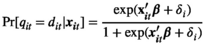


Last, to compare the impact of the allocation mechanisms on the third dependent variable of interest, allocation efficiency, we estimate the following linear model
Impact of Allocation Mechanisms on Ordering and System Performance


*
The second column of Table 5 reports on the results of the first model concerning the magnitude of order deviation across allocation mechanisms. Consistent with Hypotheses 1a and 1b, the coefficients for
The third column of Table 5 provides insight into the effect of the allocation mechanism on the probability that a retailer places an order that equals his demand. The coefficients for
Finally, the fourth column of Table 5 shows the relative impact of allocation mechanisms on efficiency. The coefficients of 
Ordering and Individual Profits
The results summarized in Table 5 suggest that orders that differ from true demand harm total allocation efficiency. However, how does this behavior influence a retailer's own profit? To test if order manipulation leads to higher individual profits, we regress a retailer's profit on their level of order deviation from true demand (i.e., 




To further explore differences across mechanisms, we repeat the above analysis for each allocation mechanism separately. Table 6 summarizes the results. As expected from theory, order manipulation under the uniform mechanism reduces own profits. More interestingly, order manipulation under the proportional and the linear mechanisms, that is strategic ordering, also significantly reduces own profits. Order manipulation of the other retailer in the same group has a negative but smaller impact under the proportional and the linear mechanisms. Under the uniform mechanism, the effect is positive but not significant. This is because retailers under the uniform mechanism are always worse‐off by ordering a quantity different than their demand. Had they ordered their true demand they would absorb less of the total inventory–demand mismatch in the round. Hence, a retailer may even benefit from the other retailer's inflation/deflation of their own needs.
The Effect of Order Manipulation on Individual Profits Per Allocation Mechanism
*
Behavioral Ordering: Additional (ad hoc) Analysis
We complement our main analysis by identifying ordering patterns across allocation mechanisms and exploring individual heterogeneity. In particular, we study (a) whether the direction of order manipulation depends on the received demand (i.e., whether subjects are able to update and incorporate in their decisions the probability of inventory shortage/surplus), (b) how past allocations affect ordering behavior, and (c) individual ordering strategies.
Anticipated Mismatch and Ordering
First, we examine whether the direction of the observed order manipulation is driven by the received demand. This allows us to examine whether subjects update the probability of system shortage/surplus based on their received demand. If subjects update their beliefs about the probability of shortage/surplus, and incorporate this in their ordering decisions, the direction of order manipulation (if any) should be dependent on the received demand. Note that, unlike the uniform mechanism, the proportional and the linear allocation mechanisms are both individually responsive (i.e., a retailer receives more when orders more). Hence, under the proportional and the linear mechanisms, retailers should in theory inflate their order when their demand is above the mean (i.e., when shortage is more likely), and deflate their order when demand is below the mean (i.e., when surplus is more likely). Table 7 shows, for the
Order Manipulation when Demand is Above/Below the Mean for Individually Responsive Mechanisms

Under the uniform mechanism, it is a dominant choice to always order the realized demand independent of whether it is above/below the mean. While subjects most frequently order their true demand both when demand is either above or below the mean (43% and 47% of the cases), they inflate their orders more often when demand is below the mean (35%) compared to when demand is above the mean (25%). This direction of order manipulation is suboptimal because it increases the chances of receiving more inventory when it is not needed.
In the post‐game survey, where subjects were asked to describe their ordering strategy across mechanisms, 17 of 66 subjects (26% of subjects) reported that they ordered above their demand when demand was above the mean and ordered below their demand when it was below the mean. Two additional subjects reported that they assessed the probability of shortage/surplus when making ordering decisions. Returning to behavior under the proportional and linear allocation mechanisms, Table 7 also reports how the magnitude of order manipulation changes with demand. Order manipulation is on average higher when subjects face demand above the mean (Wilcoxon rank‐sum test,
Recency Effect
Next, we explore whether demand in the 


The Effect of Past Allocations on Retailers’ Ordering


†
Classification of Ordering Strategies
We continue to further explore individual ordering strategies by examining possible clusters of behavior. We first separate retailers into four categories: (a) subjects that set orders truthfully in the majority of cases (i.e.,
Ordering Strategies
Considering each subject separately, we also examine whether their ordering strategy changed significantly across allocation mechanisms by looking at (a) the average directional order manipulation (
Applying the Uniform Principle
Our experimental results show that, on average, under the uniform allocation mechanism retailers have a lower propensity to place an order different than their true demand and any deviation has a lower magnitude. This results in both higher allocation efficiency and individual profits. However, the uniform allocation assigns the same quantity in general to all retailers, no matter what is their final order/demand, as long as all orders are above (below) a threshold when there is shortage (surplus). These differences would only be exacerbated if retailers differed in average market size. Thus, the simple uniform mechanism may not be the preferred choice of the DC when market sizes, or desired service levels, substantially differ across retailers (e.g., the company has a different competitive strategy in each market such as larger retailers have higher service targets).
This leads us to consider how to design a more flexible, and hence more practical, allocation mechanism based on the same uniform principle. To this end, we introduce an extended application of the uniform principle that we call
Let 

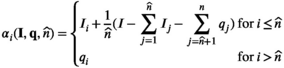


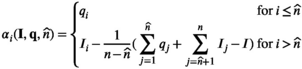


Under this scheme, when total retail orders exceed available inventory, retailers whose orders exceed their reservation share equally any excess inventory (i.e., inventory unclaimed by retailers whose orders are less than their reservation), as long as they need these extra units. Similarly, when combined retail orders are less than total inventory, retailers whose orders are below their reservation share their surplus inventory with retailers whose orders are higher than their reservation (i.e., they enjoy the same amount of reduction from the initial reservation, as long as the resulting allocation is above their order). In other words, the uniform principle is applied to inventory changes through retail ordering. Figure 2 summarizes the timing of events.
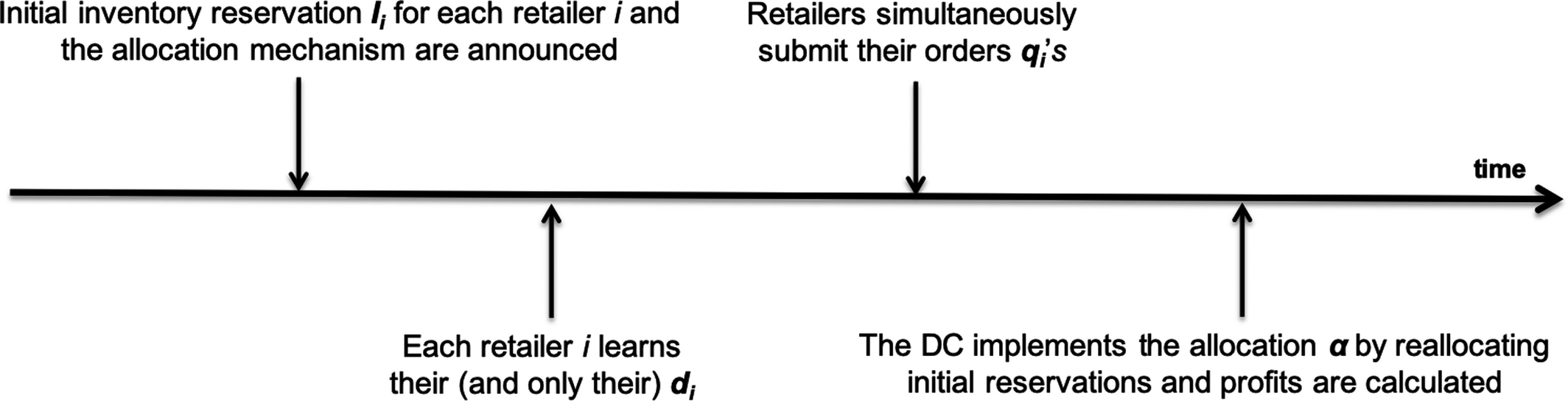
The Timing of Events Under Tailored Uniform Allocation
To illustrate, consider three retailers with
The tailored uniform mechanism is an efficient allocation mechanism that incentivizes retailers to order their realized demand (dominant strategy equilibrium).
When retailers order their true demand, the extended uniform allocation, by construction, excludes wastage, and therefore results in an efficient allocation that maximizes system profit. In the special case where the initial allocation
Normative Comparison of Various Allocation Mechanisms
The tailored uniform mechanism has identical properties to the simple uniform mechanism in terms of dynamics during the ordering stage; retailers cannot influence the final allocation by inflating/deflating their orders. Hence, we do not expect differences in the ordering behavior between these mechanisms and, therefore, the uniform principle will still offer advantages over the proportional and the linear mechanisms. To test this hypothesis, we conducted a follow‐up experiment where subjects are exposed to both the uniform and the tailored uniform allocation mechanisms. We considered two settings: a homogeneous retailer setting and a heterogeneous retailer setting that allows for different demand sizes (i.e., retailers have different demand distributions). The homogeneous retailer setting follows the same parameterization as the prior experiment to provide a consistent comparison, with
Table 11 presents the results. Both when retailers are homogeneous and when retailers are heterogeneous, we find no statistically significant difference regarding the magnitude (Wilcoxon signed‐rank tests,
Experimental Comparison between the (Simple) Uniform and the Tailored Uniform Allocation

Notes
Homogeneous retailers: number of obs (subject average) 20 per treatment, total number of obs 600.
Heterogeneous retailers: number of obs (subject average) 18 per treatment, total number of obs 720.
Last we also explore whether there are differences in ordering behavior between the smaller and the larger retailer when retailers are heterogeneous in their average demand size and initial allocation. Table 12 presents summary statistics for each retailer type. Being the small or the large retailer does not have a significant effect on the magnitude of order manipulation (Wilcoxon rank‐sum tests,
Comparison Between Small vs. Large Retailers’ Ordering

Notes
Homogeneous retailers: number of obs (subject average) 20 per treatment, total number of obs 600.
Heterogeneous retailers: number of obs (subject average) 18 per treatment, total number of obs 720.
Allocation efficiency is higher under the tailored uniform mechanism, both for small and large retailers. Specifically, the effect of the tailored uniform mechanism on allocation efficiency is positive and significant, where
Conclusions
How inventory is allocated, especially in times of scarcity or surplus, is critical in integrated distribution systems as it can provide retailers incentives to inflate/deflate their demand needs. In this study we study the impact of three well‐known allocation mechanisms (i.e., proportional, linear, uniform) on retailers’ ordering and resulting allocation efficiency. We find that all three mechanisms are system optimal when inventory allocation is based on realized demands. However, when the allocation is based on the orders placed by the retailers with private knowledge of demand, both proportional and linear allocation mechanisms may induce retailers to misreport their orders to gain a more favorable allocation. Only the uniform mechanism incentivizes retailers to place an order equal to their true demand (i.e., induces a dominant strategy equilibrium).
Experimental data suggest that, consistent with theory, the uniform allocation mechanism results in lower order manipulation, both in terms of magnitude and frequency, and higher allocation efficiency. Retailers who manipulate their orders more suffer lower profits not only under the uniform mechanism, where order manipulation is a dominated strategy, but also under the proportional and linear mechanisms, which are individually responsive (e.g., a larger order results in larger allocation). In other words, being “strategic” does not pay off under any allocation mechanism. We also find evidence that the linear mechanism results in larger strategic ordering and lower efficiency. This may be because this mechanism is less “responsive” to the quantity of orders placed in terms of the resulting allocated inventory, inducing higher distortion. Across all mechanisms, subjects fail to manipulate their orders consistently toward the right direction (inflate or deflate one's needs), informed by their realized demand (which suggests whether shortage or surplus is more probable) in each round. Subjects also seem to anchor their ordering decisions on the difference between the quantity ordered and the one received (order adaptation) in the previous round. Looking at individual ordering strategies, we observe that the majority of subjects follow a mixed strategy of order inflation/deflation under the proportional and linear mechanisms, but switch to “truthful” ordering under the uniform mechanism.
While the uniform mechanism increases efficiency, it may be difficult to implement when retailers have different market sizes or service level targets. Motivated by our experimental findings that the quality of the information passed to the central system through final orders is significantly higher when the uniform allocation principle is applied, we propose a new application of the uniform principle that has several attractive properties in this setting. It allows for differences in the allocated quantities among the retailers by connecting initial inventory reservations to final allocation. It may represent practical situations where retailers have a quantity flexibility agreement and are allowed to adjust their orders within a defined range. It induces orders equal to demand, maximizes allocation efficiency, and in the special case where the initial inventory reservations are retailers’ optimal stocking levels, it guarantees that the retailer will never have lower profit in the pooled system. Experimental results suggest that both when retailers are identical and when they differ in demand size, the tailored uniform allocation mechanism performs similarly to uniform allocation in terms of median order manipulation and frequency. When retailers are heterogeneous, because of directional differences in order manipulation between small and large retailers, the tailored uniform mechanism even slightly increases allocation efficiency compared to the simple uniform allocation.
Our study highlights that the allocation mechanism employed at the distribution center level may significantly affect allocation efficiency, and, consequently, stockout and obsolescence/wastage rates across markets, through its effect on downstream parties’ strategic ordering. We expect the benefits of a uniform allocation mechanism to be even higher when the cost of overage exceeds to cost of underage (or the reverse) as the incentives to manipulate orders placed in order to receive less (or more) inventory will be even stronger. Hence, ensuring that the allocation mechanism controls inflation/deflation of local needs is important, especially in industries with low profit margins. In integrated distribution settings, such as our motivating example, our study suggests that firms may benefit from moving toward the uniform principle, instead of employing proportional to orders allocation, a policy that is very common in practice. Firms can base their inventory policy for each market on available demand information and desired service level, and apply the uniform principle for adjustments when stores place their replenishment orders. Our findings suggest that the uniform principle in allocating inventory, a policy that requires no additional investments to obtain the true demand information (e.g., through acquiring sell‐out data) and can readily be implemented, is theoretically and behaviorally the dominant choice.
We believe that the issue of allocation in distribution systems with multiple retail channels presents many interesting opportunities for further research. Our experimental results suggest “strategic” behavior harms both system and own profits. Exploring how allocation mechanisms affect ordering behavior in a real‐life setting could provide additional insights about conditions under which being strategic may pay off. Our results also suggest that people manipulate their orders more with time. In future research, it would be interesting to further explore the effect of time, especially in multi‐period settings with repeated interactions. Understanding the behavioral causes of order manipulation and the effect of learning is worth exploring further. Learning, especially in a real‐life context, about interpreting demand signals but also about supply chain partners’ behavior, such as reactions to anticipated shortage/surplus, and its impact on how subsequent ordering strategies are formed, provides many interesting directions for empirical investigation.
In this study we take the system perspective and investigate the impact of various allocation policies on the ordering behavior of downstream parties. Hence, the choice of the allocation mechanism is predetermined. However, which allocation mechanisms retailers may prefer in different settings and the underlying reasons behind their preferences (e.g., service level guarantees, foregone profits, fairness ideals) is also an interesting avenue for future research. Spiliotopoulou and Conte (2021) study fairness ideals in allocating inventory when there is supply–demand mismatch within a similar distribution system. In addition to allocation schemes that contain order manipulation, one may explore the role of transfer prices (see e.g., Spiliotopoulou et al. 2018) or other incentive schemes within the firm (as in Scheele et al. 2018) that ensure local knowledge of regional demand is credibly shared at the central level. Last, the allocation decision of the manager of the DC remains under explored, especially when retailers can be segmented based on profitability criteria, length of the business relationship, contractual agreements, or other retail attributes.
Footnotes
Acknowledgments
The authors thank the department editor, Elena Katok, the anonymous senior editor, and reviewers for their helpful suggestions that significantly improved the manuscript. The authors also thank the participants of the 2017 Behavioral Operations Conference (Boston, MA), 2017 POMS annual conference (Seattle, WA) and seminar participants at TU Eindhoven (Netherlands) for their insightful comments on earlier versions of this research, as well as Sander de Leeuw and Jan Fransoo for constructive discussions. The authors also gratefully acknowledge support from the Network‐Institute Tech Labs, VU University Amsterdam, and CentERlab, Tilburg University, where the experiments were conducted.

We conducted a third session due to the low show‐up rate of subjects in the first two sessions.