






Abstract
To avoid inventory risks, manufacturers often place rush orders with suppliers only after they receive firm orders from their customers (retailers). Rush orders are costly to both parties because the supplier incurs higher production costs. We consider a situation where the supplier's production cost is reduced if the manufacturer can place some of its order in advance. In addition to the rush order contract with a pre‐established price, we examine whether the supplier should offer advance‐order discounts to encourage the manufacturer to place a portion of its order in advance, even though the manufacturer incurs some inventory risk. While the advance‐order discount contract is Pareto‐improving, our analysis shows that the discount contract cannot coordinate the supply chain. However, if the supplier imposes a pre‐specified minimum order quantity requirement as a qualifier for the manufacturer to receive the advance‐order discount, then such a combined contract can coordinate the supply chain. Furthermore, the combined contract enables the supplier to attain the first‐best solution. We also explore a delegation contract that either party could propose. Under this contract, the manufacturer delegates the ordering and salvaging activities to the supplier in return for a discounted price on all units procured. We find the delegation contract coordinates the supply chain and is Pareto‐improving. We extend our analysis to a setting where the suppliers capacity is limited for advance production but unlimited for rush orders. Our structural results obtained for the one‐supplier‐one‐manufacturer case continue to hold when we have two manufacturers.
Introduction
Grocery retailers often sell private labels of holiday celebration products (e.g., moon cakes, pumpkin pies, etc.) with a single selling season. Well before the selling season starts, the grocer's food technology team, the supply chain department, and the marketing department work together to develop recipes, design packaging, and select contract food manufacturers. After completing the selection, the retailer will place a firm order to the contract food manufacturer, who will in turn, place a firm order to its packaging material supplier. Because the food product is perishable and the packaging is specifically customized to the retailer, neither the manufacturer nor the supplier will produce the corresponding items in advance. Consequently, all orders along the supply chain are rush orders that are costly to fill.
The above business context motivates us to consider a situation when both the manufacturer and the supplier have to deal with rush orders of highly customized products. Due to the high production cost for rush orders, the supplier charges the manufacturer a high pre‐established contract price. Though the supplier's production costs could be substantially lowered if the orders are placed in advance, the manufacturer refrains from doing so given its apprehension of overstocking the customized material. 1 Hence, a discounted wholesale price that a supplier may offer, could encourage the manufacturer to place an advance‐order. 2
Based on our work with a grocery retailer in the UK, we learned that food contract manufacturers and packaging material suppliers are aware of the trade‐off between the benefits of advance‐order discounts and the (imputed) costs of the leftover packaging materials. This trade‐off motivated us to examine the following research questions for the case when the original rush order contract price is already established: Should the supplier offer advance‐order discounts? Can the advance‐order discount contract coordinate a decentralized supply chain? If not, how about a variant that combines the advance‐order discount contract with other commonly observed terms such as minimum order quantity and/or inventory management delegation?
We use a two‐echelon supply chain model in a two‐period setting to explore the above research questions. We first show that a simple discount contract does not coordinate the supply chain. Then, we explore a variant of the contract that combines the advance‐order discounts with a pre‐specified minimum advance‐order quantity. The combined contract enables the supplier to coordinate the supply chain. Under this combined contract, the supplier extracts the entire surplus of the manufacturer, while offering the manufacturer a discounted wholesale price. This finding provides a good rationale (in addition to the economies of batch production processes) for the omnipresent industry practice of minimum order quantities. 3
Besides minimum order quantities, we consider the case wherein the manufacturer (or the supplier) proposes that the ordering decisions and the salvaging activities are delegated to the supplier in exchange for a new discounted price for all the units procured by the manufacturer. 4 Such a contract is akin to the vendor managed inventory (VMI) setup in supply chains. We demonstrate that when price discount is coupled with delegation, this combined contract not only coordinates the supply chain but is also Pareto‐improving under mild conditions on the demand process.
Our analysis generates the following three key insights: Though advance‐purchase discount contracts by themselves do not coordinate a supply chain, they do coordinate the supply chain when coupled with either (a) a minimum‐order quantity requirement, or (b) an inventory management delegation contract. Combining advance‐purchase discount and minimum‐order‐quantity can always coordinate a supply chain. There exists a necessary and sufficient condition for the existence of an advance‐purchase discount and inventory management delegation contract that coordinates the supply chain.
To our knowledge, the existing literature does not examine the role of minimum order quantities and inventory management delegations in combination with advance‐purchase discounts. The insights we draw provide additional reasons for suppliers to offer minimum order quantity contracts and VMI‐like services in decentralized supply chains. In this study, we first prove our results for the case of a one‐supplier‐one‐manufacturer supply chain. Then, we discuss how our model can be extended to the case of two manufacturers.
Our study is organized as follows. A brief literature survey is given in section 2. Section 3 presents our supply chain model with uncertain demand and establishes two benchmarks. In section 4, we show that the advance‐order discount contract cannot coordinate the supply chain. Section 5 reveals that a combination of the advance‐order discount contract and a minimum order quantity can coordinate the supply chain. Section 6 considers the situation when the manufacturer delegates the responsibility of managing the inventory decisions to the supplier in exchange for a discounted wholesale price. Section 7 extends our analysis to the case of a one‐supplier‐two‐manufacturers supply chain. Section 8 concludes and proofs are provided in Appendix S1.
Literature Review
As one of the first articles that examine minimum order quantity contracts, Chow et al. (2012) consider a minimum order quantity contract in a quick response context where the manufacturer can postpone its single‐order decision until he obtains updated demand information. 5 They find that if the supplier can postpone the specification of the minimum order quantity till some information about demand is observed, then such an MOQ contract can coordinate the supply chain. In general, a manufacturer may be reluctant to participate in such a contract when the supplier cannot commit to the contractual terms (i.e., the minimum order quantity) in advance. In this study, we show that, by combining the advance‐order discounts with minimum order quantity contract, the supplier can simultaneously commit to the contractual terms in advance and coordinate the supply chain.
Our model differs from Chow et al. (2012) in three important aspects. First, Chow et al. (2012) consider a setting in which the manufacturer orders exactly once (one decision), while we consider a different setting in which the manufacturer can place two sequential orders (i.e., two decisions): (a) an advance‐order that is subject to a minimum order quantity, and (b) a top‐up order after the demand is realized. Second, we consider a situation when the discount factor for the advance order is endogenously determined by the supplier, while Chow et al. (2012) assume this factor is exogenously given. Third, our analysis is based on a general demand distribution that possesses Increasing Generalized Failure Rate (IGFR) properties, while Chow et al. (2012) assume that the demand is normally distributed (which is a special case of the IGFR distributions).
Our research is also related to the advance purchasing literature (e.g., Tang et al. 2004, Xie and Shugan 2001, etc.). In the field of advance‐order discounts arising from supply chain management, our base model that deals with advance order discount is closely related to Cachon (2004) and Özer et al. (2007). Cachon (2004) shows that advance‐purchase discounts can coordinate a manufacturer‐retailer supply chain when the manufacturer can set both the advance‐purchase discount and the regular wholesale price. Our base model contrasts with Cachon (2004) in two respects. First, in the initial model presented in Cachon (2004), the manufacturer's production cost is the same for both advance and regular purchase and there is only one production opportunity. Later, as an extension, Cachon (2004) incorporates a positive shipping cost for rush orders. The shipping cost is incurred by the supplier and hence this cost can eventually be treated as an increase in the supplier's unit production cost for rush orders. Even in our setting, the supplier's production cost is lower for advance‐orders, and higher for rush‐orders. However, our setting accounts for additional flexibility in production because we consider the supplier to have two production opportunities—one for advance‐orders and one for rush‐orders—facilitating more informed production decisions. While our preliminary analysis of the Pareto improving nature of advance‐order contract concurs with the findings of Cachon (2004), our main contribution lies in modifying the traditional advance‐order discount contract to ensure supply chain coordination in a Pareto improving manner. Second, while Cachon (2004) assumes that the manufacturer can set the purchase price for both advance and regular orders, our base model can be viewed as a special case when the rush‐order price has been established in advance, and the supplier can only offer an advance‐order discount on the rush‐order price.
Özer et al. (2007) examine the optimal ordering policy with demand forecast updating when the supplier can set its price before and after the manufacturer updates its demand forecast. They determine the conditions under which the supplier should offer advance‐order discount. That is, when the price in the first period should be strictly less than the price in the second period. They also show that the optimal contract is Pareto‐improving. Our context is different from that considered by Özer et al. (2007) in two ways. First, while Özer et al. (2007) consider a generic setting in which the demand forecast is updated after one period, our base model can be viewed as a special case of their model by assuming that the demand is realized after one period. Second, in addition to the Pareto‐improvement shown by Özer et al. (2007) our base model analysis shows that the advance‐order discount contract cannot coordinate the decentralized supply chain. More importantly we show that, by combining advance‐order discount with a minimum order quantity, or with inventory management delegation, the two combined contracts can coordinate the supply chain in a Pareto improving way.
Thus, although our advance‐order discount base model is directly related to Cachon (2004) and Özer et al. (2007), we leverage our base model analysis to examine two new combined contracts that occur in practice but have not been examined in the literature hitherto. In particular, while it is known that advance‐order discount contract cannot coordinate the decentralized supply chain (Özer et al. 2007), we show that the supplier can coordinate the supply chain and achieve the first‐best solution if it combines advance‐order discount with either minimum advance‐order quantities or by delegating inventory management decisions to the manufacturer.
To our knowledge, this is the first study to investigate the impact of (i) the combination of advance order discounts and the minimum‐order‐quantity contract, and (ii) the combination of advance order discounts and inventory management delegation contract, on supply chain coordination.
The Model
Consider a two‐level supply chain comprising of a supplier and a manufacturer. The manufacturer sells its product to retailers at the wholesale price p. While p is set beforehand, the underlying product demand D, from all the retailers over a single selling season is uncertain. We assume that D follows a probability distribution F(·) with density function f(·) that satisfies the IGFR property (i.e.,

To avoid obsolescence, the manufacturer places rush orders with the supplier only after receiving firm orders from the retailers. On the other hand, without a quantity commitment from the manufacturer, the supplier is reluctant to produce in advance, especially when the product is specifically customized for the retailers. Hence, the supplier has to expedite its production process in order to deliver the (rush) order on time. As a result of the expedited production process, the supplier incurs an inflated unit production cost, which we denote by e. Let r denote the regular contract price that the supplier quotes to the manufacturer. We assume p ≥ r > e. Therefore, for any exogenous regular price r established in advance, the ex ante expected profits for the manufacturer and the supplier for a rush order, which we denote by




The Advance‐Order Discount
Consider the case when the food retailer has specified the recipe, selected the manufacturer, and approved the packaging design in period 0. The price r remains the same for the rush‐order when the manufacturer delays its order until a firm order is received from the retailer at the beginning of the second period. However, the supplier realizes that it can lower its unit production cost from e to c if it can begin the production in period 1 and deliver the order in period 2. The supplier has to decide if it has to offer a discounted price of δr (where δ is a decision variable in (0, 1)) in order to encourage the manufacturer to place an advance‐order in the first period that will eventually be delivered at the beginning of the selling season. 9 That is, both the advance‐order (placed at the beginning of period 1) and the rush‐order (placed at the beginning of period 2) will be delivered before the end of the second period.
Figure 1 depicts the setting of the advance‐order discount contract, which includes the rush‐order case (i.e., without discount when δ = 1) as a special case. For exposition, we shall assume that

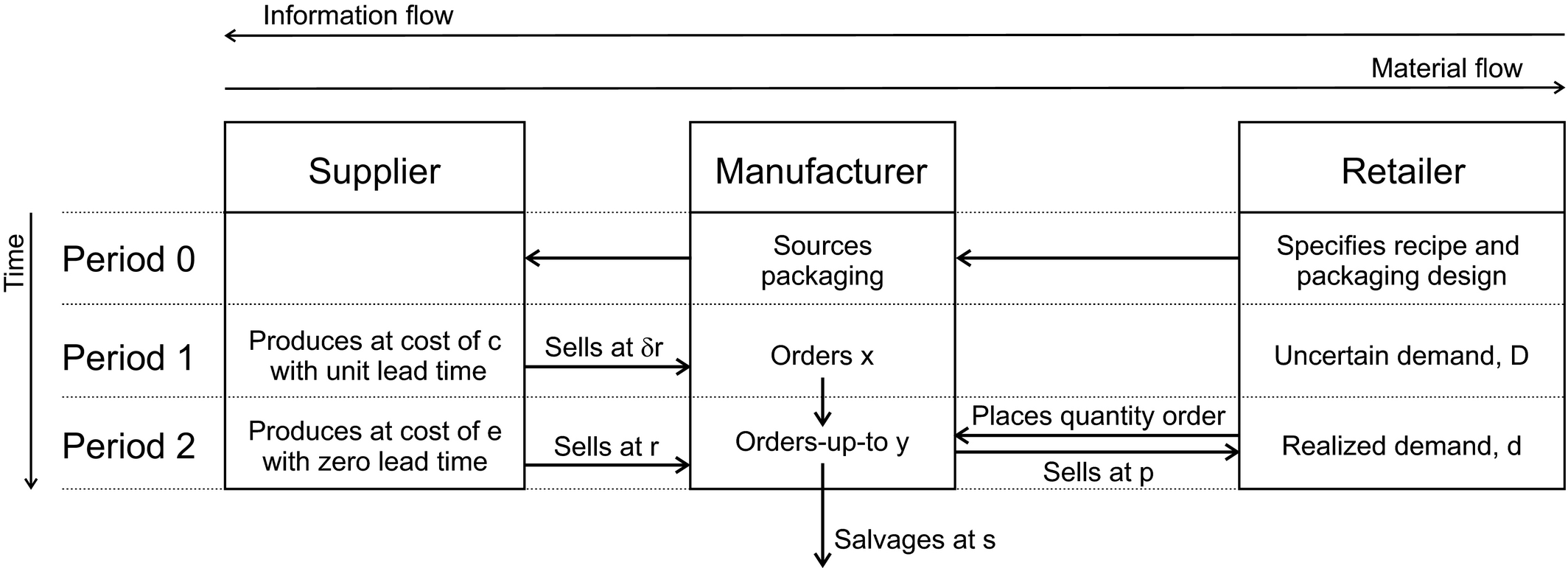
Schematic of Our Advance‐Order Setting
Under the advance‐order discount contract, the supplier offers an advance‐order price of δr per unit and the manufacturer must place an advance‐order of x (>0) in the first period before the demand D is realized, in order to avail the discounted price. Later on, once the demand D is realized, the manufacturer orders‐up‐to quantity y (≥x) in the second period. Thus, the effective order quantity in the second period (i.e., the top‐up order quantity) is [y − x]+. If y > d, the manufacturer salvages the over‐stocked [y − d]+ units for a unit salvage price s. We assume that s ≥ 0 and that s is net of any costs involved in salvaging the overstocked units.
We model the strategic interaction between the supplier and the manufacturer as a two‐period Stackelberg game in which the supplier acts as the leader 11 who sets the advance‐order discount δ and the manufacturer acts as the follower who chooses the order quantities x and y. We use backward induction to determine the optimal advance‐order quantity x and the optimal order‐up‐to quantity y for a fixed discount δ. Then, we examine the optimal discount contract under different settings.
First‐Best Solution: The Centralized Case
Before we analyze the decentralized supply chain for the case when the supplier offers an advance‐order discount contract δ, we first establish a benchmark in a centralized system in which the supplier and the manufacturer operate under a central planner. Given the advance‐order x placed in period 1 and a realization d of the demand, the central planner determines its order‐up‐to level y by solving the following problem at the beginning of the second period:
12



Thus, the expected profit of the central planner in the first period can be written as follows:

Observe that

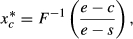



Observe that it is always feasible for the central planner to set x = 0 and y = d so that the supply chain profit is equal to Π o ≡ (p − e)E(D), which is the profit in the base case. Hence, when the central planner optimizes its profit jointly over x and y, the optimal supply chain profit is at least as much as that in the base case, that is, Π c ≥ Π o .
Optimal Advance Order Discount Contract: The Decentralized Case
We now examine the advance‐order discount contract in a decentralized system. Consider a decentralized system in which the supplier determines the discount (δ), and the manufacturer chooses its advance‐order quantity (x) and its order‐up‐to quantity (y). For a given advance‐order x and a realized demand d, the manufacturer needs to determine the order‐up‐to quantity y during the second period by solving the following problem:
13



Using the above optimal profit

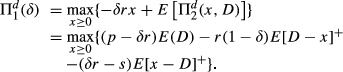
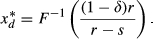




Over‐Production by the Supplier in the First Period
It is plausible that, by taking advantage of the lower production cost c in the first period, the supplier may be willing to risk over‐producing in the first period (i.e., produce z units in the first period, where z is larger than the advance‐order quantity



However, in many practical instances, such an over‐production strategy is seldom employed by a supplier for the following reasons. First, suppliers have finite production and inventory holding capacities and they transact with multiple manufacturers (in addition to the one we capture in our model). As such, suppliers would prefer to use the capacity to produce for other manufacturers with firm orders rather than taking the risk to over‐produce. Second, besides the underlying risk of over‐production, that is, the supplier ends up with certain unwanted units with virtually zero salvage value (as they are customized products), the opportunity cost incurred by the supplier who uses its capacity to over‐produce (i.e., produce more than the advance‐order placed by a manufacturer) is high compared to the benefits that it gains from such an overproduction strategy. Nevertheless, for the sake of completion, we analyze the case when the supplier over‐produces during the first period in Appendix S2. We show that, even with over‐production by the supplier in the first period, an advance‐order discount contract cannot coordinate the supply chain.
In the remaining portion of this study, for the ease of exposition and for tractability, we shall focus on the scenario when the supplier produces the exact quantity ordered by the manufacturer during the first period.
Optimal Advance‐Order Discount Contract
By considering the profit functions given in Equations 7 and 8, along with the manufacturer's participation constraint, the supplier's problem can be formulated as:



Let The optimal discount The supplier's profit function The optimal discount contract





Proposition 1 has the following implications.
15
The first statement shows that


However, it remains to determine if the advance‐order discount contract can coordinate the supply chain. To address this issue, observe from Equations 7 and 8 that the decentralized supply chain profit can be written as:





In a decentralized system, the optimal advance‐order discount contract


Though Proposition 2 shows that the optimal discount contract




Advance‐Order Discount Contract with a Minimum Order Quantity
Consider the scenario in which the supplier imposes a minimum advance‐order quantity q as a qualifier for the manufacturer to receive a discount δ. That is, in order to benefit from a discounted advance‐order, the manufacturer has to order at least q units in the advance‐order. We shall refer to such a contract as a combined contract because it combines an advance‐order discount with a minimum advance‐order quantity. For the combined contract (δ, q) that the supplier quotes, it is easy to check that the manufacturer's optimal order‐up‐to quantity remains the same, y* = max{x, d}, as described in section 3.2. It also follows from Equation 5, and the fact that the manufacturer will receive the discount δ only when its advance‐order quantity x is as much as q, the manufacturer's problem in the first period can be formulated as:
16

By considering the first‐order condition along with the constraint x ≥ q, and noting that the objective function is strictly unimodal in x, it is easy to show that the optimal initial order quantity is as follows:

By incorporating the manufacturer's best response function


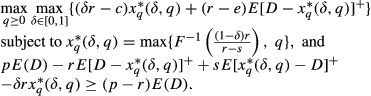
By analyzing the supplier's problem 15 for the case when


The optimal combined contract Relative to the coordinated discount contract δ*, it offers a smaller discount (i.e., It induces the manufacturer to set its initial order quantity as in the centralized case (i.e., It enables the supplier to extract the entire surplus from the manufacturer (i.e., It coordinates the supply chain (i.e.,


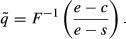





We draw the following insights from Proposition 3. The first two statements of the proposition quantify the optimal combined contract



Proposition 3 shows that the optimal combined contract


When D ∼ N(μ, σ
2), the optimal combined contract If e > 2c − s (i.e., when k > 0), then the optimal minimum order quantity If e = 2c − s (i.e., when k = 0), then the optimal minimum order quantity If e < 2c − s (i.e., when k < 0), then the optimal minimum order quantity


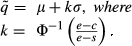



Corollary 1 has the following implications. First, as the mean demand increases, it is always beneficial for the supplier to set a higher minimum order quantity (i.e., increase


Discount Contracts with Delegations
In Proposition 3, we argued that the combined contract (that combines the advance‐order discount and the minimum order quantity initiated by the supplier) can enable the supplier to achieve the first‐best solution by coordinating the supply chain. By noting that the aforementioned combined contract is initiated by the supplier, we want to verify if there is a similar contract, that when initiated by the manufacturer, can coordinate the supply chain. In this section, we analyse such a contract.
Consider a contract in which the manufacturer can delegate its inventory decisions (i.e., order placement and salvage decisions) to the supplier, who can lower its unit production cost from e to c when the production is undertaken early. We term this contract as the delegation contract. In exchange for this delegation contract, the manufacturer requires that the supplier should satisfy the realized demand (by using either the advance production in period 1 or the expedited production in period 2) and offer a discounted price θr, where θ < 1, on all the units. Now, it is not clear if the supplier should accept such a delegation contract offered by the manufacturer. 17
Supplier's Problem under the Delegation Contract
In the event that the supplier rejects the delegation contract offered by the manufacturer, the manufacturer's expected profit is



Under the delegation contract, the supplier (and not the manufacturer) has to determine its advance production quantity x in the first period, and its produce‐up‐to level y in the second period. Additionally, the supplier should also account for the salvage operations after the selling season. For a given advance‐production quantity x in the first period and a realization d of the demand, the supplier determines its produce‐up‐to level y by solving the following problem:



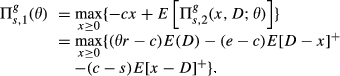
From the first‐order condition, the optimal advance production quantity x* that is to be produced in the first period can be shown to be:
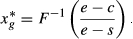
Observe that the advance production quantity







Discount Factor
In this section, we examine the existence of a discount factor θ that can facilitate a discount contract with delegation to coordinate the supply chain. The crux of the discount factor selection hinges on the following two factors. First, observe from Equation 22 that




The above two factors imply that the existence of such a delegation contract (in combination with advance order discount) hinges on the existence of a nonempty region that satisfies these two conditions: (a) θ < 1 (i.e., manufacturer's participation constraint), and (b) θ ≥






Let D ∼ N(μ, σ
2). Then


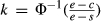
Proposition 4 provides the necessary and sufficient condition for the existence of a Pareto‐improving delegation contract that can coordinate the supply chain. This condition depends on the magnitude of the demand uncertainty (measured in terms of the coefficient of variation,

Proposition 4 has other implications as well. Specifically, when the stated condition holds, such a Pareto‐improving delegation contract is not unique; any delegation contract with θ ∈ [






Optimal Advance‐Order Discount Contract with Two Manufacturers
In this section, we extend our model to analyze the advance‐order discount contract when there is more than one manufacturer. We consider a model with two manufacturers who simultaneously source from a single supplier. It is well known that manufacturers compete for supplier's capacity by strategically inflating their orders to game the rationing policy that the supplier adopts when capacity is finite (see Cachon and Lariviere 1999, Cho and Tang 2014, Lee et al. 1997, and the references therein). Even in a single‐period setting, the analysis for finding an efficient allocation rule A
i
(x
1, x
2), i = {1, 2}, that allocates the supplier's capacity between the manufacturers, for a given order quantities x
i
, i = {1, 2}, they place, is complicated. For the optimal advance‐order discount contract in a two‐period problem, the supplier's decisions include the discounts δ
i
and the capacity allocations

Though we do not analyze the generic case of the two‐period game with finite supplier capacity in each of the periods, we examine a specific setting in which the supplier has a finite capacity K in the first period, but unlimited capacity in the second period. Also, the manufacturers pay a discounted price for all the units that are ordered in advance. Note that we do not restrict the sum of the advance orders from the two manufacturers to be less than K. We show that: The advance‐order discount contract cannot coordinate the supply chain. When advance‐order discount δ
i
is combined with minimum order quantity The coordinating delegation contract exists if and only if the coefficients of variation of the demands of the manufacturers are small (specifically, we require


For a detailed analysis of the two‐manufacturer case, we refer to Chintapalli et al. (2017).
Conclusions and Future Directions
In this study, we have examined three supply chain contracts that are applicable in the context when the supplier can afford to offer advance‐order discounts to its manufacturer, who places its order before the uncertain demand is realized. We showed that the optimal advance‐order discount contract is Pareto‐improving, but it can never coordinate the supply chain because of efficiency loss from decentralization.
This finding led us to examine whether the supplier can leverage the advance‐order discount contract to design a mechanism that can coordinate the supply chain. We found that if the supplier offers a combined contract that is based on the advance‐order discount and a minimum advance‐order quantity, then such a contract can coordinate the supply chain. More importantly, the supplier can achieve the first‐best solution by extracting the entire surplus from the manufacturer.
Finally, we considered another contract that could be proposed by the manufacturer or the supplier where, in exchange to a discount θ on all the items procured from the supplier, the manufacturer delegates its ordering decisions and the salvaging activities to the supplier. We found that, under some mild conditions on the demand distribution, the delegation contract can coordinate the supply chain and that the total profit could be arbitrarily (within a range) apportioned between the manufacturer and the supplier. We showed that the combined advance‐order discount and minimum order quantity contract that coordinates a supply chain always exists and we derived a necessary and sufficient condition for a combined advance‐order discount and delegation contract to exist. We found that our results continue to hold in the case when there are two manufacturers, and when the supplier has limited capacity K in the first period and unlimited capacity in the second period.
The model presented in this study has several limitations that can serve as potential directions of future research. First, in our model we assume that the demand is fully realized in the second period (i.e., the manufacturer receives firm orders from its retailers). However, there may be practical cases when the demand uncertainty is not fully resolved. Even though the same solution procedure applies, it is of interest to extend our analysis to the case of demand updating over multiple time periods and explore the nature of contracts over the sale horizon. Second, our model did not capture supplier's capacity constraints in both periods. When the supplier has limited capacity in both periods, the strategic interaction between the supplier and the manufacturer becomes quite intricate. Specifically, it is of interest to explore the impact of supplier's capacity on the supplier's decisions regarding the advance‐order discount factor, the minimum order quantity, capacity rationing policy and the like. For instance, when the supplier's capacity is limited, manufacturers may anticipate capacity rationing and hence inflate their orders (see Cho and Tang 2014 and the references therein) making the analysis substantially more complex. We shall defer these issues to future research.
Footnotes
Acknowledgments
We gratefully acknowledge the support and advice of the Editor, the anonymous referees, and the audience of presentations of this work at the POMS 2016 and POMS 2017 Conferences. This work was completed while Stephen Disney was on Research Sabbatical at UCLA during 2015‐2016. Stephen is grateful for the financial support provided by UCLA (USA) and Cardiff University's Executive Board (UK).
While the retailer‐specific packaging materials can be inventoried before the selling season, these materials have only recycling value after the selling season especially when the packaging design changes every year or when the manufacturer may not win the contract in the following year.
We are also aware of a case in the commemorative medal industry. Here, the manufacturer makes medals to celebrate special events (sporting events, royal weddings, special anniversaries etc.). The commemorative medals are made out of high value metals (gold, silver, platinum etc.) and are sold through retailers such as Harrods, The Post Office and the company's own Web‐site. After receiving the orders from the retailers, the medals are manufactured in a single production run. The medals are sold in presentation boxes, often hand‐crafted from mahogany or walnut by a supplier. This case also fits our modeling assumptions.
We note that minimum order quantities are almost always imposed by packaging suppliers posted on
This setting is plausible when the supplier is in a better position to salvage or recycle the leftover packaging materials.
We thank an anonymous reviewer who brought this study to our attention.
As noted in Cachon (2004) and Lariviere ( ), IGFR distributions are fairly general because they include common distributions like the Uniform, the Normal, the Exponential, the Gamma, and the Weibull distributions. Furthermore, the IGFR distributions ensure that the supplier's profit function (in a newsvendor setting) is unimodal.
We use the sub/superscript o to denote the base case.
Clearly, if the supplier aims to maximize its profit subject to the manufacturer's participation constraint, the supplier's problem in the wholesale contract can be formulated as:
Note that the discount is actually (1 − δ), but congruent with the established literature, we refer to δ simply as the discount.
We later show that it is not optimal for the supplier to set
In many instances, packaging suppliers in the food industry are often large multi‐national companies, whereas contract food manufacturers are typically smaller national companies that often focus on specialized niche items. Thus, it is reasonable to assume that the supplier is the Stackelberg leader.
We use the sub/superscript c to denote the centralized case.
Here we use the sub/superscript d to denote the decentralized case.
We thank an anonymous reviewer for suggesting us to examine whether the combination of over‐production and advance‐order discount can coordinate a decentralized supply chain.
We use the sub/superscript q to denote the advance‐order discount with a minimum order quantity contract.
Our delegation contract is akin to the vendor managed inventory (VMI) agreement under which the manufacturer manages the replenishments on behalf the retailer (e.g., see, Aviv and Federgruen 1998, Lee et al. 1997). To execute this delegation contract, the supplier needs to observe the realized demand as in most VMI contracts (Çetinkaya and Lee 2000, Disney and Towill ).
We use the sub/superscript g to denote the delegation contract.