






Abstract
Significance:
In biomedical setup, at large, and drug delivery, in particular, transdermal patches, hypodermal needles, and/or dermatological creams with the topical appliance are among the most widely practiced routes for transdermal drug delivery. Owing to the stratum corneum layer of the skin, traditional drug delivery methods are inefficient, and the effect of the administered therapeutic cues is limited.
Recent Advances:
The current advancement at the microlevel and nanolevel has revolutionized the drug delivery sector. Particularly, various types of microneedles (MNs) are becoming popular for drug delivery applications because of safety, patient compliance, and smart action.
Critical Issues:
Herein, we reviewed state-of-the-art MNs as a smart and sophisticated drug delivery approach. Following a brief introduction, the drug delivery mechanism of MNs is discussed. Different types of MNs, that is, solid, hollow, coated, dissolving, and hydrogel forming, are discussed with suitable examples. The latter half of the work is focused on the applied perspective and clinical translation of MNs. Furthermore, a detailed overview of clinical applications and future perspectives is also included in this review.
Future Directions:
Regardless of ongoing technological and clinical advancement, the focus should be diverted to enhance the efficacy and strength of MNs. Besides, the possible immune response or interference should also be avoided for successful clinical translation of MNs as an efficient drug delivery system.

Scope and Significance
The most important perspective of microneedles (MNs) is to increase the invasion of a drug to the target site. Ultrafine and microstructure of MNs consist of several hundred-micrometer squares like honeybee comb that has multiple advantages, including decreasing the related detrimental properties and carrying maximum concentration of drugs. Along with all these benefits, MNs can also delimit the nonspecific target delivery and restrain the drugs to local areas or tissues.
Translational Relevance
This study provides convincing importance for further translational research to aid the home health care services, where injectable medicines are mostly administered by community nurses or by trained patients themselves. Such clinical translation will also facilitate the elderly, ensuring the age-appropriate drug delivery platform at their doorstep.
Clinical Relevance
The successful deployment of MNs, regardless of types and materials, in clinical settings, such as highly effective and targeted drug or vaccine delivery, is remarkable. So far, MNs have gained substantial application in the diagnosis, painless monitoring of diseases, and biochemical analysis to extract the sample. For instance, MN patches are used to draw the interstitial fluid from the skin epidermis to monitoring the diseases in a minimally invasive way. With the aid of MNs, this process can be a painless and most convenient experience for the patients.
Background/Introduction
Among different drug delivery routes, oral administration is promising, primarily due to patient compliance and safety. However, it is not suitable for all kinds of drugs due to the complex biological environment and internal conditions with pH variability and presence of enzymes. 1,2 Therefore, parenteral routes are used for such drugs. Transdermal drug delivery is also considered an alternative for the oral route in terms of patient compliance, and also offered the opportunity for controlled and targeted drug release. However, some drugs cannot pass through skin barrier for their absorption and action. 3 Different strategies have been reported to enhance the penetrability of these drugs, such as chemical/lipid enhancers, ionophoresis, electroporation, sonophoresis, and photoacoustic effect. However, these techniques are based on the creation of smaller pores in the skin for penetration of small and macromolecular drugs. 4 These approaches, except penetration enhancer addition, are considered effective, but affect patient compliance. Another approach is to develop microsized drug-loaded needles (MNs), which can create nonclinical significant damage to skin for enhancing drug penetration. 5
MN concept was generated in the 1970s, and significant progress has been reported in the last decade, particularly for drug delivery application. 6 This technique is particularly important for macromolecular drugs such as protein-/peptide-/nucleic acid-based therapeutic agents, which cannot pass through intact skin owing to higher molecular weight. 7 Apart from skin, MNs have also been reported for drug delivery through oral mucosa, 8 vaginal, 9 anal, 10 intestinal, 11 and cornea. 12 In addition to enhancing drug absorption, controlled drug release can also be achieved through the selection of appropriate material and design. In this review, we have discussed the overall concept of MNs with emphasis on future prospective.
Discussion of Findings and Relevant Literature
Microneedles—A Smart Approach
MNs are becoming a smart approach with time from the conventional transdermal approach. These are preferred over hypodermal needles because of the painless nature of MNs. It is also because they can pass stratum corneum with tolerable pain. 13 MNs also exhibit higher bioavailability compared to that of transdermal/topical preparations. 14 MN patches can be self-administered with patient compliance and safety. 15 The faster drug of action is also attained with MNs due to direct release for absorption in the systemic circulation. 16 Furthermore, stimuli-responsive MNs offer a smart approach for the on-demand release of drugs. Yu et al. developed MNs loaded with insulin as hypoxia-sensitive vesicles that disassembled in the presence of local hypoxia induced by high glucose levels. 17
Drug Delivery Mechanism of MNs
Drug delivery through MNs is primarily based on damaging the skin barrier and then release of drugs in the upper dermis layer for systemic absorption. 18 After crossing the skin barrier, the release of the drug into the body is dependent on the type of MNs, which can be classified as dissolution-based and diffusion-based drug delivery (Fig. 1). Nonbiodegradable solid MNs usually deliver the drug through diffusion, while coated and biodegradable MNs exhibit dissolution-based drug release. 19,20 Solid nondegradable MNs are used to create microchannels into the skin, followed by the application of drug formulation, which crosses channels through passive diffusion. For instance, Wei-Ze et al. 21 used super-short silicone solid MNs for the creation of micropores in skin to enhance galanthamine delivery. 21 With advancement, biodegradable and dissolving MNs have gathered attention of researchers owing to benefits over solid MNs. Nguyen et al. 22 reported poly (vinyl alcohol)-based solid dissolving MNs for the rapid delivery of doxorubicin (DOX) after disrupting stratum corneum. Furthermore, they found that modification in DOX distribution in needles can alter drug release profile. 22 Another approach is to coat the MNs with a drug-containing solution that will be released into the body by dissolution. 23 In recent decades, hydrogel-forming MNs also become popular, which tend to swell upon insertion into the skin and allowed diffusion of the drug from the attached reservoir. 24
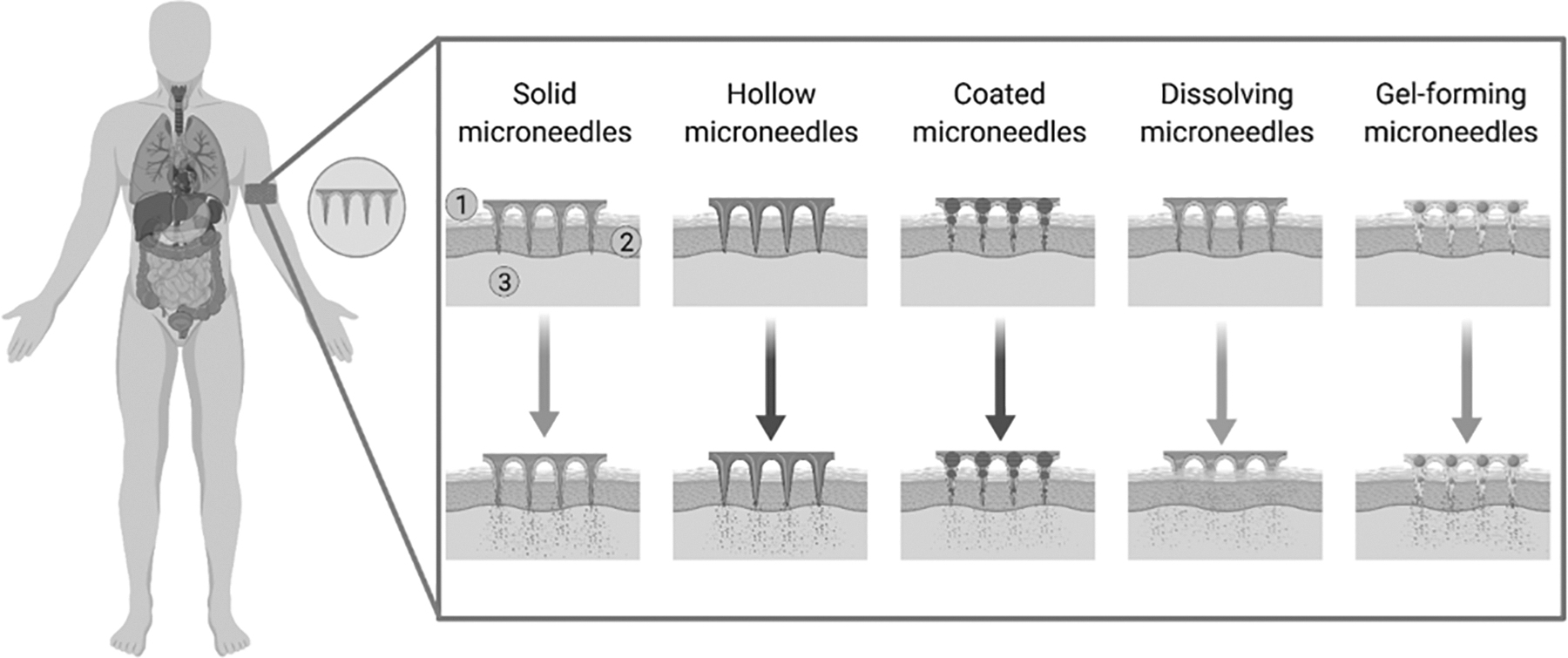
Schematic illustration of drug release from different types of MNs. (1) Stratum corneum, (2) epidermis, and (3) dermis. MNs, microneedles.
Fabrication and Designing Strategies
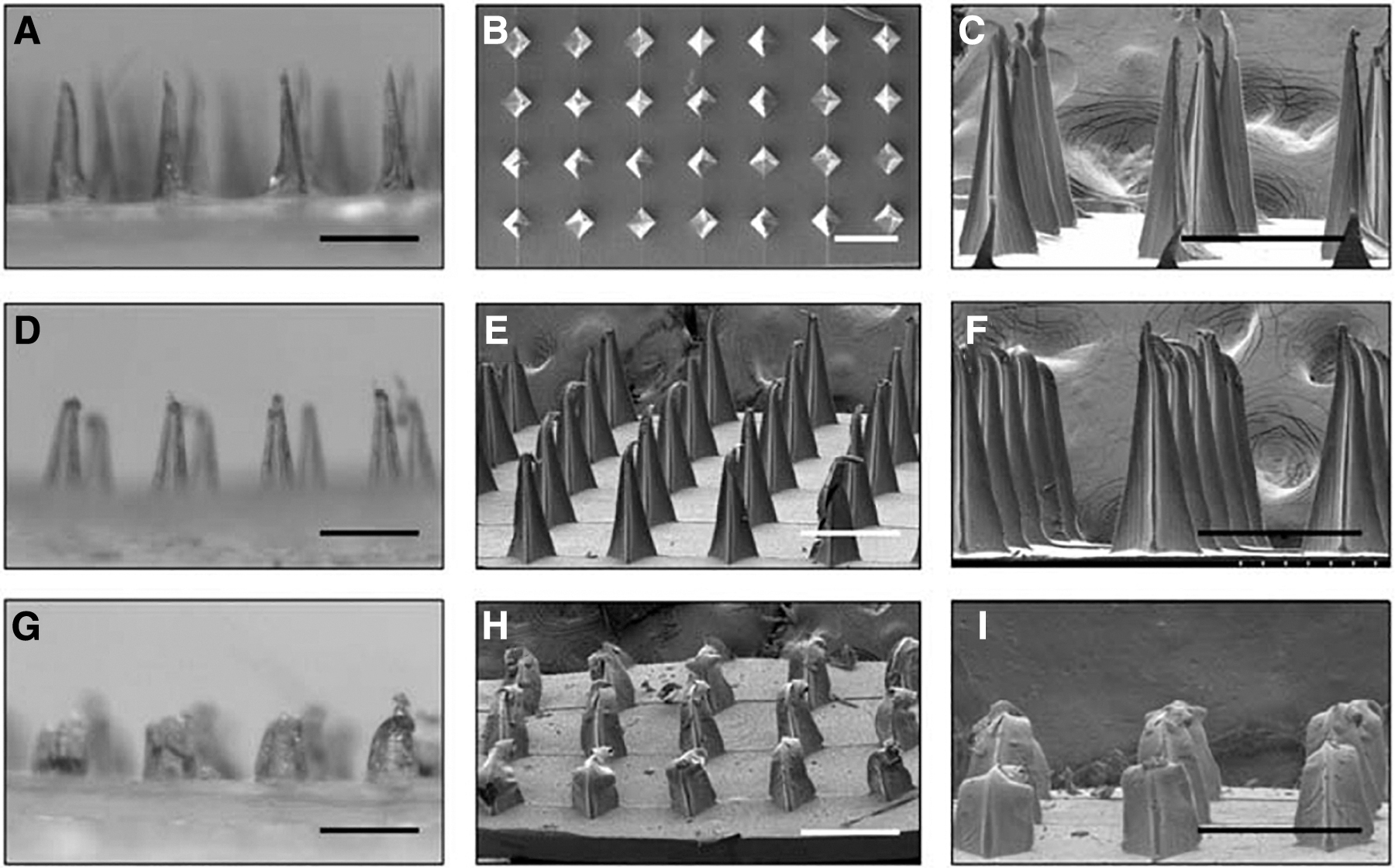
With the advancement in technology, several techniques have been evolved to fabricate MNs from simple techniques such as micromolding to three-dimensional (3D) printing. Some of the commonly reported techniques are summarized in Table 1. While designing MNs through any suitable method, the size and shape of MNs should be considered, as these parameters can influence drug delivery. Figure 2 illustrates various designs of MNs with respect to shape and tip. 28 The sharpness and diameter of MNs could affect dye distribution with better results using sharp needles. 28,29 One of the benefits of MNs is pain reduction compared to hypodermic needles (26G). However, the size and number of MNs in a patch can influence the pain sensation in patients. Gill et al. reported that a decrease in length and number of MNs could decrease the pain. 13
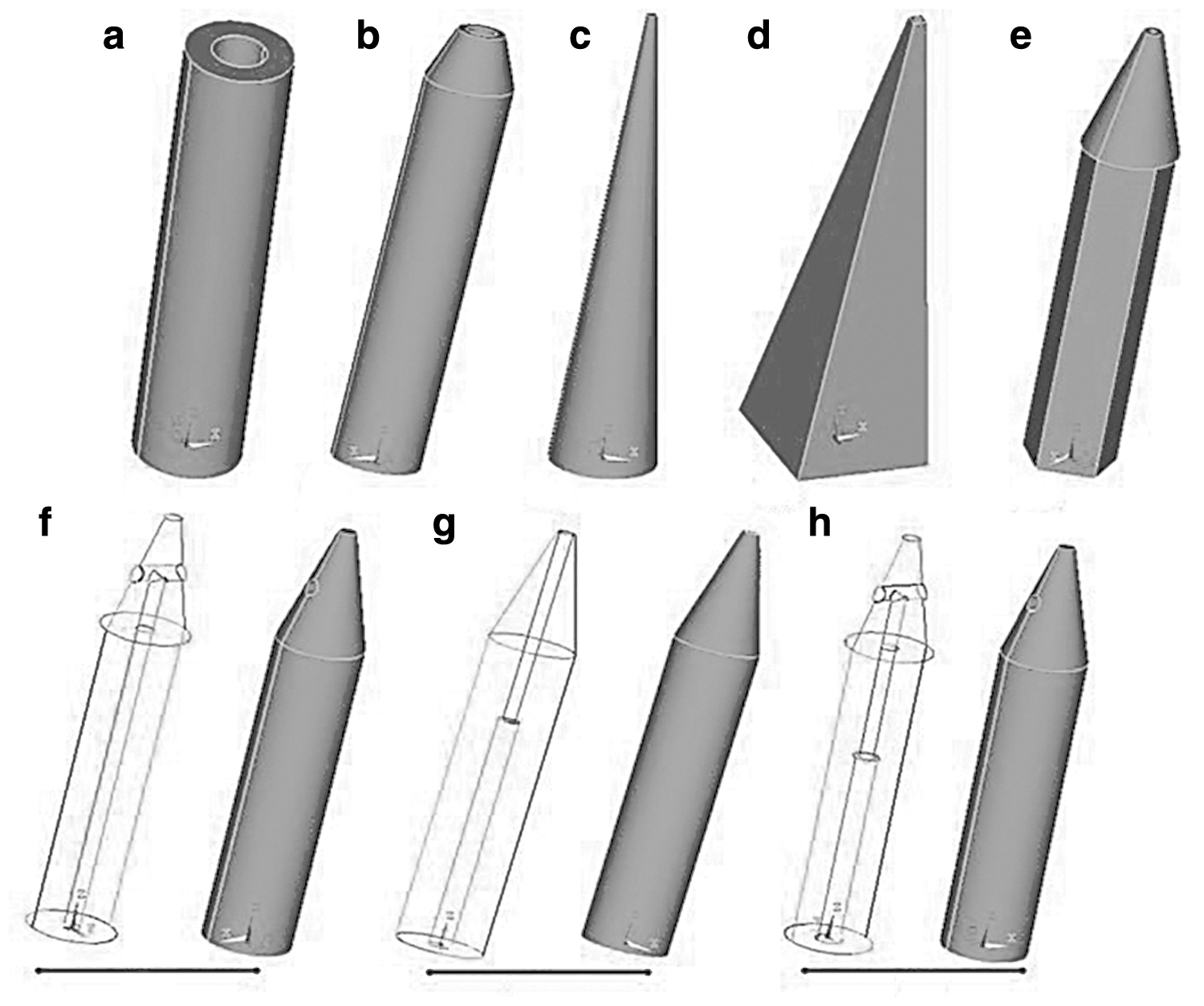
Illustration of various designs of solid MNs with respect to shape and tips.
Fabrication methods of different types of microneedles
3D, three dimensional.
Variety in MNs
There are different types of MNs reported for drug delivery applications, such as solid MNs, hollow MNs, dissolving MNs, coated MNs, and hydrogel-forming MNs. These differ in their design, material, and mechanism of drug release.
Solid MNs
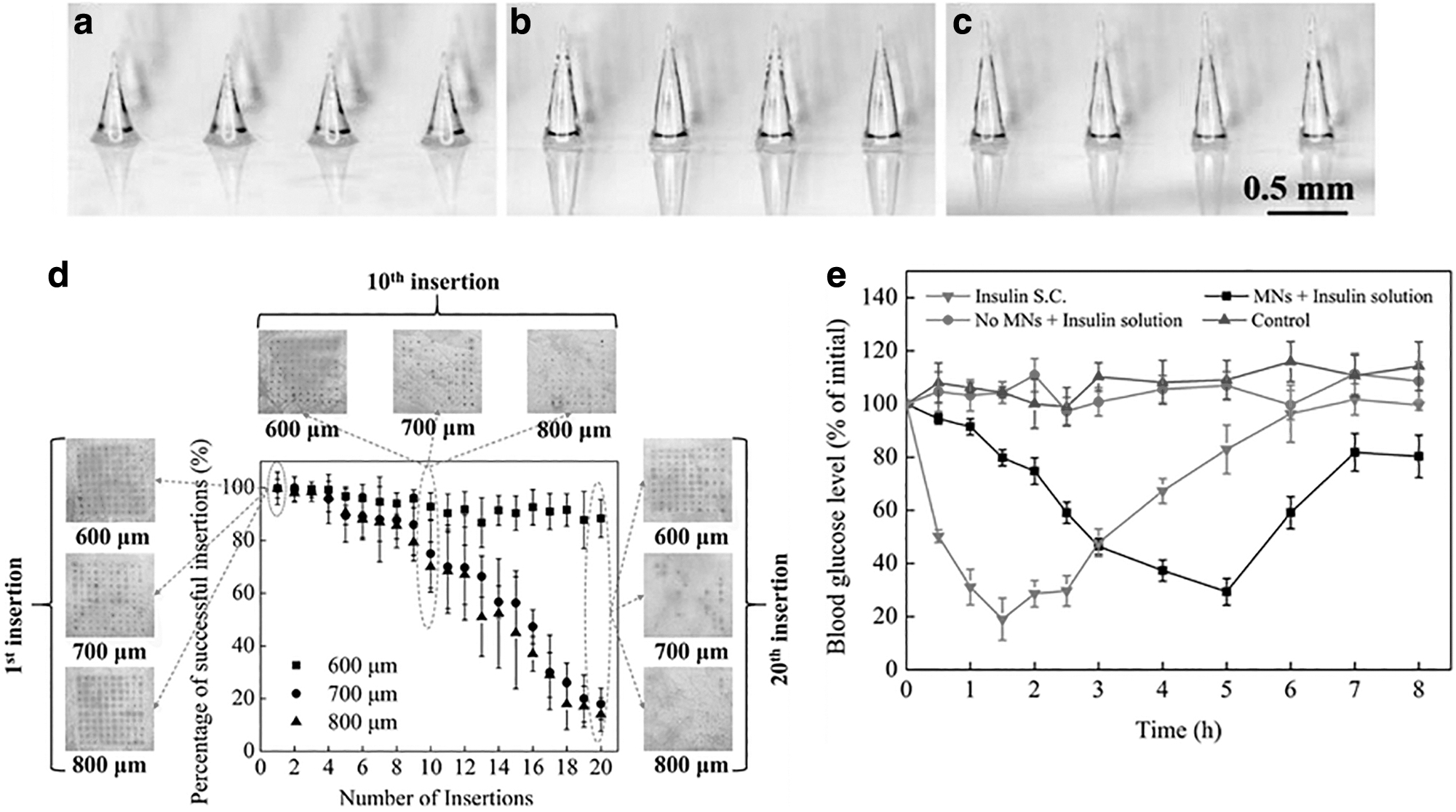
Solid MNs are usually applied for the creation of conduit channels in skin for subsequent delivery of drug/vaccine. 30 Created microsized conduit channels allow drug diffusion through the skin. They have a disadvantage that created channels should be closed to protect the transport of unwanted material/pathogens. 31 Different materials have been used to prepare solid MNs such as silicone, metals (stainless steel and titanium), polymers, and ceramics. For instance, Narayanan and Raghavan prepared sharp silicon MNs using a wet etching process with 52 times higher mechanical strength compared to that of skin for smooth insertion. The average height, base width, and tip diameter of needles were 158, 110.5, and 0.4 μm. 32 In another report, Nguyen et al. used stainless steel MN rollers and array for the enhancement of penetration of captopril and metoprolol. Array showed about eight times increase in transdermal reflux for captopril, while about five times for metoprolol. 22 Li et al. used poly(lactic acid) (PLA) to fabricate solid MNs to deliver insulin with three different sizes (Fig. 3a–c). They found that 600-μm-sized MNs have more successful insertion compared to that of size 700 and 800 μm (Fig. 3d). Furthermore, adequate control blood glucose level was observed in Balb/c mice diabetic model (Fig. 3e). 33 Furthermore, Bystrova and Luttge reported solid ceramic MNs based on alumina. They used a cost-effective polydimethylsiloxane (PDMS) micromolding method for the fabrication of ceramic solid MNs. 29
Hollow MNs
Hollow MNs have an empty core with a pore at the tip to deliver fast drug delivery. This type of MNs is usually used to deliver high molecular weight bioactive molecules. 25 These kinds of MNs can accommodate a higher dose of drugs in hollow space. 15 After the application of hollow MNs, the drug delivery rate can be controlled by varying pressure from slow delivery to fast delivery. 34 In addition to drug solution application, hollow MNs were also reported to facilitate transdermal delivery of nanoparticles. Du et al., reported dermal delivery of ovalbumin [with or without pily(I:C)]-loaded poly(lactic-co-glycolic acid) (PLGA) nanoparticles, liposomes, mesoporous silica nanoparticles (MSNs), and gelatin nanoparticles (GNPs) through in-house made hollow MNs. PLGA nanoparticles and cationic liposomes were found to have enhanced delivery of model antigen compared to that of MSNs and GNPs evaluated by immune response. 35 In another report, Mönkäre et al. compared the delivery of PLGA nanoparticles loaded with ovalbumin and poly(I:C) using hollow and dissolving MNs. They found hollow MNs had superior ability to deliver model antigen to induce immune response. 36 Overall, hollow MNs have benefits of fast delivery of loaded substance and the ability to enhance transdermal delivery of nanocarriers.
Dissolving MNs
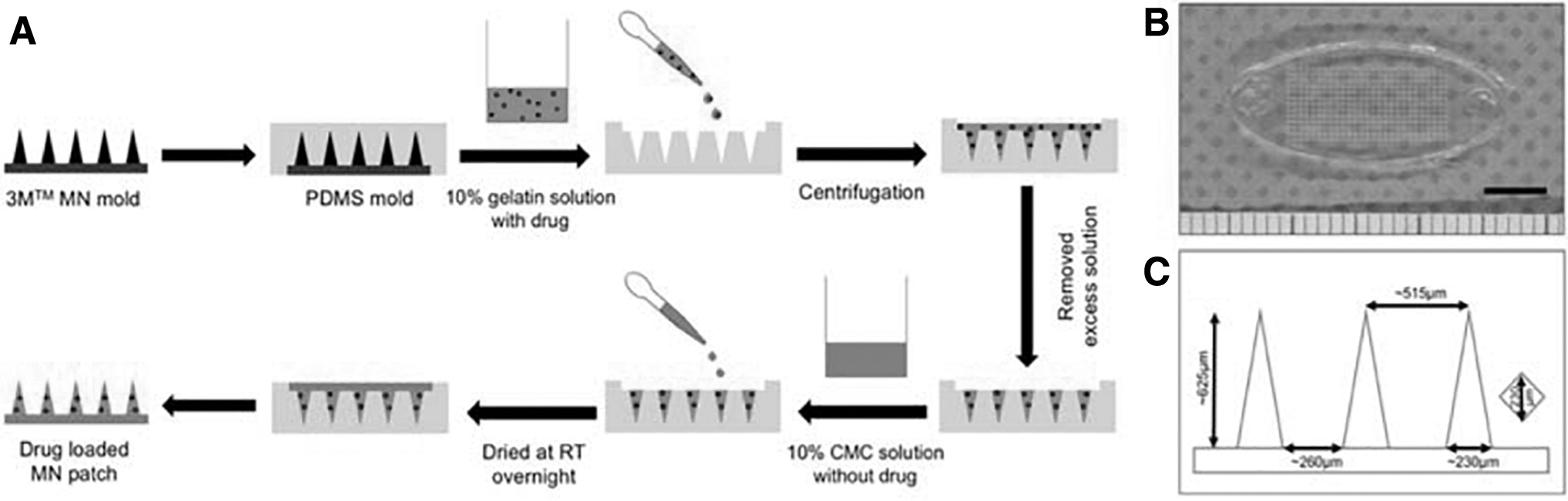
Dissolving MNs are composed of biodegradable and biocompatible materials that tend to degrade and dissolve in body fluid, leading to the release of loaded cargo. Usually, they are fabricated using the micromolding technique, the fabrication process of dissolving gelatin/carboxymethyl cellulose polymeric MN patches is shown in Fig. 4. 26 Drug release is mainly controlled through the dissolution rate of materials (Fig. 5). 26 These kinds of MNs have the drawback of dose limitation compared to solid, hollow, and hydrogel-forming MNs. 20 Zhao et al. reported hyaluronic acid-based fast-dissolving MNs loaded with 5-aminolevulinic acid (5-ALA; a precursor of proporphyrin IX) for photodynamic therapy using micromolding. They found a fast in vitro release (∼100% in 60 min) of 5-ALA using Franz diffusion cell. Furthermore, in vivo antitumor efficiency was also confirmed using tumor-bearing BALB/c nude mice. Mice group treated with 5-ALA-loaded MNs with light exposure showed a reduction in tumor volume compared to 5-ALA injection, only light and no treatment group. 37 Recently, Li et al. prepared separable dissolving MNs made up of biodegradable polymers (PLGA and PLA) for sustained delivery of levonorgestrel (LNG). Upon application, the needles were implanted into skin and slowly sustained. 38 In another report, Bhatnagar et al. reported PLA and PVP composite dissolvable MNs for delivery of DOX and docetaxel (DTX). MNs were dissolved fast and showed a fast release of drugs in the skin. However, the slow permeation of drugs through skin was observed. In vivo antitumor efficacy was tested on 4T1 bearing BALB/c nude mice, which showed control over tumor volume using DOX-/DTX-loaded MNs after intratumor application of MNs. 39
Coated/hybrid MNs
Coated MNs have a coating of drug solution on needles with soluble material. They tend to provide fast drug release by the fast dissolution of coating layer of needles. The higher amount of drug loaded can be controlled by the thickness of the coating layer. Jain et al. used dip-coating method to fabricate 5-ALA solution-coated two-dimensional stainless steel MNs for skin tumor treatment. 40 Furthermore, they optimize coating parameters in terms of coating and concentration of the drug. In vivo antitumor efficacy of 5-ALA-coated MNs was evaluated using A-20 tumor-bearing balb/c mice, which showed a significant reduction in tumor volume after treatment with MNs and light exposure for photodynamic therapy. The dip-coating approach cannot precisely control drug loading. For precise control, Chen et al. devised an adjustable apparatus for dipping of needles into drug solution. 41 Coated MNs can be used to deliver peptides whose efficiency can be affected by the hydrophobicity of peptide, needle morphology, and excipients. 42 These types of needles were also used for local anesthetic delivery. 43
Hydrogel-forming MNs
These are the new type of MNs with a swellable material composition, which can absorb and swell interstitial fluid to form 3D network. 15 This swelled network behaves as a hydrogel conduit for the delivery of drugs from the attached reservoir in a controlled manner. 44 This type of MNs leaves no material residue upon removal. 45 Larger doses can be administered at a controlled rate using hydrogel-forming needles. 24 Different drugs from small hydrophilic molecules (theophylline) to high molecular weight molecules (insulin) have been reported to deliver through hydrogel-forming needles. For instance, Donnelly et al. reported poly (methyl vinyl ether-co-maleic anhydride) (PMVE/MA)-based hydrogel-forming MNs and evaluated their transdermal delivery efficiency using six molecules with different molecular weights (∼171 to ∼67,000 Da). 45 In another report, Migdadi et al. prepared hydrogel-forming MNs using poly (ethylene glycol) cross-linked poly (methyl vinyl ether-co-maleic acid) with metformin HCl-loaded reservoir. Sustained release of metformin with Tmax of 24 h was achieved using MNs, ensuring transdermal delivery of drug. 24 Besides, on-demand drug release can also be achieved using hydrogel-forming MNs by stimulus control. Hardy et al. prepared hydrogel-forming MNs using light-responsive materials, that is, 2-hydroxyethyl methacrylate (HEMA) and ethylene glycol di-methacrylate (EGDMA), for on-demand delivery of ibuprofen. 46
COMPATIBILITY—PATIENT COMPLIANCE AND SAFETY
MNs offer a minimum invasive approach with less pain drug delivery, which leads to better patient compliance compared to conventional invasive needle-based drug delivery. 13 MNs can help in decreasing needle phobia, which promotes health such as a successful immunization program because of higher patient acceptability. In addition to compliance, MNs help in decreasing costs in terms of administration, packing, transportation, and disposal cost. 47 MNs' perception and acceptability in pediatric population for immunization were also reported to be positive. 48 Besides being painless, the ease of administration, and the cost-effectiveness, MNs also promote patient compliance by smart delivery of the drug. For instance, Chen et al., report enzyme-free glucose-sensitive MNs for on-demand release of insulin with 2-month stability in aqueous medium. 41
APPLIED PERSPECTIVE AND CLINICAL TRANSLATION OF MNs
MNs have a wide range of theranostic applications in the field of molecular medicine, cell biology, human biology, biomedical engineering, and genetic engineering. Potential applications of MNs are shown in Fig. 6. MNs are used for the local drug administration and development of personal medication on the basis of introducing an RNA medicine (small noncoding RNA, small interfering RNA [siRNA], microRNA [miRNA], and antisense RNA), 49 DNA (recombinant deoxyribonucleic acid), 50 peptides (cyclosporine and desmopressin), 51 and proteins (FC proteins, hormones, interleukins, anticoagulants, antibodies, and enzymes). 52,53 These molecules play an imperative role in personalized medicine. Still, the limitations with these molecules as drugs are target delivery and to maximize the drug concentration reached to the affected site. For this reason, MNs can be used for target drug delivery and also to break the biological barriers like cellular impermeability and blood-brain barrier (BBB). 54
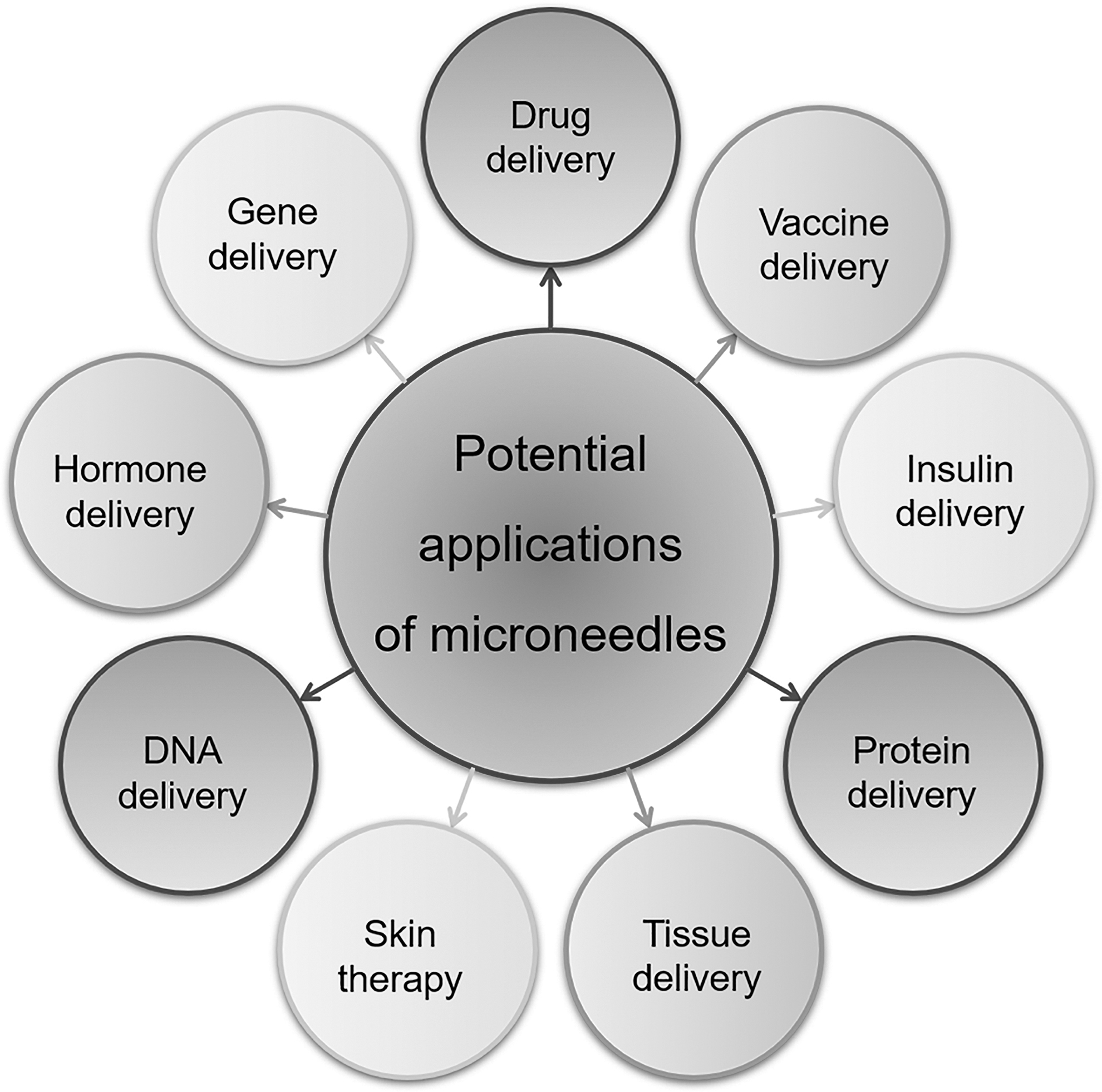
Potential applications of MNs. Each application strongly depends on the MN type and materials used for fabrication.
Localized, controlled, and painless delivery of drugs are the main advantages of MNs, which can promote reduction in nonspecific effects as well as patient compliance. This can make an MN a potential drug delivery system in neural activities where the biggest challenges to cross the BBB and reach a significant amount of drug to active site. 55 MN shaft length at the microscopic scale is controlled by advance microfabrication technology that shows a considerable advantage. Due to the ultrafine microarchitecture of MN, it can be quickly injected into stratum corneum (outermost keratinized layer with very low permeability) of skin. Most of the nerve terminal branch point is present under the depth of about 100 μm of this layer. So, local delivery at this site will help to neutralize the toxicity, replenish the pain, and local cellular injury. On the other hand, skin is considered the largest organ of the body. Previous research revealed that cutaneous uptake of oxygen in all age groups is 0.529 ± 0.265 mL O2 m−2·min−1. 56 For this purpose, there is a large number of blood capillaries run under the skin, especially highly saturated in stratum corneum. Due to this, drugs administered under the skin rapidly join the blood flow and result in fast treatment. MNs have substantial application in the diagnosis, painless monitoring of diseases, and biochemical analysis to extract the sample. For instance, MN patches are used to draw the interstitial fluid from the skin epidermis to monitor the diseases in a minimally invasive way. Similarly, blood glucose monitoring is a routine test for diabetic patients and the injection of insulin (for insulin-dependent diabetes or type 1 diabetes). With the aid of MNs, this process can be a painless and most convenient experience for the patients. 57,58
MNs have a broad range and multidisciplinary applications. These are also useful in the designing of sensors and electronics fields. They have been used in purpose-based modification in scanning tunneling and atomic force microscopes. Other applications are to construct electrospray emitting nozzles, microdialysis use for low molecular weight compounds, and printer head nozzles. 34
APPLICATIONS OF MNs THROUGH DIFFERENT DRUG DELIVERY ROUTES
Transcutaneous or transdermal drug delivery
The transdermal drug administration route is widely used for injecting drugs. This method is typically applied through topic creams, hypodermal needles, and patches. Topical creams and hypodermal needles are very common in practice from the last few decades. Hypodermis needles are not always acceptable as when everyone looked back to their childhood. Hypodermic needles were biased as a giant monster. On the other hand, topical creams showed less bioavailability due to the biodegradation in the body and crossed the strong skin barrier. Skin consists of three primary layers, peripheral layer is called stratum corneum, middle layer epidermis, and core layer is dermis. The stratum corneum is the first and most considerable barrier in drug delivery due to the physiochemical properties, for example, less permeability. It shows significant permeability for low molecular weight drugs (Heparin) and lipophilic drugs (diclofenac epolamine and capsaicin). 31,59 To increase the permeability and bioactivity and overcome the skin barrier, transdermal drug delivery system, including MNs, nanocarriers, and patches loaded with drugs, are used. 60,61
MN-based vaccine administration
Skin acts as a first-line defense and plays a vital role in restraining the pathogens. For this reason, a wide range of antigen-presenting cells flow under the skin, especially dermis and epidermis. Thus, researchers have preferred intradermal over intramuscular vaccine administration. With the fast-growing and rapid advancement in the field of nanotechnology, nanomaterials, especially MNs, are considered promising vehicles in vaccinology. 62,63
Currently, MN-based vaccination has gained tremendous attraction of biomedical and pharmaceutical researchers because conventional methods required professional training of phlebotomy. Also, careful handling needs to be safe disposal (incineration), avoiding significant injury, and changes to the transmission of blood-borne infection. Therefore, the intradermal route for vaccine administration is a more handy and safe direction compared to the conventional way, although intradermal vaccinations have some limitations, for example, microdermabrasion, tape stripping, and ballistic shown low penetration. The MNs are fascinating in the case of self-administration vaccination. There are different types of vaccines that will be administered by MNs.
MN patches for DNA vaccination
A DNA vaccine is a third-generation vaccination. Nowadays, health care researchers focus on endogenous antigen production by introducing engineered DNA (usually come from a plasmid, small circular bacterial DNA) into the host body. As a result, the humoral immune system of the host is stimulated against the specific antigen. DNA vaccines attained significant attention of medical professional over conventional vaccination method due to the following reasons: (1) safety profile (no whole bacterial cell or attenuated virus), (2) host body shows less immunogenic resistance, (3) stability, and (4) large-scale production at commercial scale. 64,65
Kim et al. conducted research on the influenza virus in which only 3 μg of hemagglutinin (HA) DNA was sufficient to stimulate the immune response administered by MN patches. 66 Later on, HA DNA combined with attenuated influenza vaccine is injected by as MN patch for cross-protection. 67,68 Another comparative study was conducted by Fernando's research team, in which designed MN patches were loaded with NP gene of A/WSN/33 influenza virus and conventional DNA vaccine administration. The study concluded that nanopatch-based introduced DNA vaccine has significantly induced conserved CD8+ T cell epitope immunity against influenza virus. 69 To enhance the amount of DNA in MN patches, pH-responsive polyelectrolyte multilayer assembly technique was introduced by Kim et al., which facilitates the release and carries the maximum amount of vaccine. 34
MN patch approach had also been used on dogs to induce immunity against the rabies virus. Arya and her collaborators designed MN patches that were used to deliver the DNA vaccine. MNs loaded with vaccines were dissolved under the skin after a few minutes of injection. These dissolved MNs with DNA vaccines were found as a very safe and feasible method for vagrant and domestic dogs. 70 Previous studies reported another approach: dry-coated DNA MN patches had been practiced for West Nile virus to modulate immunity in mice. 71 The efficacy of dry-coated DNA vaccine against the hepatitis C virus was also studied, which showed the activation of immunity by stimulation of virus-specific cytotoxic T lymphocytes. 72 Microscale silicon projections, also known as a microenhancer array, were designed to enhance the efficiency of dry coating loaded with DNA vaccine in vivo experimentation for Hepatitis surface antigen. 73
For further analysis after in vivo confirmation studies of cutaneous DNA vaccine management on an animal model, an ex vivo system of human skin has been done for immunological modulatory over 72 h and expression level confirmation. 74 Another comparative study between conventional and MN patches was conducted by Kask et al. on low dose of protein gD2 of vaginal herpes simplex virus that was incorporated in a plasmid. Results confirmed that the low-dose vaccine in MN patches provides a more protective effect on fetal challenges over traditional methods in mouse models. 75 Similarly, another approach was applied for immunization against anthrax in mice. DNA plasmid solution with anthrax protective antigen was mounted on positively charged PLGA nanomaterial and that immunized solution applied on mice skin than pretreated with MN derma rollers. 76 Finally, transcutaneous or intradermal vaccination has shown significant and comparable results. 65
MN patches for peptide or subunit vaccination
MN patches have also been used for skin or transdermal injecting of peptide or subunit vaccine. Skin is considered a more appropriate route for a vaccine to grasp the cells of epidermis and dermis, especially dendritic cells (DCs) and Langerhans cells (LCs) 75 because these cells are the primary site for modulation of humoral as well as cellular immunity. 77 Boks et al. developed nanoporous ceramics microneedle (npMN) arrays loaded with OVA257–264 peptides (8-residue peptide) along with agonistic anti-CD40 antibodies as an adjuvant. Ex vivo experimental study on human skin revealed that npMN array is a promising way to deliver vaccines as well as in vivo induction of CD8+ effector T cell responses. 78 Primarily, MN patches incorporated with subunit for influenza vaccine stimulate the antibody production. 79,80 In vivo experimental results confirmed that MN-based transdermal delivery of only 1 μg imiquimod-adjuvanted and HA vaccine against influenza was shown to be more significant and improved modulation of immune response by inhibition of proinflammatory cytokines as well as reduce the viral titer in lungs compared to adjuvant TLR (Toll-like receptor) ligands alone. 80 Kim et al. reported co-delivery of M2e virus-like particles (VLPs) with influenza split vaccine to the skin using MNs (Fig. 7). 79
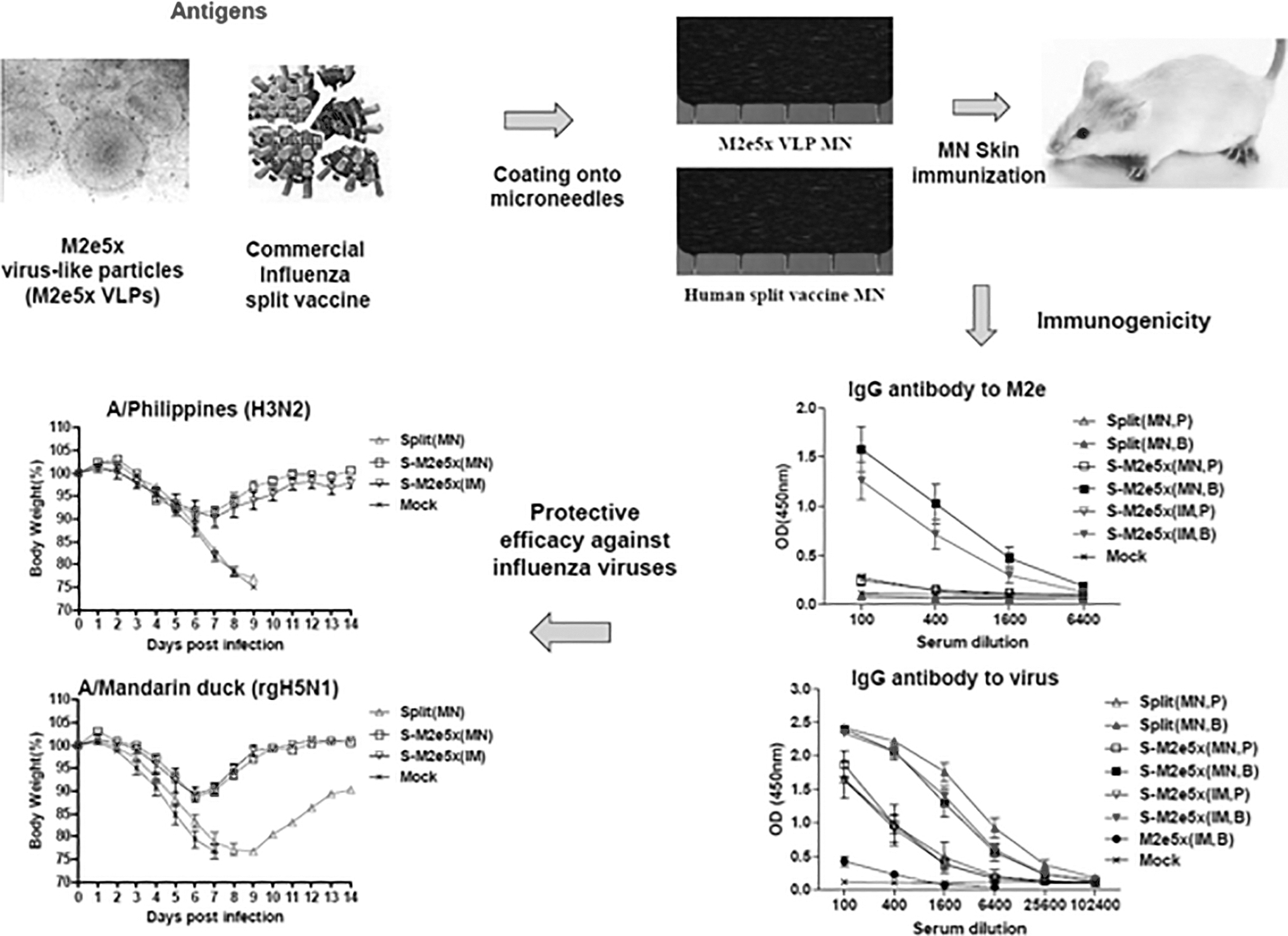
Co-delivery of M2e virus-like particles with influenza split vaccine to the skin using MNs. Reprinted from Kim et al.
79
with permission under the terms and conditions of the Creative Commons Attribution (CC BY) license (
Studies conducted on young and elderly healthy volunteers revealed that there are no significant and noticeable side effect observed during experimentation. 81,82 In addition, MN patches were also applied to rescue the other diseases by injecting antigens through the transdermal route. MN patches have been used for ovarian cancer vaccination through the intradermal route along with oral administration. It provokes the systemic, mucosal, and T cell immune response to conquer the tumor growth in the cancer microenvironment of mouse model. 82 To stimulate the IgE-mediated immune response against the allergen, Shakya and Gill's project introduced the allergen through the skin by MN patches. IgE plays an essential role in the manifestation of many allergic diseases. MN patch-mediated exposure of allergen significantly reduces the IgE attachment and the mast cell activation. 83 MN patch BCG (bacillus Calmette-Guérin) and tetanus toxoid vaccines were used to stimulate the humoral immune system against tuberculosis and tetanus, respectively. A study demonstrated that MN patches encapsulated with tetanus toxoids stimulate the humoral immune response in pregnant mice, and also reported the high antibody titer at prenatal stage as well as in the postnatal stage up to 12 weeks. 84,85 An experiment conducted on guinea pigs BCG-coated MN patch used for intradermal immunization. Results clearly showed that MN patch coated with vaccine vigorously increased the cellular immunity in both spleen and lungs. 86 MN patch mediated combinatorial vaccination of plague, botulism, anthrax, and staphylococcus antigenicity, significant protection was observed. 87 –90
MN patches for virus-like particle delivery
VLPs or viral particles are similar to viruses that consist of self-assembled noninfectious particles, usually structural proteins, with higher molecular weight than peptides and subunit antigen. For this reason, VLPs can be covered with MN patches to prolong the magnitude of humoral immune response. 91 –93 Kang's and his team introduced the VLPs by the intradermal route to immunize the mice. The results showed that antigen encapsulated in patches had adverse effects on immune efficiency. Furthermore, these coated patches exhibited a protective role to boost up the immune response by increasing the level of IgG and IgA in mice alveolar fluid and lungs. 94 Similarly, influenza patches encapsulated with VLP trigger the LCs and generate the immune response. 95,96 These results proposed that MN patches can offer a beneficial platform to successfully deliver VLP vaccines. Similarly, intradermal immunization by MN patches impregnated with VLP can play a prophylactic role in human cervical cancer compared to intramuscular immunization. 97 Another study stated that DNA- and HPV16 VLP coated MN patches produced vigorously neutralizing the antibody response and deliberated protection over HPV16 challenge. 98 The results showed that lyophilized HPV VLP-coated patches are thermostable and more practical approaches for vaccine administration.
MN patches for whole virus delivery
Attenuated viruses are merely used for MN patch-based immunization, but live viruses can be used in this method. For the protective immune modulation with inactivated viruses required time-dependent dose or introduce along with certain potent adjuvants. A large number of studies have been revealed that attenuated viruses encapsulated in MN patches showed a clear dose-sparing benefit over the traditional counterpart, and MN patch-based delivery exponentially increases the efficacy of vaccine. 99 –101 These dose-sparing properties of MN patches were testified with inactivated rotavirus vaccine along with influenza virus in mice. 100 MN patch encapsulated with the inactivated virus can have distinctive features other than inducing the humoral response, including high thermostability, produce high magnitude cellular response by activating the antigen-producing memory B cells. 102,103 Similarly, cytokines play an integral part in immunity. MN patch loaded with inactivated influenza vaccine involved in the production of anti-inflammatory cytokines that take part in the long-lasting protection and cellular response. 99 Inactivated influenza vaccine delivery with this method heightened the stability in dissolving MN patches. 104
A comparative study was conducted on rhesus macaques in which live measles virus was encapsulated into MN patch applied on the skin with a subcutaneous injection to generate a humoral immune response. It was demonstrated that there was no significant difference in the magnitude of humoral immunity. Besides this, vaccine delivered by MN patch exhibits more thermostability compared to conventional lyophilized vaccine. 105 Various research groups administered adenoviruses with MN patch. As a result, intradermal vaccine delivery of live virus did not affect the efficacy of cellular immunity and increases the production of memory B cell or long-lasting immune response. 106 –108 Finally, these data showed that the live virus vector could be successfully introduced without harming the effectiveness of the immune system.
MN patches for drug delivery to other tissues
After the successful and momentous transdermal MN patch drug delivery, researchers have moved and target the other body tissues for local drug delivery.
Oral mucosa
Oral mucosa has a large number of lymphoid tissues just beneath the epithelial surface. For this reason, oral mucosa is one of the promising sites for vaccine administration. MN patch coated with antigen injected into the oral mucosa was reported as a successful method to overcome the mucosal barrier. Similarly, the same experiment has been done to over-ride the vaginal mucosa. Results showed that MN patch-based vaccination significantly increases antigen-specific antibodies in saliva (IgA) and serum (IgG) compared to intramuscular vaccine administration route. 8 Traverso et al. design prototype of a device implanted with MNs to enhance the bioavailability of the oral administered insulin. This device was placed in intestinal lumen and insertion of MNs occurred during the peristaltic bowel movement, which facilitates the penetration of insulin by breaking the mucosal barrier of gastrointestinal tract. 11
Vaginal mucosa
Similar to other target tissue sites for vaccination, it is desirable to break the drug transport barrier. The vaginal mucosa may also be the most promising site for vaccine administration. Wang and his collaborators had introduced MN patch coated with antigen into the vagina, and results showed robust stimulation of antigen-mediated antibody (IgG) production both in the serum and reproductive tract. This method of administration is more efficient as it overcomes poor bioavailability of biotherapeutics through the oral route. The biodegradation and biological membranes are less permeable to macromolecules. 9,109
Ocular tissue
The bioavailability of ocular drugs (eye drops) is poor because the eye is one of the most sensitive and delicate organs of the body, which is protected with a barrier called corneal epithelium. Jiang et al. reported that pilocarpine and fluorescein coated on MN patches had increased the bioavailability up to twofolds. As a result, that aided the long-lasting reconstruction of the pupil, while comparing to conventional drug treatment. 110,111
Nail
Nails are one of the hardest and most difficult parts of the body in terms of drug delivery due to the presence of a nail bed. A study was conducted by Chiu et al. in which the nail bed was pretreated with MN cylindrical roller and then a topical drug was applied. This method increased the penetration ability of drugs compared to drugs administered without MNs because drugs took time to cross the keratinized architecture of nail. 112,113
Anal sphincter
Topical phenylephrine (PE) is used for the treatment of ineffective control over bowel movement (bowel incontinence). Conventional delivery of PE dose by gel did not significantly treat fecal incontinence due to insufficient drug concentration at the target site. For this purpose, with the help of MN patch-coated PE dose increase, the delivery up to 10-folds, as a result, increases sphincter pressure compared to that of conventional PE gel-based delivery alone. 114,115
Dermal papilla
Conventional treatment for alopecia is restricted due to the insufficient concentration of drugs available to the affected area. Second, the considered amount of dose does not reach because it is unable to cross the corneum stratum. MNs combined with hair loss therapeutic drugs, including platelet-rich plasma, minoxidil, and steroids, can significantly increase hair growth, although, previously, this therapy is used for neovascularization, induced collagen formation, and increased growth. 116,117
Cardiac muscle
Tang et al. designed an MN patch combined with cardiac stromal cells (MN-CSCs) that was used for rejuvenation of cardiomyocytes after the attack of myocardial infarction. In this study, CSCs were introduced into the rat body by intravascular injection as well as direct heart injection and epicardial patch transplantation. The result showed that MN-CSCs is an innovative and distinctive method to regenerate the cardiomyocyte. 118
Future Directions
Although MN-based delivery of biologically active molecules or compounds is an emerging and promising area for prophylactic human diseases, some areas need to be improved. There is still a need for more advanced and precise approaches that have minimal invasiveness and target specificity, and overcome the biological barriers with higher drug loading capacity. Two main parameters that need to be considered, while improving MN development, are mechanical strength and immunogenic rejection. The mechanical designing of MNs is the most promising and fundamental approach to define prophylactic applications. The optimization of MNs is a very crucial step to engineer MNs with precise geometrical and physical properties. The microscopic miniature design of MNs can be a major area of improvement. The saturation or abundance restricted at the microscale level can be easily failed, while applying on skin. 119
There are two main mechanical events that take a decisive role in MN administration: (1) the friction force that plays to neglect the skin friction force to insert the MNs before puncturing the skin and (2) the friction force must be greater than the skin force to puncture the skin and perform its function. A study was conducted to assess the relationship between geometries and the insertion force of MNs. MN tip radii usually vary between 30 and 80 mm and length around 500 mm. Davis and his team's needle applied force (insertion force) was relatively higher than the needle tip interfacial area. Different types of MNs have diverse friction force, insertion force, as well as an interfacial force. For example, in this experiment, investigators found that solid and thin-walled hollow needles needed approximately the same insertion force, that is, range between 0.1 and 3 N. The insertion force is directly proportioned to the wall angle, thickness, and tip radius. According to the margin, safety criterion (ratio between insertion force and friction force) must be higher, and margin safety is again directly proportioned to wall thickness and tip radius. 120
These mechanical obstacles seriously restrict the MN in prophylactic medical applications. Unfortunately, only a few research groups are working on enhance the mechanical feasibility and overcome the hindrance during MN administration. Mistilis et al. reported a combinatorial method of MN patch encapsulated with an influenza virus that can be removed from the cold chain. They have manufactured the MN to stabilize the influenza virus that unveiled the noteworthy thermostability. This way of manufacturing supports the liquid formulation as well as live and attenuated vaccination. 121 Some of the groups are working on dissolved MN patches that are based on organic gelatin polymers to enhance the activity, including immunogenicity and thermostability.
To specifically target the skin DCs, especially LCs, polymeric dissolve microneedle (DMN) patches encapsulated with nanomaterial coated with the antigen that stimulates the skin LCs explicitly. LCs are important immunomodulatory cells that play an important role in cellular immunity by specifically cross-priming the CD8 T+ cells and CD4 T+ cells. They also have priming effects on Th1 and Th17 mediating immune response. So these cells are imperative players to modulate the antigen-specific antiviral and antitumor activity. Results showed that activation of skin LC stimulation mediated by nanoparticle coated with immunogenic and transdermal delivery mediated by DMNs provides an efficient platform for immunization strategies. 108,122 MNs are usually employed for transdermal route, but various researchers also applied through the oral route. 109,123 Through the oral administration route, the major hindrance is strong immunogenic rejection overtake by IgG and even by mucosal IgA of salivary secretions. The same problem is faced while being administered in vaginal and intestinal parts. To combat strong and robust immune rejection, including injury, allergic reaction, and irritation, Wang et al. introduced a pretreatment method in which nonablative fractional laser treatment of administered animal has done before injecting the MN patches. 124
Summary
MNs are the emerging device that possesses distinctive properties like rapid, painless, and local delivery compared to existing administration systems for prophylactic disease and biomedical applications. Despite all these facts, MNs made momentous advancement and transfigured the health care field, including diagnosis, therapeutics, and immunization, as well as the world's most growing field cosmetics. Besides this, there are many areas of improvements that still need to be addressed. There is a lot of advancement need to design and construct the smart and wearable devices that can be used for therapeutic applications. On the other hand, MN-based wearable devices need to develop a multifunctional approach in the future. As mentioned in the limitation section, MN-based drug administration required many significant modifications and enhancements to make it more effective, safe, and minimal invasive immunogenic or allergic reaction. Silicon chip-based MNs should be designed and linked to APP to make it digitalized and easily accessible. The compendium of this review is, MNs are the emerging and most promising area in prophylactic or health care applications.
Take-Home Messages
This work presents state-of-the-art MNs as smart drug delivery platform. Readers can get a balanced overview of numerous types of MNs and their revolutionary perspectives in clinical settings.
Besides the well-established and documented influencing factors, that is, shape, size, geometry, and type of MN, formulation procedures, material choice, and end-product viability and stability are also crucial factors that readers must take into account.
Evidently, MN-based unique drug delivery platform has become a robust alternative drug delivery system with added benefits, such as overall efficacy, targeted delivery, painlessness, noninvasiveness, controlled administration, and so on.
Footnotes
Acknowledgments and Funding Sources
All listed author(s) gratefully acknowledge the literature services provided by their representative departments and universities. No external funding was received.
Author Disclosure and Ghostwriting
No competing financial interests exist. The content of this article was expressly written by the author(s) listed. No ghostwriters were used to write this article.
About the Authors