






Abstract

Introduction:
Obstructed hemi-vagina with ipsilateral renal agenesis (OHVIRA) is a rare and complex Mullerian anomaly with an incidence ranging from 0.1% to 3%. 1 It is usually characterized by cyclical dysmenorrhea and, in a later stage as, chronic pelvic pain. The standard of care comprises the surgical restoration of normal genital tract anatomy through a combination of vaginoscopic and hysteroscopic techniques, aiming to enhance sexual and reproductive outcomes. Cases of a septate uterus in conjunction with OHVIRA syndrome are rarely reported in the literature. 2
Materials and Methods:
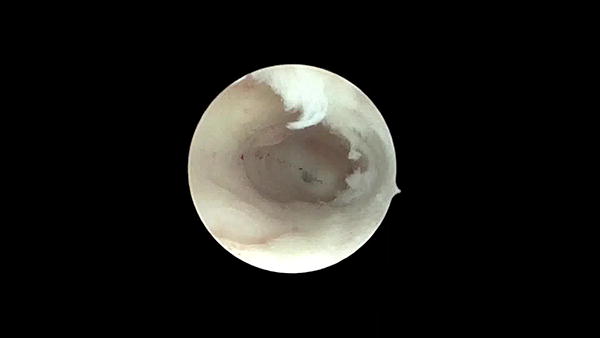
This video demonstrates the hysterolaparoscopic view of OHVIRA with complete uterine and cervical septal resection.
Case:
A 23-year-old with 2 years of infertility with no dysmenorrhea since menarche was incidentally diagnosed to have OHVIRA on ultrasound during her infertility workup. Magnetic Resonance Imaging of the pelvis revealed two uterine cavities with a uterine and a vaginal septum with a collection in the left uterine cavity. On laparoscopy, there was a left accessory ovary with pelvic peritoneal endometriosis. Speculum examination revealed a single cervix with no vaginal bulge. On hysteroscopy, the right uterine cavity was small, and the endometrium appeared normal. An ultrasound-guided incision was given on the vaginal wall, and blood drained from the left uterine cavity and the left cervix was identified. On hysteroscopy, the left uterine cavity was relatively large and filled with stones (collected blood over time had solidified into stones). Using a bipolar resectoscope, complete cervical and uterine septal resection was done. She had a spontaneous conception after 6 months of surgery with an elective cerclage placed and delivered vaginally at term.
Conclusions:
Herlyn–Werner–Wonderlinch syndrome is usually seen with uterine didelphys. OHVIRA with a septate uterus is very rare, especially with a combination of an accessory ovary and stones in the uterine cavity, which was never reported. Her clinical presentation is unusual and unique as she presented after 9 years following menarche during her infertility workup with no history of dysmenorrhea and clinically undetectable vaginal bulge.
This case was operated in a tertiary care hospital, and no conflicts of interest or obligations resulted from it.
There are no commercial associations during the last 2 years that might create a conflict of interest in connection with the video.
The authors have received and archived patient consent for video recording/publication in advance of the video recording of the procedure.
Runtime of video:
5 mins 54 secs.
Get full access to this article
View all access options for this article.