






Abstract
Introduction:
Fibroepithelial polyps of urethra (FEPU) are a rare entity in infancy. They are benign mesodermic tumors that affect prevalently boys, while are exceptional in girl. The most frequent locations are the membranous urethra/neck bladder, proximal ureter, and ureteropelvic junction. FEPU are extremely rare in the anterior urethra. Their etiology is unclear. Predisposing factors are infection, chronic inflammation, allergens, trauma, and congenital causes. Patients present with hematuria (30%–60%), obstructive symptoms, retention, and voiding disorders. The diagnosis is made by voiding cystourethrography (VCU) and confirmed by cystourethroscopy. FEPU could be associated with other congenital urologic anomalies. They are benign lesions with no recurrence rate reported. The treatment of choice is transurethral resection (by fulguration or by laser).
Materials and Methods:
We report an 18-month-old boy with a polyp arising from the posterior urethra and extending to the bladder. He presented to our pediatric surgery department with a history of painless macroscopic hematuria (first episode) followed by microscopic hematuria. Laboratory investigations, (urinalysis, urine culture, and blood examination) were negative. Ultrasonography revealed normal kidneys. The bladder wall was of normal thickness and an exophytic tumor arising apparently at the base of the bladder was identified.
Results:
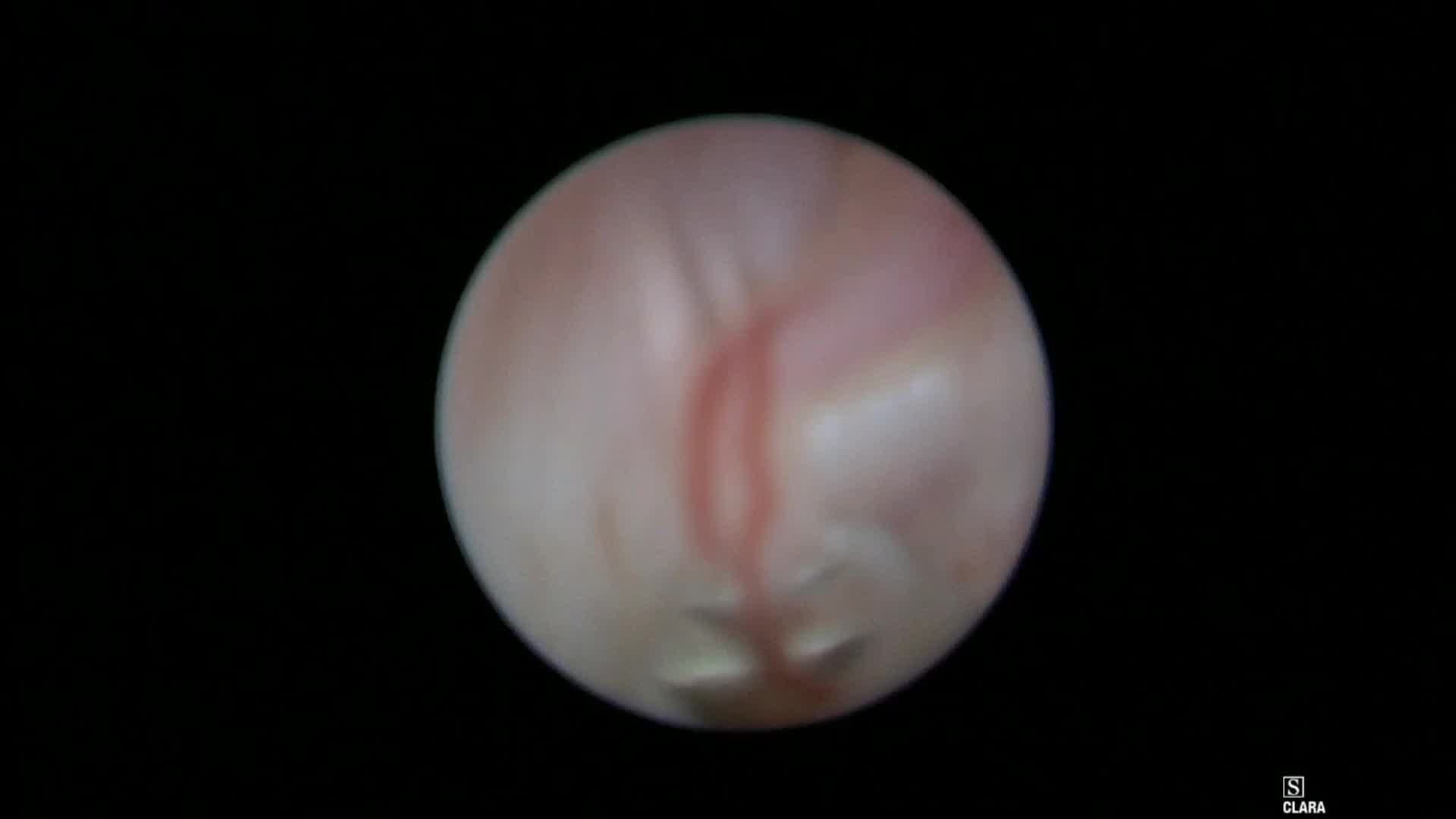
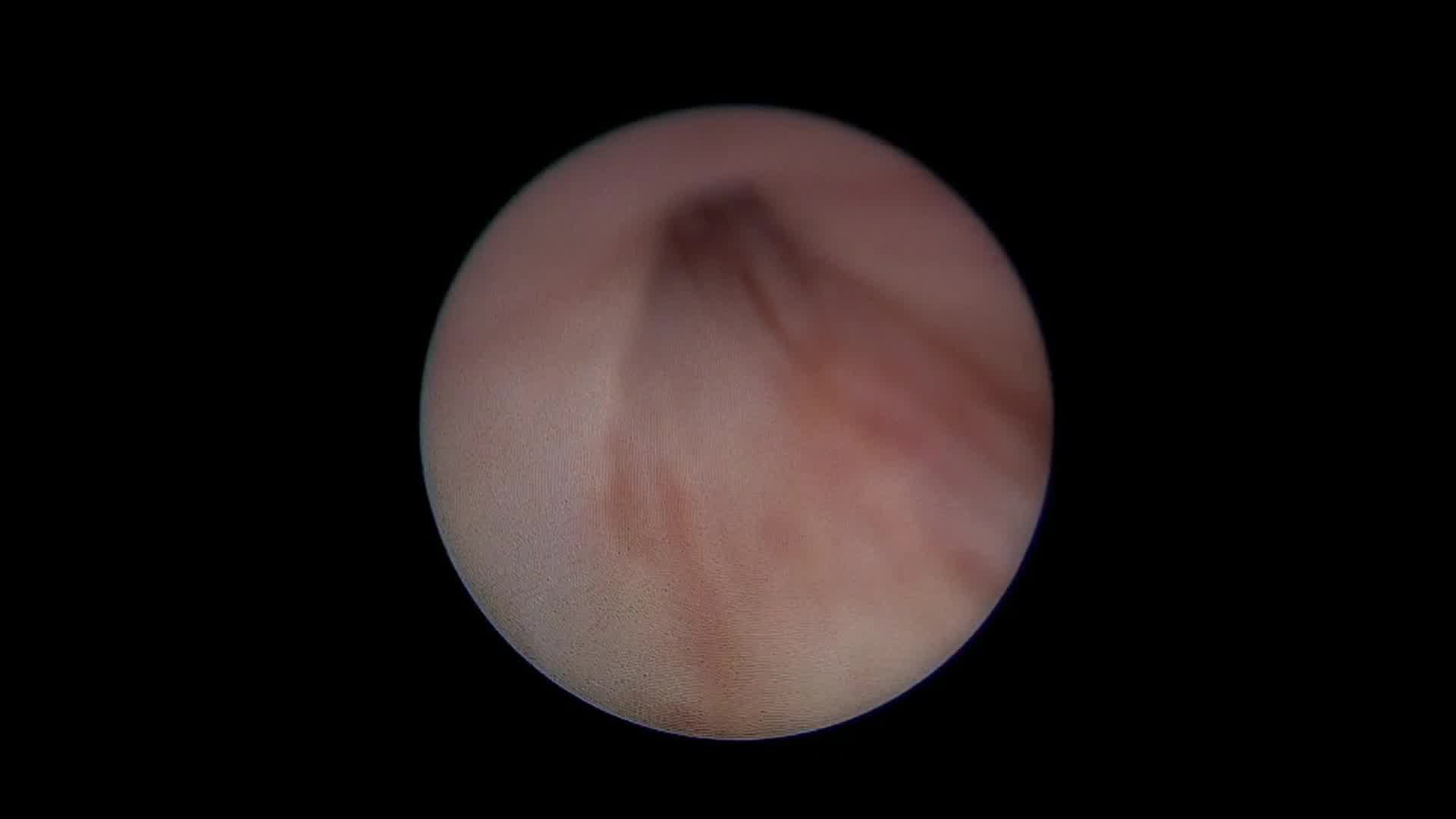
Cystoscopy revealed a polyp (length 1 cm) of the posterior urethra, just above verumontanum, floating through the bladder neck. The polyp was removed transurethrally by a cystoscope 12-9Ch. Using an endoscopic forceps we exerted compression on the pedicle associating traction and rotation on its axis. We did not use electrocautery or laser, reducing the urethral impact. The patient was discharged after 1 day. Cystoscopy at 12 months showed no recurrence. Histology report described a fibrotic core lined with regular transitional urothelium without atypia: findings are compatible with benign fibroepithelial polyp.
Conclusions:
FEPU represent an extremely rare and significative cause of recurrent and painless hematuria in children. No guidelines on long-term follow-up are described. No association with malignant degeneration is reported. The diagnosis could be challenging for varying morphology of FEPU. Ultrasonography could help in diagnosis; VCU shows a filling urethral defect in more detail, usually under bladder neck. Cystoscopy is essential to confirm the diagnosis and for FEPU resection.
Author(s) have received and archived patient consent for video recording/publication in advance of video recording of procedure.
No competing financial interests exist.
Runtime of video: 5 mins 47 secs

Get full access to this article
View all access options for this article.