






Abstract
Introduction:
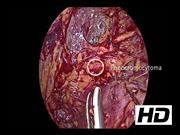
Indocyanine green (ICG) is a water-soluble fluorophore that binds albumin and exhibits fluorescence in the near-infrared (NIR) spectrum. The use of ICG fluorescence in adrenal surgery was first described by Manny et al. for robotic partial adrenalectomy to perform a parenchymal-sparing surgery. 1,2 Partial adrenalectomy is usually performed for the management of hereditary and sporadic bilateral pheochromocytomas to preserve the adrenal cortical function and avoid adrenal failure. This video shows a right retroperitoneoscopic cortical-sparing adrenalectomy using ICG fluorescence.
Materials and Methods:
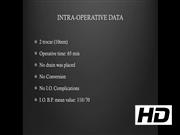
A 34-year-old woman presented with an 8-mm pheochromocytoma as part of MEN 2A syndrome. The patient had already undergone a left cortical-sparing adrenalectomy with a retroperitoneoscopic approach for a pheochromocytoma 5 years ago. A right retroperitoneoscopic cortical sparing adrenalectomy was planned. Two weeks before surgery, alpha- and beta-blockers along with corticosteroids and high hydration were administered to stabilize the blood pressure and the heart rate of the patient. Two 10-mm laparoscopic trocars were placed: the first one (camera trocar) under the 12th rib border and the second one (operative trocar) under the 11th rib border. The surgical field was maintained with CO2 pneumoretroperitoneum and fluorescence was observed using an NIR/ICG endoscopic system. ICG was administered intravenously once the adrenal gland was identified. The initial dose was 7.5 mg and, after the imaging system was switched to ICG fluorescence, the adrenal gland became vividly enhanced in blue after 90 seconds. An excellent contrast was displayed between the adrenal gland and the surrounding tissues and organs (liver and right kidney). The intraoperative blood pressure remained within the normal range and no complications occurred.
Results:
The patient spent the first postoperative night in the intensive care unit according to protocol for patients affected by pheochromocytoma. The postoperative course was uneventful, and the patient was discharged in postoperative day two. At 6-months follow-up, the patient's blood pressure was normal without antihypertensive medications.
Conclusion:
ICG fluorescence is a safe and effective tool that may be helpful during minimally invasive cortical-sparing adrenalectomy.
No competing financial interests exist.
Runtime of video: 5 mins 16 secs

Get full access to this article
View all access options for this article.