






Abstract
Introduction:
Minimally invasive urologic surgery has a challenging learning curve. The development of a simulation surgical training program has become an essential tool in the pediatric urology fellowship program. The aim of this video is to present our initial experience with specific pediatric urology low cost models introduced in the “Gruyere” trainer. 1
Materials and Methods:
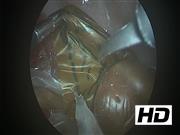
We developed four different models: laparoscopic pyeloplasty, extravesical ureteral reimplantation, Mitrofanoff apendicovesicostomy, and ureteroureteral anastomosis. 2,3 All the models are created using three-dimensional (3D) printed organs, inner mesh, and synthetic gel. They are all introduced and fixed in the same training box. A covering transparent film is used to resemble the peritoneum. 1,4
Results:
This trainer allows the practice of all the main steps in each procedure specially refining delicate suturing in small spaces. All these models are portable and easy to carry. A detailed tutorial of material, steps of each procedure, and evaluation sheet has been designed to facilitate its use.
Conclusion:
Surgical training in simulated surgical models has become an important part in the pediatric urology fellowship program. The use of 3D printing models with low cost materials has allowed us to develop more accurate models and incorporated them in minimally invasive surgery trainer boxes.
No competing financial interests exist.
Runtime of video: 2 mins 59 secs
This video was originally submitted and selected for the IPEG 2020 congress program (Vienna June 2020).


Get full access to this article
View all access options for this article.