






Abstract
Introduction:
An aberrant left hepatic artery (aLHA) may be seen in 8%–15% of cases 1,2 and a replaced LHA (rLHA) may be seen in ∼2%–11% of cases. 1,3 An aLHA and a rLHA assume significant importance during gastric resections. A preoperative assessment of this anatomy is particularly important in laparoscopic surgery because of loss of tactile feedback of the arterial pulsation within the lesser omentum. When present, the artery of origin should be preserved. This video demonstrates a gastric resection for cancer where a diligent review of imaging identified a rLHA arising from the left gastric artery (LGA). An LGA preserving radical gastrectomy, without compromising oncologic principles, was performed.
Methods:
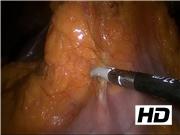
A 54-year-old male patient presented with melena and he underwent an upper endoscopy and was found to have an antropyloric lesion. Biopsy showed adenocarcinoma. A contrast-enhanced CT scan showed the tumor, perigastric lymph nodes, and a rLHA arising from the LGA—Michel's Type 2 anatomy. 4 A laparoscopic LGA preserving subtotal gastrectomy with D2 lymphadenectomy was planned. The patient was operated in the French position with five ports, which included a 10-mm umbilical camera port, and 5- and 12-mm left and right working ports, respectively, in the midclavicular line. Standard steps of a subtotal gastrectomy with D2 lymphadenectomy were followed with modification to preserve the LGA. After dividing the greater omentum from the transverse colon, all the tissues around the left and right gastroepiploic, common hepatic, right gastric, proper hepatic, celiac axis, and proximal splenic arteries were meticulously cleared to remove all the lymph nodes en bloc. The lesser omentum was incised and the rLHA was identified along with the LGA. The LGA was circumferentially cleared and the gastric branches divided to complete the en bloc lymphadenectomy.
Results:
The patient had an uneventful recovery. He was tolerating solids by postoperative day 5. His postoperative liver function tests were normal. He was discharged on the eighth postoperative day. The histopathology was moderately differentiated adenocarcinoma pT1bN0 with 0/32 lymph nodes positive.
Conclusion:
During a laparoscopic gastric resection, it is pertinent to look for vascular anomalies, including a rLHA in the preoperative imaging to prevent accidental injury. When present, the vessel of origin should be preserved. A laparoscopic LGA sparing radical gastrectomy is feasible without compromising the oncologic safety.
No competing financial interests exist.
Runtime of video: 9 mins 51 secs


Get full access to this article
View all access options for this article.