






Abstract
Introduction:
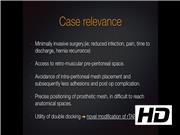
The advances in robotic surgery have permitted the application of such technology to various surgical fields including hernia repairs. This video depicts the treatment of two primary ventral hernias repaired using a modified robotic transabdominal retromuscular umbilical prosthetic hernia repair (rTARUP) approach. The approach utilizes a lateral double-docking technique with the DaVinci Si® robotic system.
Methods:
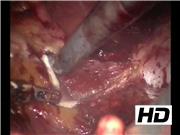
The patient is a 50-year-old male who presented with obesity and chronic epigastric pain. An abdominal computed tomography (CT) confirmed two primary ventral hernias: a large epigastric hernia measuring 6 × 7 cm and a supraumbilical hernia with visceral contents. The abdominal wall defect diameters were 6 and 2.5 cm, respectively. Using the minimally invasive robotic system of the DaVinci Si, a retromuscular mesh technique was utilized to repair the defects. The operation was initially intraperitoneal with access to the retromuscular preperitoneal space using a right-sided longitudinal incision of the posterior rectus sheath (as per the standard TARUP technique). The dissection proceeded into the retromuscular space until the left lateral edges of the rectus sheath (linea semilunaris). This created the initial preperitoneal space to insert a modified UltraPro polyprolene® 25 × 22 cm mesh. After this, the DaVinci Si was repositioned in a symmetrical manner on the right side of the abdomen, with ports placed this time in the retromuscular preperitoneal space. After a symmetrical incision of the right-sided retromuscular space, the mesh was positioned, and the posterior rectus sheath was subsequently closed extraperitoneally with a V-lock suture®. Finally, a Jackson–Pratt drain was inserted parallel to the mesh in the retromuscular plain.
Results:
The operative time was 121 minutes. The patient was discharged on the second postoperative day without short-term complications. Follow-up continued until 12 months postoperatively during which the patient remained asymptomatic, without signs of hernia recurrence, site infection, or chronic pain.
Conclusion:
This video shows that the robotic system of the DaVinci Si allows excellent instrument articulation and angulation within small operative spaces. 1 Our experience supports that of preceding studies in terms of the effectiveness and safety of the rTARUP technique. 2,3 This minimally invasive procedure allows a shorter hospital admission and effective pain control when compared with the open technique. 3,4 In addition, this technique may be used to treat large peritoneal defects including a transverses abdominal release technique as required. 4 Multicenter data with long-term follow-up would be useful in verifying the safety of this technique.
All procedures and reporting in our study were carried out in accordance with the ethical standards for the responsible committee on human experimentation (through the governing body of the Swiss Ethics Committee) and with the international Helsinki Declaration of 1964 and its later amendments.
No competing financial interests exist.
Runtime of video: 6 mins 46 secs
Presented in part at the 27th International Congress of the European Association for Endoscopic Surgery (EAES) in Seville, Spain, July 13, 2019.

Keywords
Get full access to this article
View all access options for this article.