






Abstract
Background:
Complete surgical resection of choledochal malformations is recommended due to an 11% overall risk of developing malignancy, as well as attendant symptoms arising from poor biliary tree drainage, including ascending cholangitis, choledocholithiasis, and pancreatitis. 1,2 We report a case of type IV-A choledochal malformation resected by a robotic approach in a 20-year old patient.
Methods:
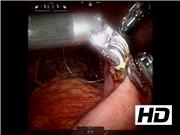
The patient is a 20-year old female who was admitted with upper abdominal pain caused by acute pancreatitis with a lipase of 2,950 U/L. Ultrasonography and computed tomography imaging revealed a markedly dilated fusiform extrahepatic bile duct malformation with dilated left intrahepatic ducts. Magnetic resonance cholangiopancreatography (MRCP) showed that the choledochal malformation extended into the left bile ductal system, with multiple left intrahepatic cysts. The right intrahepatic ducts were spared. On MRCP, patient also had an anomalous pancreaticobiliary junction with a common channel measuring 17 mm long, as well as pancreas divisum. Through a robotic approach, the extrahepatic portion of the choledochal malformation was dissected from the hepatoduodenal ligament and posterior pancreas, ligated distally and resected right at its junction with the pancreatic duct. Cholecystectomy was done en bloc with the cyst. The hilar portion of the cyst extended into left liver. Therefore, left hepatectomy was performed en bloc. The right main bile duct divided at the junction with the cyst. A Roux-en-Y right hepaticojejunostomy was then performed using robotic intracorporeal suturing. The specimen was retrieved from the abdomen through a 5-cm Pfannenstiel incision. The operative time was 300 minutes, and estimated blood loss was 100 mL. Final pathology report revealed fibrocystic wall with erosion consistent with a choledochal cyst. There was no evidence of dysplasia or malignancy. The patient had an uneventful recovery and was discharged on postoperative day 6 with normal liver functions tests. On follow-up at 1, 3, and 6 months postoperatively, the patient was doing well, with appropriate remnant liver hypertrophy and normal function. There was no evidence of residual or recurrent choledochal malformation in the remnant liver.
Conclusion:
Robotic resection of type IV choledochal cyst with a Roux-en-Y reconstruction is safe, feasible, and affords the patient the benefits of a minimally invasive surgery, including quick recovery and short length of hospital stay. The several degrees of freedom and wrist-like articulation of the robotic instruments facilitated effective performance of this complex procedure in a minimally invasive manner.
No competing financial interests exist.
Runtime of video: 10 mins


Get full access to this article
View all access options for this article.