






Abstract
Introduction:
Femoral hernia is a rare and often misdiagnosed condition in childhood. Laparoscopy offers diagnostic accuracy and a safe and effective treatment. 1 Different laparoscopic techniques have been proposed for femoral hernia repair in children, but there is still no consensus about which one is the most effective. 2 –7 Laparoscopic percutaneous internal ring suture (PIRS) is a simple and reproducible technique that has been popularized in the pediatric surgery community. 8,9 In this video, we present a laparoscopic technique to repair femoral hernia in children, a PIRS-like technique.
Materials and Methods:
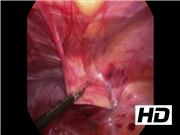
A 6-year-old girl presented a painful groin mass. Ultrasonography confirmed the diagnosis of a femoral hernia. The patient presented an asymptomatic congenital epigastric hernia as well. Laparoscopic repair of both hernias under general anesthesia and tracheal intubation was proposed. A 5-mm umbilical trocar was inserted. Carbon dioxide was inflated to obtain a pneumoperitoeum pressure of 10 mmHg. A 30° laparoscope was introduced. A 3-mm stab incision was made 6 cm left to the umbilicus to insert a 3-mm dissecting grasper. The epigastric hernia was repaired using the “scarless” technique previously described by Moreira-Pinto et al. 10 Concerning the femoral hernia repair, we used an 18G atraumatic needle and the 3-mm dissecting grasper to perform a high ligation of the hernia sac. First, a 2-0 Prolene loop was passed through the lateral aspect of the femoral hernia rim. Then, a 2-0 Ethibond thread entering through the same skin puncture site was passed through the medial aspect of the femoral hernia and into the Prolene loop. The Prolene loop was pulled out, bringing the Ethibond thread through the lateral aspect of the hernia orifice. Simultaneously, the hernia sac was inverted into the peritoneal cavity. The knot was tied extracorporeally and buried under the skin, performing a high ligation of the hernia sac in a PIRS-like manner. The whole procedure lasted 44 minutes. The femoral hernia repair lasted 15 minutes.
Results:
The patient was discharged 4 hours after the procedure. There were no intraoperative complications or postoperative complications during the first year of follow-up. Ultrasonography 1 year after surgery showed no recurrence of the hernias.
Conclusions:
Laparoscopic inversion of the sac with PIRS-like ligation is a simple technique and seems effective for femoral hernia repair in children. More cases are needed to further support this conclusion.
No competing financial interests exist.
Runtime of video: 3 mins 40 secs

Get full access to this article
View all access options for this article.