





Abstract
Introduction:
Leiomyomas are the most common benign esophageal neoplasms and they are located commonly in the distal esophagus. 1 Surgical excision is recommended for symptomatic lesions or for those >5 cm. 1 This video shows a laparoscopic resection of a gastric mass at the gastroesophageal junction using a laparoscopic transgastric technique.
Materials and Methods:
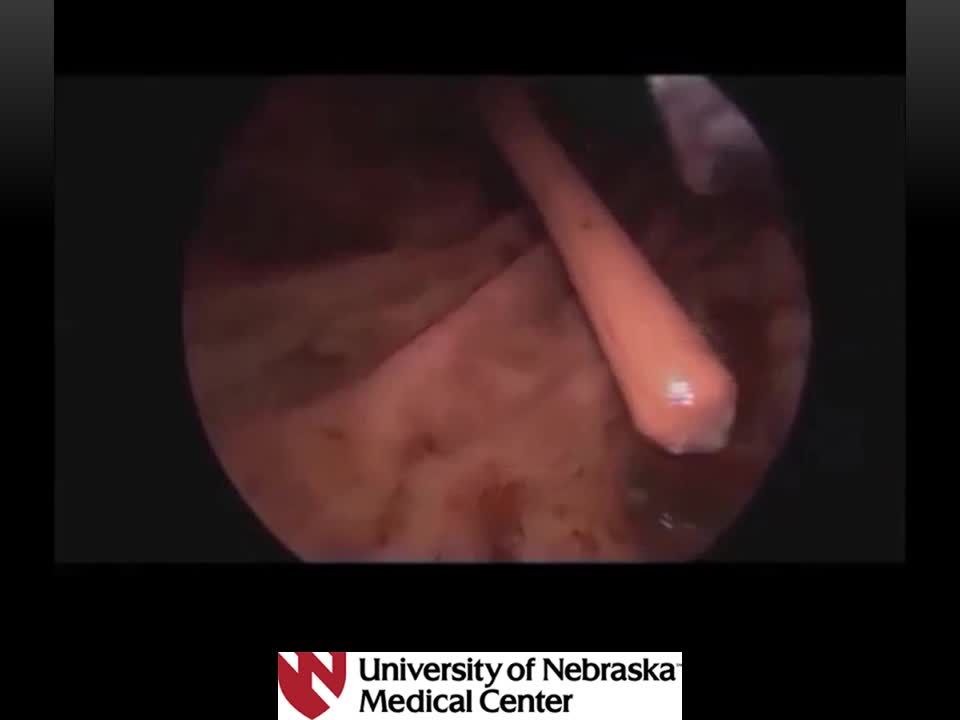
A 61-year-old female presented with dysphagia and underwent an upper endoscopy. The endoscopy diagnosed a mass in proximity to the posterior gastroesophageal junction (GEJ). Preoperative imaging and endoscopic biopsy were suggestive of a mass of mesenchymal origin. Owing to the location of the mass at the posterior aspect of the GEJ, a transgastric laparoscopic resection with intraoperative endoscopy was recommended. She was positioned supine with bilateral arms tacked and in steep reverse Trendelenburg position. Upper endoscopy verified the location of the mass at the posterior GEJ. Three 5 mm trocars were placed through the abdominal wall and directly into the insufflated stomach. The mass was circumferentially resected within the underlying stomach wall in a full thickness manner. The gastric defect was closed with intragastric suturing in a running manner with an absorbable suture. The endoscope and a 56F bougie passed easily through the GEJ after the resection and repair. The mass was removed through a small incision at the anterior stomach wall that was subsequently closed with a laparoscopic stapler. There were no intraoperative complications.
Results:
She had an uneventful postoperative course. An upper gastrointestinal contrast swallow study on postoperative day 1 revealed no leak or stricture and the patient was started on a clear liquid diet. She was discharged home on postoperative day 2 on a soft diet. Final pathology report revealed a 4.7 cm leiomyoma. To date, the patient has completed a 7-month follow-up without complications.
Conclusions:
The traditional options for resecting any gastric mass include a total, subtotal, or wedge gastric resection with either open or laparoscopic/robotic techniques. In the era of minimally invasive surgery, improvements in technology and instrumentation allow endoscopic, natural orifice, and transgastric approaches as valuable alternatives. This patient benefited from a transgastric resection and avoided an otherwise morbid operation for a benign lesion.
Acknowledgment:
Funding for this study was provided by the Center for Advanced Surgical Technology at the University of Nebraska Medical Center.
There are no commercial associations that might create a conflict of interest in connection with the published video. No competing financial interests exist.
Runtime of video: 9 mins 36 secs


Get full access to this article
View all access options for this article.