





Abstract
Introduction:
Laparoscopic Roux-en-Y gastric bypass has become one of the most common techniques for surgical treatment of morbid obesity. 1 Over the past decade, robot-assisted procedures for abdominal surgery have increased. 2,3 Robotic surgery seemed to be the recuperation of the third dimension with the advantages of the laparoscopic surgery. 1,4 Nonetheless, robotic surgery also has some limitations compared to the conventional laparoscopic surgery. 2 Despite the nicer ergonomic position for surgeon, in robotic surgery, the tactile sensation is fully lost, 4,5 and also, according to the literature, takes longer and is more expensive. 2,6,7 Advance laparoscopic bariatric surgery requires longer learning curve than other procedures, mostly the Roux-en-Y gastric bypass in which surgeon has to develop skills for suturing. The learning curve seems to be significantly shorter for robotic procedure and might be more suitable for more efficient skills development. 3,7
Materials and Methods:
The authors report the clinical case of a 42-year-old lady with a body mass index of 38.1 kg/m2 (height 1.66 m and weight 105.5 kg). Her main obesity-related comorbidities included type 2 diabetes on metformin and gliclazide for the past 4 years and arthritis requiring occasionally a stick for walking. No previous abdominal surgery. The procedure was performed by robot (Da Vinci Si HD) assisted by laparoscopy at the St. Mary's Hospital NHS Trust (Imperial College of London).
Results:
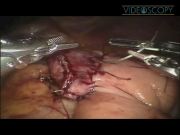
In October 2013, the patient underwent the first UK robot-assisted Roux-en-Y gastric bypass. The operation was performed by a multidisciplinary team in Laparoscopic Bariatric Surgery. The operative time was 198 minutes. There were neither perioperative complications nor morbidity. The patient received intravenous analgesia for the first 24 hours and then orally. The patient started walking few hours after the operation and drinking clear fluids after 12 hours. She was discharged on postoperative day 2. She presented normal follow-up after 2 months since the operation having lost 19 kg over the past 4 months.
Conclusion:
The robotic approach appears feasible and was performed safely in this first case in the UK. Nonetheless, further cases have to be performed in our hospital to compare with laparoscopic approach and to state, in our experience, the real advantage or disadvantage of this new surgical approach.
No conflicts of interest declared.
Runtime of video: 9 mins

Get full access to this article
View all access options for this article.
References
Supplementary Material
Please find the following supplemental material available below.
For Open Access articles published under a Creative Commons License, all supplemental material carries the same license as the article it is associated with.
For non-Open Access articles published, all supplemental material carries a non-exclusive license, and permission requests for re-use of supplemental material or any part of supplemental material shall be sent directly to the copyright owner as specified in the copyright notice associated with the article.
