





Abstract
Introduction:
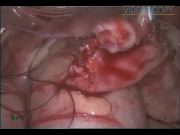
Duplex moieties may present with a wide range of pathologies, obstruction and reflux being the most common. 1 Reconstruction in duplex moieties is challenging, as integrity of both moieties needs to be meticulously preserved. Although the laparoscopic approach has been increasingly employed for different urological reconstructions, the laparoscopic approach for restoration of different pathologies in duplex moieties has been reported sparingly. 2,3 We demonstrate operative exercises of laparoscopic reconstructions of various pathologies in duplex moieties.
Methods:
All patients were evaluated in detail, including clinical and biochemical profiles. Imaging included ultrasound, computed tomography or magnetic resonance urogram, voiding cystourethrogram, and retrograde pyelogram. Cystoscopy was performed to rule out concomitant bladder pathologies. Diuretic renogram was ordered to ensure salvagability of the pathological moiety. All procedures were performed through the laparoscopic approach via transperitoneal access. Pelvic and upper ureteric pathologies were dealt in lateral decubitus, whereas lower ureteric and vesicoureteric pathologies were approached in Trendelenberg decubitus. Four ports were utilized—one 5-mm camera port and three 3-mm working ports. The vascular supply to both moieties was preserved, and usage of thermal energy was restricted. In duplex moieties with segmental pelviureteric junction obstruction, if the ureter draining the pathological moiety was short, a pyeloureterostomy was undertaken, whereas if the ureter was of adequate length to ensure tension-free approximation after dismemberment and excision of the adynamic segment, a segmental pyeloplasty was performed. Common sheath ureteric reimplantations were performed obeying Lich Gregoir principle. Operative and postoperative events were recorded. Ureteral stents were removed 6 weeks postprocedure. All patients underwent periodic follow-up with assessment of the clinical and blood profile. Imaging was repeated at 1 year postprocedure.
Results and Discussion:
Between January 2008 and December 2011, six laparoscopic procedures were undertaken in duplex moieties—two lower-segment pyeloplasty (lower-segment pelviureteric junction obstruction and long lower ureter), one pyeloureterostomy (lower-segment pelviureteric junction obstruction and short ureter), and three common sheath ureteric reimplantation (one duplex moiety with lower-segment ureterocele and two duplex moieties with lower-segment ureteral stenosis). The mean age was 5.3 years. Four were males and two females. Presenting complaints were fever, recurrent urinary tract infection, and flank pain. All procedures were completed uneventfully. The mean operation duration was 110 minutes. The mean blood loss was 50 mL. Mean duration of hospital stay was 3.5 days. Till last follow-up, all patients were asymptomatic. Four patients completed 1 year follow-up and revealed satisfactory follow-up imaging. Although technically demanding, the laparoscopic approach may be successfully attempted in duplex moieties. Familiarity with laparoscopic anatomy, diligent handling of tissues, and proficiency in intracorporeal suturing are important technical aspects. The operator should be well versed with laparoscopic exercises. Satisfactory outcome can be achieved with limited morbidity.
No competing financial interests exist.
Runtime of video: 7 mins 48 secs


Keywords
Get full access to this article
View all access options for this article.
References
Supplementary Material
Please find the following supplemental material available below.
For Open Access articles published under a Creative Commons License, all supplemental material carries the same license as the article it is associated with.
For non-Open Access articles published, all supplemental material carries a non-exclusive license, and permission requests for re-use of supplemental material or any part of supplemental material shall be sent directly to the copyright owner as specified in the copyright notice associated with the article.
