





Abstract
Introduction:
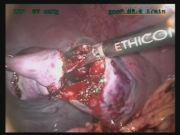
Congenital splenic cysts are usually of the epidermoid variety. 1 These cysts have a propensity for progressive enlargement with a risk of infection, hemorrhage, rupture, and becoming symptomatic. Diagnosis is usually made on abdominal ultrasonography or a computed tomography scan. Management options, from simple cyst aspiration to partial splenectomy, have been employed to preserve splenic function. However, more conservative measures such as cyst aspiration and limited decapsulation risk cyst persistence or recurrence and are generally not advocated. Radical cyst decapsulation has been deployed to achieve cyst control. 2 –6 Presented is a video of a giant epidermoid cyst managed by radical decapsulation performed laparoscopically. Highlighted is the technique of cyst decompression, segmental vascular control, and decapsulation of >90% of the cyst with preservation of the normal lower pole.
Materials and Methods:
The patient is placed in a supine position with the left side raised 30°. Three ports are utilized, a 12-mm umbilical camera with an epigastric and a left paraumbilical port. A pneumoperitoneum of 12 mm Hg is created, and the cyst initially decompressed before adhesions to adjacent structures is divided. Initially, the short gastric vessels are divided by an ultrasonic dissector followed by control of the segmental supply to the upper pole. Once devascularized, the cyst is divided circumferentially ∼1 cm from its junction with the normal spleen. Hemostasis is assured with a combination of ultrasonic and monopolar diathermy. Omentum is packed into the residual cyst cavity to minimize the risk of recurrence. The resected cyst is placed in a bag before retrieval through the umbilical port. The patient is fed on recovery and discharged the next day.
Results and Conclusions:
The patient is discharged from care 2 years postsurgery and at 5 years remains in excellent health. The experience reinforces the effectiveness of radical decapsulation in the management of giant epidermoid cysts and is advocated.
The authors have no conflicts of interest to disclose.
Runtime of video: 5 mins 03 secs


Get full access to this article
View all access options for this article.
References
Supplementary Material
Please find the following supplemental material available below.
For Open Access articles published under a Creative Commons License, all supplemental material carries the same license as the article it is associated with.
For non-Open Access articles published, all supplemental material carries a non-exclusive license, and permission requests for re-use of supplemental material or any part of supplemental material shall be sent directly to the copyright owner as specified in the copyright notice associated with the article.
