





Abstract
Background:
Laparoscopic transperitoneal nephrectomy is technically feasible in most cases of benign renal disease. To date, there have been isolated reports of laparoscopic transperitoneal hemi-nephroureterectomy of principally the upper moiety of a duplex system. Rarely reported are lower moiety nephroureterectomies.
Aim:
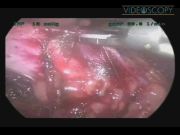
To present a 3-minute video demonstrating the technical details of a transperitoneal laparoscopic, right, lower moiety, hemi-nephroureterectomy in a 3-year-old.
Method/Technique:
A child with marginally functioning (5%) lower moiety of a right duplex system was subjected to a transperitoneal hemi-nephroureterectomy. The patient was placed in a left lateral position, and an umbilical camera and two working ports (right iliac fossa and epigastric), all 5 mm, were utilized. The ascending colon was reflected to the left and the underlying lower moiety ureter identified and isolated. With traction on the ureter, the pelvis was brought into view, and the blood supply to the lower moiety was controlled using a combination of ultrasonic scalpel and hook diathermy. A critical step at this stage was definition of the superior limit of the pelvis, which corresponded to the level of vascular demarcation. The renal parenchyma was transected at this point using the ultrasonic scalpel, which ensured reasonable hemostasis. Complete hemostasis was assured by approximating the divided kidney with a series of three interrupted intracorporeal sutures. The subtending ureter was dissected to close to the bladder base, where it was ligated and divided. A drain was placed percutaneously in the renal bed and the specimen retrieved via an extended umbilical incision.
Result:
The patient was started on fluids on recovery, with oral feeds introduced the next morning. The drain was removed before discharge on day 2. At 2 years postresection, the patient remains well.
Conclusion:
Laparoscopic transperitoneal lower-pole hemi-nephroureterectomy is technically feasible for benign renal disease in children. The combination of ultrasonic scalpel and intracorporeal suturing is adequate to control bleeding of the transected kidney. Dissection of the ureter distally to bladder neck is easily achieved without change in the port position. Recovery is robust with minimal requirement for analgesia. The wider space, better view, and ability to access all of the urinary tract make this a tenable alternative to other laparoscopic approaches.
No competing financial interests exist.
Runtime of video: 3 mins 28 secs


Get full access to this article
View all access options for this article.
Supplementary Material
Please find the following supplemental material available below.
For Open Access articles published under a Creative Commons License, all supplemental material carries the same license as the article it is associated with.
For non-Open Access articles published, all supplemental material carries a non-exclusive license, and permission requests for re-use of supplemental material or any part of supplemental material shall be sent directly to the copyright owner as specified in the copyright notice associated with the article.
