





Abstract
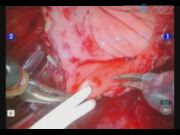
Bladder paraganglioma is exceedingly rare, accounting for possibly 0.06% of bladder tumors. Although some presented with typical symptoms, occasionally they are misdiagnosed as bladder cancer, where medically unprepared patients can have major consequences. Herein, we report the surgical management of a 31-year-old woman who was referred after partial transurethral resection of bladder tumor had been performed where histology demonstrated paraganglioma. The remnant lesion remained metabolically active and the patient was prepared adequately with alpha and beta blocker. A combined endoscopic laparoscopic approach was adopted. The posterior bladder lesion, in proximity to the left ureteric orifice (UO), was demarcated and Double-J stent was inserted. Transperitoneal laparoscopic dissection was performed, and a posterior cystostomy allowed combined intra-vesical and extra-vesical assessment of lesion. Resection was initially performed with a view to completely remove the lesion while preserving the lower ureter and UO. When the defect was deemed too close to the UO to offer a sound bladder closure without compromise to blood supply of the intramural ureter, resection of the lower ureter, primary bladder closure, and reimplantation of the ureter was performed. This was facilitated by the use of robotic suturing. This case demonstrated that combined endoscopic and laparoscopic surgery is a viable treatment option for well-prepared bladder paraganglioma, and a hybrid laparoscopic and robotic approach can facilitate complex reconstructive procedure.
No competing financial interests exist.
Runtime of video: 5 mins


Get full access to this article
View all access options for this article.
Supplementary Material
Please find the following supplemental material available below.
For Open Access articles published under a Creative Commons License, all supplemental material carries the same license as the article it is associated with.
For non-Open Access articles published, all supplemental material carries a non-exclusive license, and permission requests for re-use of supplemental material or any part of supplemental material shall be sent directly to the copyright owner as specified in the copyright notice associated with the article.
