





Abstract
Introduction:
The technical feasibility of laparoscopic radical vaginal hysterectomy (LRVH) with lymphadenectomy as treatment for early stage cervical cancer has been well established. 1 –4 However, the treatment of FIGO (International Federation of Gynecology and Obstetrics) stage IB2 cervical cancer is controversial. 5 We performed this procedure in about 120 women with early invasive cervical cancer, including FIGO stage IB2. The purpose of this video is to show our laparoscopic surgical technique.
Materials and Methods:
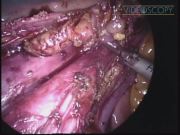
A 31-year-old Korean nulliparous woman with cervical cancer IB2 underwent LRVH, laparoscopic pelvic lymphadenectomy, and laparoscopic para-aortic lymphadenectomy up to the level of the left renal vein, and laparoscopic transposition of both ovaries. The port placements were as follows: subumbilical 12-mm trocar for the 5-mm telescope, 12-mm suprapubic trocar, and two ancillary 5-mm trocars at both upper quadrants. 6
Results and Conclusion:
The final histopahological results were as follows: the size of the tumor was 8.0 × 4.5 × 2.0 cm. There were no vaginal or parametrial invasion, and all surgical margins were free of tumor. Eighteen pelvic lymph nodes were harvested and 13 of them had metastasis. Thirteen para-aortic lymph nodes were harvested and four of them had metastasis. There were no intra- and postoperative complications. LRVH with lymphadenectomy can be a feasible surgical technique as an alternative treatment modality for women with cervical cancer IB2.
The authors declare that there are no conflicts of interest in this research. The authors have no commercial, proprietary, or financial interest in the products or companies described in this article.
Runtime of video: 6 mins 52 secs


Get full access to this article
View all access options for this article.
References
Supplementary Material
Please find the following supplemental material available below.
For Open Access articles published under a Creative Commons License, all supplemental material carries the same license as the article it is associated with.
For non-Open Access articles published, all supplemental material carries a non-exclusive license, and permission requests for re-use of supplemental material or any part of supplemental material shall be sent directly to the copyright owner as specified in the copyright notice associated with the article.
