





Abstract
Background:
Single-incision laparoscopic colectomy has been reported recently in various colorectal diseases. 1 –4 Up to date, there are only a few reports on single-incision laparoscopic low anterior resection with intra-abdominal double-stapled colorectal anastomosis in humans. 5–6 This study was to evaluate the feasibility of single-incision laparoscopic low anterior resection while maintaining oncologic principles in unfrozen cadaver models.
Methods:
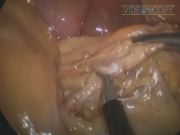
Two unfrozen cadavers were used. A 2-cm vertical transumbilical skin incision was made and a three-port access system was used. Surgical procedures did not differ much from 5-port laparoscopic surgery for rectal cancer. The rectum was dissected with total mesorectal excision technique and the specimen was extracted through the transumbilical incision under wound protection. End-to-end colorectal anastomosis was made using a circular stapler.
Results:
The operative time was 150 minutes for a male cadaver and 180 minutes for a female, respectively. Most procedures were possible with usual laparoscopic instruments. There was no adverse event during the operation. The most challenging part of this study was performing low rectal dissection with oncologic safety. The parietal peritonerum overlying bladder dome was sutured and drawn anteriorly throughout the rectal procedure. Cephalad traction of mobilized upper rectum tied by 1-0 vicryl with knot-pushing instrument provided a better view for further rectal dissection into the deep pelvis. Struggling between the instruments could be minimized by using a long 5-mm rigid laparoscope (45°-direction-of-view camera, 45-cm length) and articulating instruments. Colorectal anastomosis was made at 6 cm from the anal verge in both cadaver models without mobilization of the splenic flexure.
Conclusion:
The unfrozen cadavers provided the environment for surgery similar to that of real patients, compared with frozen and then thawed human cadavers. Single-incision laparoscopic low anterior resection could be performed in unfrozen cadaver models maintaining oncologic surgical principle in this study and might be feasible in selected patients.
This study was supported by grants from the Seoul National University (SNUH Grant No. 30-2009-0030) and the National Cancer Center of Korea (NCC-0910520).
Runtime of video: 7 mins 1 sec


Get full access to this article
View all access options for this article.
References
Supplementary Material
Please find the following supplemental material available below.
For Open Access articles published under a Creative Commons License, all supplemental material carries the same license as the article it is associated with.
For non-Open Access articles published, all supplemental material carries a non-exclusive license, and permission requests for re-use of supplemental material or any part of supplemental material shall be sent directly to the copyright owner as specified in the copyright notice associated with the article.
