






Abstract
Clinical History:
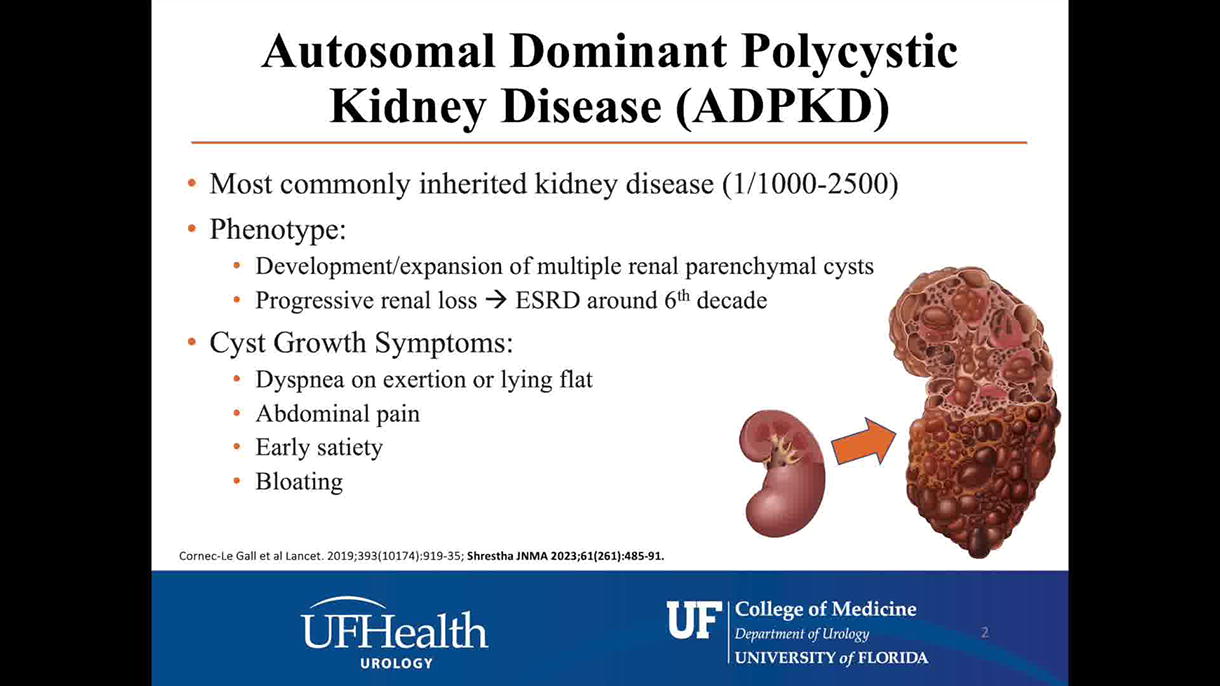
Our patient was a 43-year-old female with autosomal dominant polycystic kidney disease (ADPKD) and worsening abdominal pain and flank pain (L > R), early satiety, and difficulty taking deep breaths. Past medical history includes chronic kidney disease stage 3 (estimated glomerular filtration rate = 48) and chronic lower back pain.
Physical Exam:
The patient presented with a soft, distended abdomen, diffusely tender to palpation.
Diagnosis:
ADPKD.
Intervention:
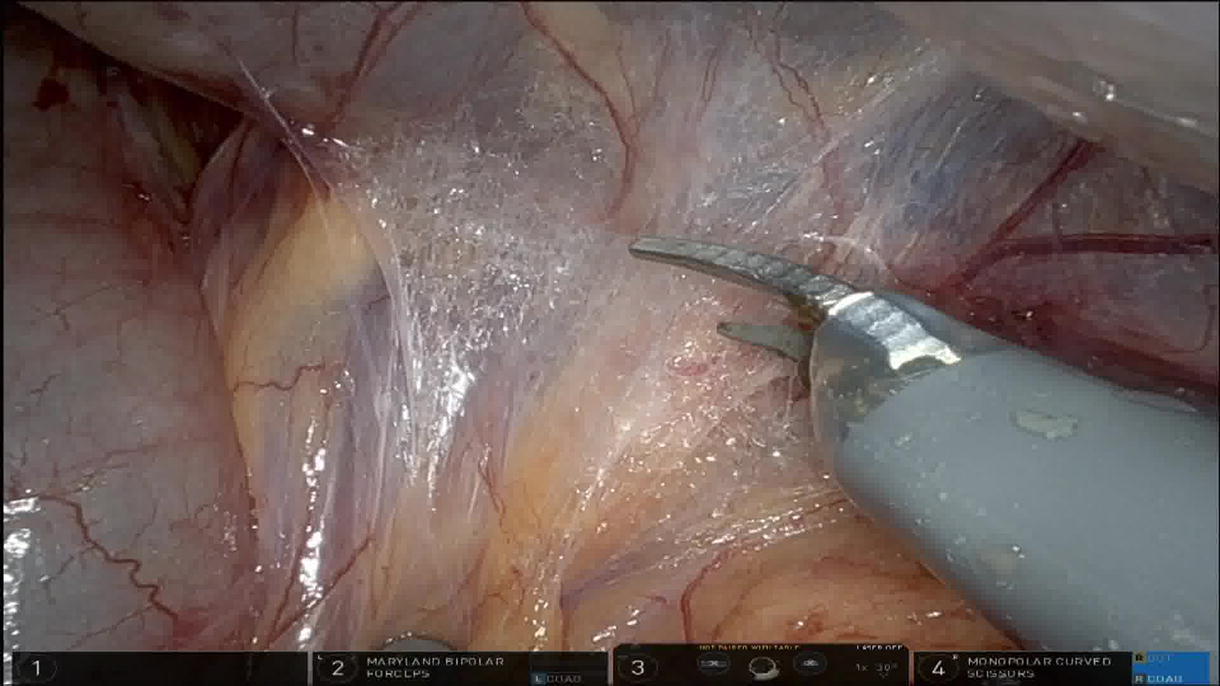
Due to her significant symptom burden related to cyst growth and adequate renal function, our patient elected to proceed with a nephron-sparing robotic-assisted laparoscopic renal cyst decortication. She elected for a left-sided procedure given her abdominal and flank pain were worse on the left. Veress access was difficult, as we violated and aspirated one of the renal cysts before safely entering the peritoneum. Once the descending colon was medialized and the kidney exposed, we began debulking the numerous renal cysts. The ureter was not identified until part of the cyst burden was debulked. We did not expose hilar vessels. For the larger cysts, the cyst walls were excised. Smaller cysts were incised and drained. On the posterolateral edge, we encountered a thick-walled cyst and ultimately performed a modified off-clamp partial nephrectomy. Lastly, we pexed the remnants of Gerota’s fascia to the lateral abdominal wall to reorient the kidney.
Follow-up/Outcomes:
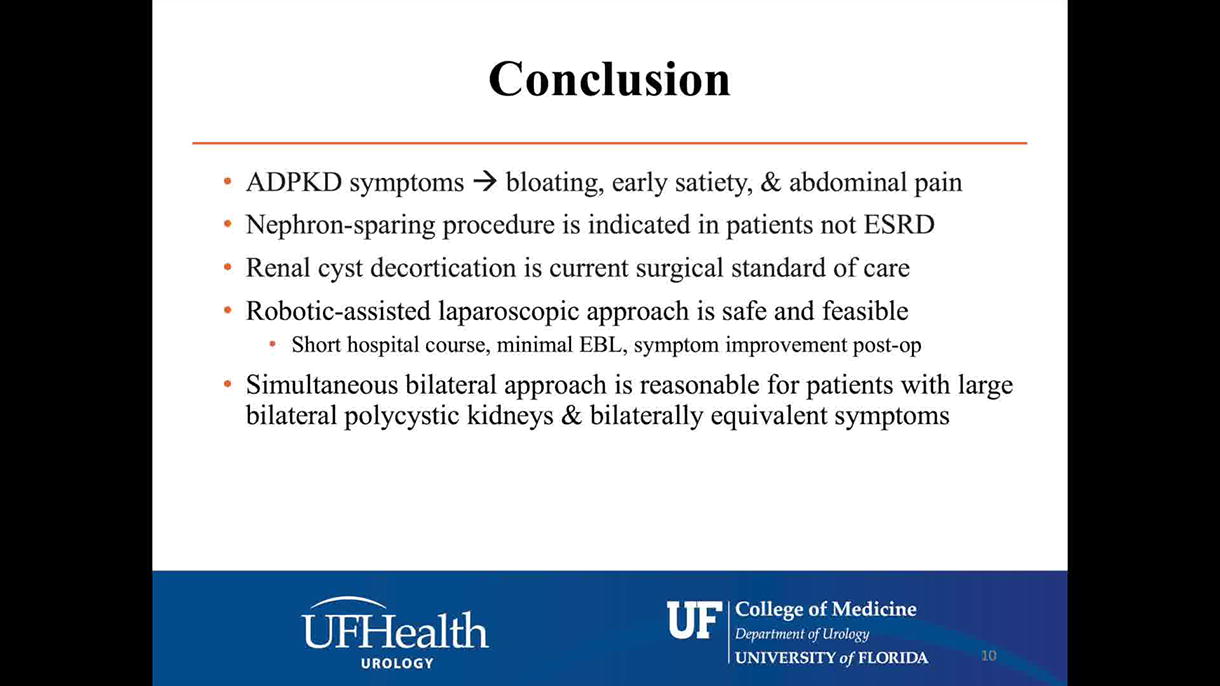
Estimated blood loss was minimal. She had minimal postoperative pain, stable labs, and was discharged home on postoperative day 2. At her 4-week postoperative visit, her abdominal pain and distension had improved. Postoperative creatinine was mildly increased. Renal cyst decortication is the standard of care for symptom relief in patients with ADPKD, and a robotic-assisted laparoscopic approach is safe and feasible with positive results. For patients with predominantly unilateral pain, a unilateral approach is typically sufficient. However, a simultaneous bilateral approach would be reasonable for patients with large bilateral polycystic kidneys and bilaterally equivalent symptoms, but it would require undocking the robot and repositioning the patient.
Music:
Silence by Pierre Langer and Scott Schreer, from http://freeplaymusic.com, not copyrighted.
The authors have no commercial associations during the last 3 years that might create a conflict of interest in connection with the video.
There are no conflicts of interest or obligations resulting from the work.
Author(s) have received and archived patient consent for video recording/publication in advance of video recording of procedure.
Runtime of video: 4 mins 56 secs.
Keywords
Get full access to this article
View all access options for this article.