






Abstract
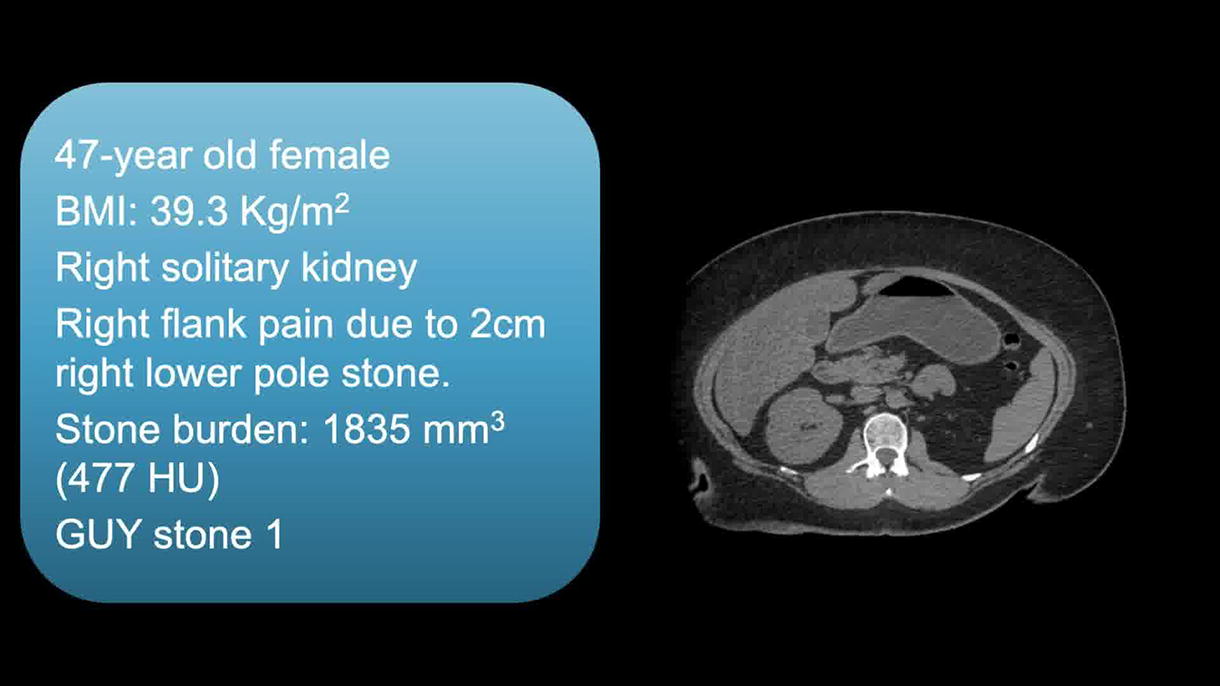
Introduction:
Percutaneous nephrolithotomy (PCNL) is the treatment of choice for kidney stones greater than 2 cm. 1 This procedure in patients with obesity is challenging because obesity is a risk factor for complex access and requires more experience to achieve a successful puncture. 2 –5 In this video, we demonstrate our technique for totally ultrasound-guided PCNL with two-step tract dilation, our experience, and provide guidance on improving success rates in patients with obesity.
Materials and Methods:
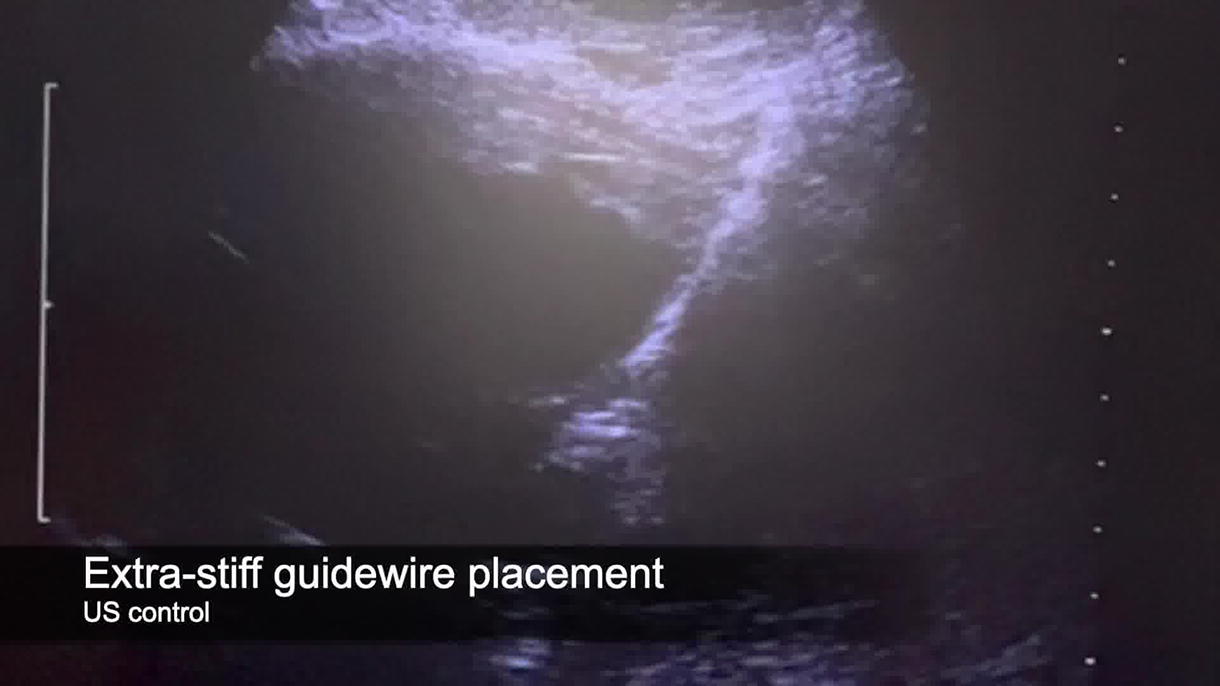
Surgical technique: With the patient in the supine position, we mobilized fatty tissue; after a proper ultrasound configuration, percutaneous access with a longitudinal freehand technique was obtained. Dilation with a two-step technique 6 Step 1: Creation of a minitract 14Fr to perform antegrade nephroscopy to check the renal cavities and measure the length of the tract; a pair of guides are placed in the ureter, one for definitive dilatation and the other as a safety guide. Step 2: Definitive tract 26Fr, insert the Amplatz dilator 1 cm in addition to the previously measured length of the tract to avoid a short dilation and advance the sheath. Pneumatic fragmentation is performed. Finally, a JJ stent was placed. Case series: Retrospective review of 54 patients treated with totally ultrasound-guided PCNL from July 2021 to June 2023, and we divided the cases according to their BMI: Group 1 included 27 patients with a BMI ≥30 kg/m2 and Group 2 included 27 patients with a normal BMI.
Results:
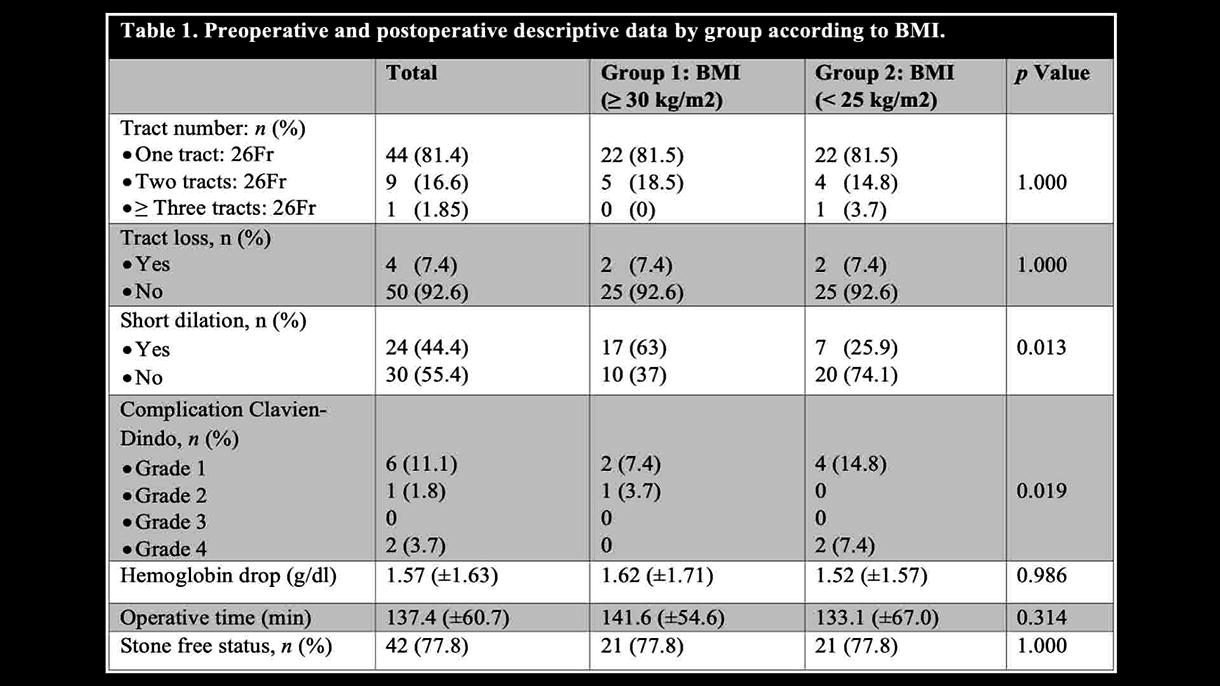
Mean age was 46.9 years. The BMI was 36.3 kg/m2 (±5.9) and 21.7 kg/m2 (±2.4) (p = <0.001), respectively. In Group 1, 57% of our patients had Guy’s 3, and 15% had Guy’s 4; 72% of the cases had complex stones. The stone burden was 10,976.43 mm3 (±11,287.6) and 7,543.0 mm3 (±10,203.6) (p = 0.056), with a mean of 12 cm and 8 cm of tract length (p < 0.001), respectively (Table 1). In the obesity group, the short dilation was more frequent, 63% vs. 26% (p = 0.013). The stone-free rate was 77.8% in both groups (p = 1.000), and we found that the stone burden had a more significant effect on the stone-free rate than the BMI (Fig. 1). In Group 1, the complications were 3 (11.1%); 2 patients had fever (Clavien I), and 1 needed a blood transfusion due to anemia (Clavien II), whereas in Group 2 there were 6 (22.2%); 4 had fever (Clavien I), and 2 had urosepsis (Clavien IV) (p = 0.019).
Relation between stone volume (mm3) and body mass index (Kg/m2) in stone-free status: In blue, the patients with stone-free status, and in red, the patients with residual stone.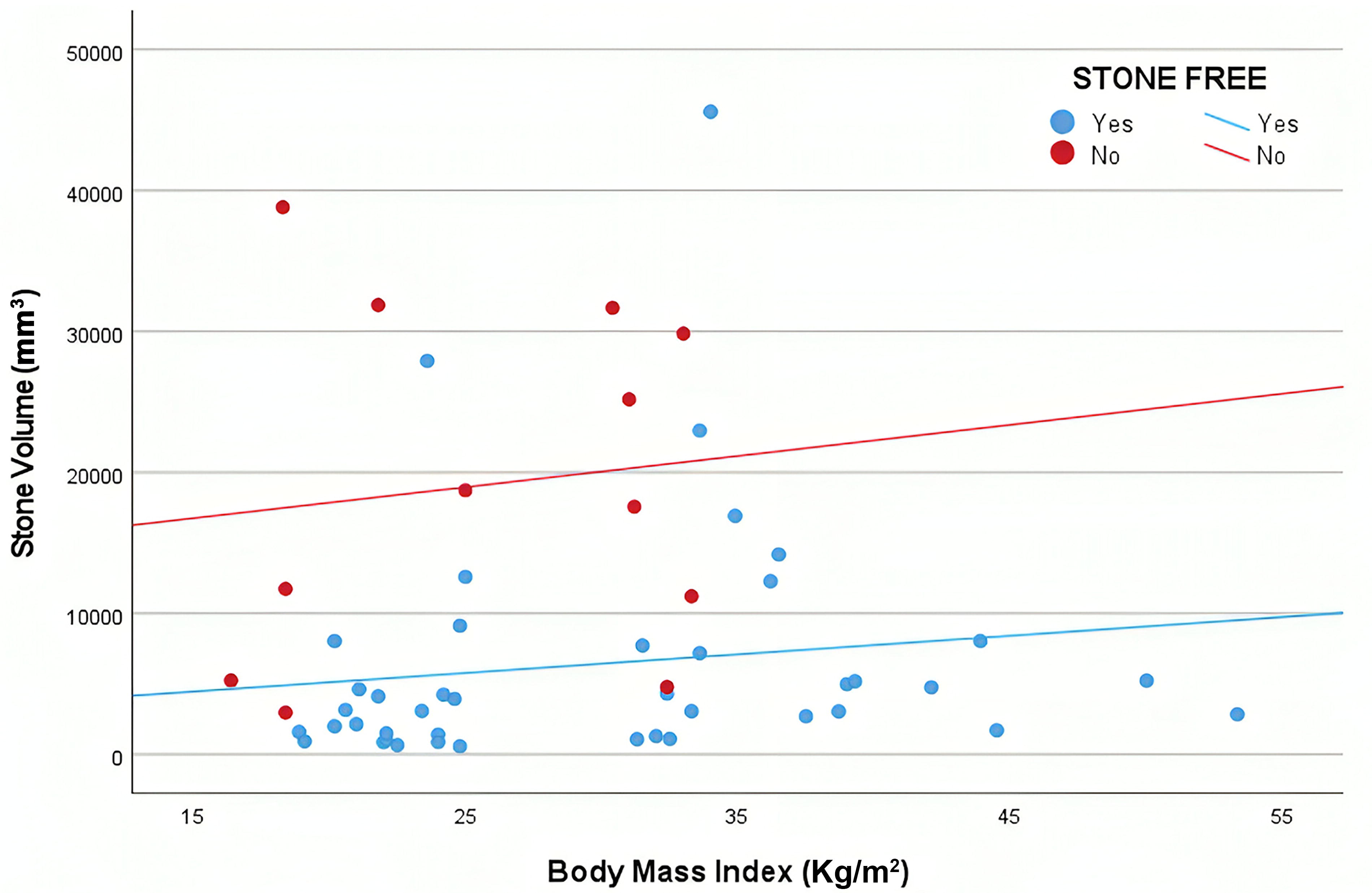
Preoperative and Postoperative Descriptive Data by Group according to BMI
p Value of t tests to compare means and Fisher’s exact test p value.
Total
Group 1: BMI (≥30 kg/m2)
Group 2: BMI (≤25 kg/m2)
p Value
Number of patients
54
27
27
Age, years
48.4 (±11.9)
49.9 (±11.1)
46.9 (±12.7)
0.36
Gender: n (%)
Male
18 (33.3)
9 (33.3)
9 (33.3)
0.613
Female
36 (66.7)
18 (66.7)
18 (66.7)
BMI (kg/m2)
29.06 (±27.7)
36.3 (±5.9)
21.7 (±2.4)
<0.001
Previous Procedure: n (%)
None
34 (62.9)
18 (66.7)
16 (59.3)
0.976
SWL
2 (3.7)
1 (3.7)
1 (3.7)
Ureteral Stent
10 (18.5)
5 (18.5)
5 (18.5)
Flexible Ureteroscopy
2 (3.7)
1 (3.7)
1 (3.7)
PCNL
5 (9.2)
2 (7.4)
3 (11.1)
Open Surgery
1 (1.8)
0
1 (3.7)
Guy Stone: n (%)
Guy 1
11 (20.3)
4 (14.8)
7 (25.9)
0.047
Guy 2
11 (20.3)
4 (14.8)
7 (25.9)
Guy 3
20 (37)
15 (56.6)
5 (18.5)
Guy 4
12 (22.2)
4 (14.8)
8 (29.6)
Skin-stone distance (cm)
9.8 (±2.5)
11.7 (±2.0)
8.0 (±1.1)
<0.001
Stone burden (mm3)
9259.75 (±10797.2)
10976.43 (±11287.6)
7543.0 (±10203.6)
0.056
Hydronephrosis, n (%)
None
34 (62.9)
19 (70.4)
15 (55.5)
0.494
Mild
10 (18.5)
3 (11.1)
7 (25.9)
Moderate
10 (18.5)
5 (18.5)
5 (18.5)
Tract number: n (%)
One tract: 26Fr
44 (81.4)
22 (81.5)
22 (81.5)
1.000
Two tracts: 26Fr
9 (16.6)
5 (18.5)
4 (14.8)
Three tracts: 26Fr
1 (1.85)
0 (0)
1 (3.7)
Tract loss, n (%)
Yes
4 (7.4)
2 (7.4)
2 (7.4)
1.000
No
50 (92.6)
25 (92.6)
25 (92.6)
Short dilation, n (%)
Yes
24 (44.4)
17 (63)
7 (25.9)
0.013
No
30 (55.4)
10 (37)
20 (74.1)
Complications, Clavien– Dindo, n (%)
Grade 1
6 (11.1)
2 (7.4)
4 (14.8)
0.019
Grade 2
1 (1.8)
1 (3.7)
0
Grade 3
0
0
0
Grade 4
2 (3.7)
0
2 (7.4)
Hemoglobin drop (g/dL)
1.57 (±1.63)
1.62 (±1.71)
1.52 (±1.57)
0.986
Operative time (min)
137.4 (±60.7)
141.6 (±54.6)
133.1 (±67.0)
0.314
Stone free status, n (%)
42 (77.8)
21 (77.8)
21 (77.8)
1.000
Conclusion:
A proper ultrasound configuration and adipose tissue mobilization increase success in obese patients. This technique offers a good stone-free rate and a safety profile without radiation.
Rutime of video: 7 min 25 sec.
No competing financial interests exist.
Informed consent was obtained to film portions of the procedure from the patient who appeared in this video.
Get full access to this article
View all access options for this article.