






Abstract
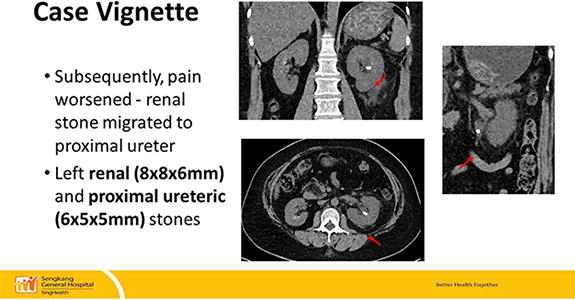
In recent years, retrograde intrarenal surgery (RIRS) has been increasingly used to treat renal stones, especially with the development of miniaturized flexible ureterorenoscopes (fURS) and stone retrieval devices. In addition, advancements in laser technology, such as thulium fiber laser and Moses technology, have made laser lithotripsy a more efficient process. However, such technology and equipment are expensive.
In this video, we demonstrate RIRS in a patient with renal stones (not prestented), using a traditional low-energy laser lithotripter (1 J, 5 Hz), 9.5 Fr single-use fURS and an 11/13 Fr flexible-tipped negative pressure ureteral access sheath (FT-npUAS).
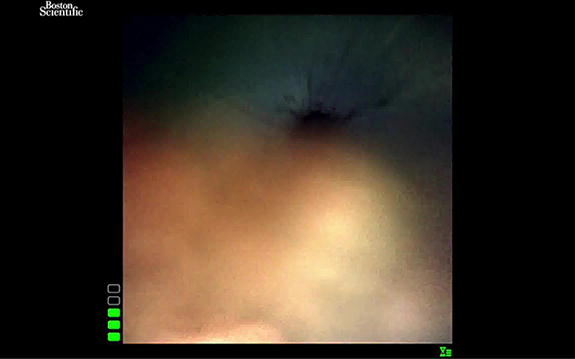
During fragmentation, the negative pressure generated by the FT-npUAS allowed for continuous suction of smaller stone fragments into the sheath alongside the fURS throughout the lithotripsy process.
After fragmentation, the fURS was then withdrawn into the sheath till approximately 1.5 cm away from the tip of the access sheath; using the fURS, the FT-npUAS was then navigated toward the calyx with the stone fragments. Stone fragments were removed effectively using negative pressure.
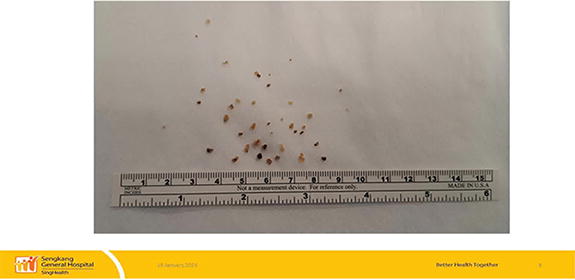
In this surgery, we could manipulate the FT-npUAS and fURS en bloc into the lower pole calyces without difficulty. Furthermore, we did not need to use a stone retrieval basket during the case. The operative time was 46 minutes and the postoperative X-ray showed no residual stones.
In conclusion, we have demonstrated that it is possible to achieve effective stone clearance using traditional low-energy laser lithotripter coupled with FT-npUAS, without the use of a stone retrieval basket.
Patient Consent Statement:
Authors have received and archived patient consent for video recording and publication in advance of video recording of procedure.
No competing financial interests exist.
Running time of video: 4 minutes 36 seconds
Keywords
Get full access to this article
View all access options for this article.