






Abstract
Background:
Laparoscopic radical nephrectomy (LRN) has become the preferred method for the surgical treatment of T2 and T3 renal tumors. A thrombus in renal vein (RV) poses a challenge and mandates a high level of laparoscopic precision and dexterity. In this video we have demonstrated four different laparoscopic techniques deployed in the management of level I renal vein thrombus.
Details of Techniques:
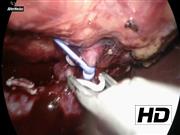
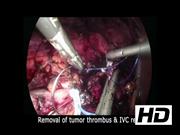
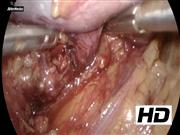
Technique 1: Milking of thrombus; this technique was demonstrated on a 42-year-old gentleman with right renal mass and renal vein thrombus reaching up to Inferior vena cava (IVC). Preoperatively patient underwent selective angioembolization with gel foam, followed by laparoscopic right radical nephrectomy. Renal vein was slung in Rumel tourniquet manner and synched to milk thrombus up. Then Weck clips were applied just below the thrombus on the renal vein. Technique 2: Application of Satinsky on the IVC; a 73-year-old gentleman underwent right laparoscopic radical nephrectomy for right renal mass with renal vein thrombus. Thrombus was extending beyond the ostium of renal vein into the IVC, so we decided to apply Satinsky on the IVC, and renal vein was incised just proximal to the Satinsky to remove the thrombus. The renal vein stump was sutured with Prolene 4-0. Technique 3: Management of left renal vein thrombus in right lateral position; renal vein was dissected as low as possible, and clips were applied. Frozen section of the margin came out to be positive, so additional margin was resected that was tumor free. Technique 4: Management of left renal vein thrombus in left lateral position; preoperatively the patient underwent angioembolization followed by laparoscopic radical nephrectomy. Deriving experience from the previous case, we decided to dissect renal vein up to the confluence with IVC. Initially left lateral position with right side up was given. Dissection of the IVC and renal vein confluence was done followed by renal vein clipping. Later the patient was turned to left side up position for completion of left radical nephrectomy.
Results:
In our series of four patients of renal tumor with level I renal vein thrombosis, two patients had right-sided and two had left-sided tumors with level 1 thrombus. Median tumor size was 9.7 cm. Two patients underwent preoperative angioembolization. All the patients were managed effectively with the laparoscopic approach. Intraoperative Satinsky was used in one patient, thrombus was slung and milked up in one patient and Weck clips were applied directly on the renal vein just below the thrombus in the remaining two patients. Median estimated blood loss was 150 mL, median operative time was 125 minutes, and median length of hospital stay was 4 days. One patient had grade 2 Clavin–Dindo complication. Median follow-up was 18 months.
Conclusion:
Renal tumors with level 1 renal vein thrombus can be managed effectively by the laparoscopic approach. Despite the learning curve, it offers a minimally invasive and oncologically safe surgical option.
No competing financial interests exist.
Runtime of video: 7 mins 28 secs
Consent: Authors have received and archived patient consent for video recording/publication in advance of video recording and publication of the procedure.
Get full access to this article
View all access options for this article.