






Abstract
Introduction:
Urinary tract complications after treatment of advanced gynecologic malignance are among the most serious medical conditions. 1 Bilateral ureteral stricture and bladder contracture caused by pelvic radiotherapy are more difficult and more complicated to deal with. Although ureteral reconstruction is a definite option, it is limited by the complexity of surgery and tissue degeneration or adhesions caused by radiation. 2 , 3 In this video presentation, we describe a step-by-step technique to effectively perform completely intracorporeal robot-assisted bilateral ileal ureter and bladder augmentation.
Materials and Methods:
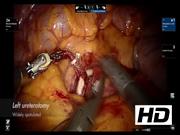
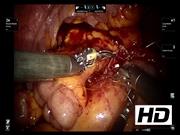
A 53-year-old female with history of cervical cancer treated with neoadjuvant chemoradiation and surgery presented with bilateral distal ureteral strictures managed with bilateral percutaneous nephrostomy tubes. At diagnosis, cystography showed reduced bladder volume and bladder contracture. The first step is localization of both ureters at the pelvic brim. Then, the ureters proximal to the injury site was widely spatulated for following anastomosis. A 40-cm ileum segment was finally isolated and bowel continuity was restored with side-to-side anastomosis. The distal ileal segment was incised on the antimesenteric border and then the two medial borders of the ileal segment were oversewn in a U-shaped augmentation pouch. The left and right ureters are then anastomosed to the proximal end of the harvested ileum. A cystotomy combined with “autologous augmentation” is performed at the bladder dome. Finally, the mucosa of the U-shaped augmentation pouch was sutured to the dissected bladder wall.
Results:
Surgery was completed without intraoperative complication. Operating time was 361 minutes and estimated blood loss was 100 mL. Postoperative course of the patient was uneventful and the patient was discharged home in 7 days. Baseline glomerular filtration rate was 47.580 mL/(min·1.73 m2) and at discharge it was 68.908 mL/(min·1.73 m2). No complication was reported within 90 days, postoperatively.
Conclusions:
Completely intracorporeal robot-assisted bilateral ileal ureter and bladder augmentation are feasible, which provides the advantage of minimal-invasive techniques. More cases are needed to validate their applications.
No competing financial interests exist.
Ethical Statement:
The authors are accountable for all aspects of the study in ensuring that questions related to the accuracy or integrity of any part of the study are appropriately investigated and resolved. All procedures performed in this study were in accordance with the Declaration of Helsinki (as revised in 2013) and approved by the ethics committee of Peking University First Hospital (approval number: 2020-283). Written informed consent was obtained from the patient for publication of this case report and accompanying images.
Authors have received and archived patient consent for video recording/publication in advance of video recording of procedure.
No funding was received for this article.
Runtime of video: 9 mins 58 secs
Keywords
Get full access to this article
View all access options for this article.