






Abstract
Introduction:
Anderson–Hynes dismembered pyeloplasty is the current gold standard for treating ureteropelvic junction obstruction (UPJO). 1 –3 Compared with open repair, robot-assisted laparoscopic pyeloplasty is equally effective and safe alternative for repair of UPJO. 4 –6 However, it can be more difficult to effectively complete this procedure in patients with complex anatomy such as UPJO with a duplex collecting system, multiple crossing vessels, and malrotation of the kidney. The presence of crossing vessels particularly has been shown to increase the likelihood of a negative surgical outcome. 7 , 8 In patients with UPJO and complex anatomy, there is currently no accepted gold-standard surgical approach. There is a paucity of literature on the subject, with even fewer cases of complex robot-assisted laparoscopic pyeloplasty described in the pediatric population. 9 , 10 Here, we describe the technical aspects of completing robot-assisted Anderson–Hynes dismembered laparoscopic pyeloplasty effectively in these patients as well as provide our insight into the technical aspect.
Materials and Methods:
Two patients with complex renal and UPJ anatomy underwent robot-assisted Anderson–Hynes dismembered laparoscopic pyeloplasty. Preoperative assessment included split renal function with renal scan, and either renal bladder ultrasonography or computed tomography. A retrograde pyelogram was performed immediately preoperatively to get a complete understanding of UPJ anatomy in terms of stricture length, UPJ insertion (high vs low), renal pelvis size, any associated malrotation of the kidney, or presence of a polyp at the UPJ. Follow-up renal ultrasonographs were taken at scheduled 3-, 6-, and 9-month postoperative visits.
Results:
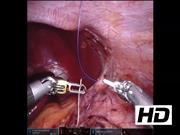
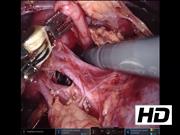
Both patients had symptom resolution and significant improvement in their hydronephrosis at their 9-month follow-up. Neither patient experienced hematuria or developed a urinary tract infection. Both of their preoperative pain symptoms also resolved after corrective surgery. A retrograde pyelogram should be performed before obtaining a more complete understanding of the patient's UPJ anatomy. The reconstruction is based on the individual anatomical abnormality and tailored to address the issue. For example, if the length of the structure is the issue, we want to place the higher insertion of the UPJ to the most dependent part for adequate drainage. Any polyps should also be excised as they have the potential to traverse the UPJ into the ureter, longer ureteral strictures can be addressed with foley Y-V plasty. Lastly, in the case of malrotation, the retrograde pyelogram assists the surgeon how to properly orient the pelvis to the dependent part for adequate drainage. In renal duplication, it is important to identify the unobstructed upper pole ureter early and minimize the dissection between the two sets of ureters to preserve the intervening adventitial tissue intact for vascularity. For those with significant malrotation and multiple anomalous crossing vessels, the addition of a 4th robotic arm can be helpful to rotate the kidney laterally, as well as provide better observation of the hilum, UPJ anatomy, and the crossing vessels. Posterior dissection of the renal pelvis can cause excessive traction on the lower set of crossing vessels with potential for intimal injury. In the setting of multiple crossing vessels, it is critical to know the exact locations of the UPJ and the set of vessels to avoid angulation of the UPJ.
Conclusion:
With advances in robotic technology, it is now technically feasible to complete Anderson–Hynes pyeloplasty in patients with complex UPJ anatomy such as duplex collecting system, lower pole UPJO with a crossing vessel, malrotated kidney, high insertion UPJO, and multiple crossing vessels.
No competing financial interests exist.
Runtime of video: 8 mins 37 secs
Consent: The author(s) have received and archived patient consent for video recording/publication in advance of video recording of procedure.

Keywords
Get full access to this article
View all access options for this article.