






Abstract
Introduction:
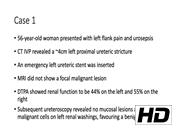
Reconstruction of proximal and mid-ureteral strictures is challenging. Robotic ureteroplasty allows for three-dimensional observation, technical precision, and dexterity over the traditional open approach. The first robotic ureteroplasty with buccal mucosa graft was described in 2015 by Zhao et al. 1 The technique has not been widely adopted yet and there are scarce visual demonstrations in the literature. We present two cases of traumatic ureteral stricture treated with robot-assisted ureteroplasty with buccal mucosa graft.
Materials and Methods:
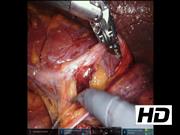
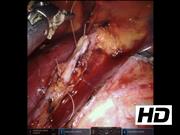
Two cases of robot-assisted ureteroplasty with buccal mucosa graft were performed by two experienced surgeons in a high-volume robotic center using the da Vinci Xi surgical system. Standard robotic pyeloplasty port placement was undertaken and the patient was placed in lateral decubitus lithotomy position. The colon was medialized. The ureter was identified and dissected from the mid-ureter to the pelviureteral junction. The gonadal vein was medialized to ensure safe dissection and ureterolysis was performed because of extensive periureteral fibrosis. Indocyanine green (ICG) fluorescent imaging and flexible pyeloscopy was used to identify the stricture location. Ureterotomy was made along the anterior ureteral wall over the pyeloscope. The stricture length was measured and an appropriately sized buccal mucosa graft was harvested. Ventral onlay ureteroplasty was performed with 4-0 vicryl on a cutting needle. Flexible pyeloscopy was performed to confirm patency and a 4.8F Double-J ureteral stent was inserted. An onlay wrap with vascularized periureteral fat was performed with 3-0 vicryl and ICG was used to confirm vascularity of the ureter-graft complex. The peritoneum was closed with 2-0 V-Loc and a drain was placed.
Results:
There were no intra- or postoperative complications. The drain was removed and patients were discharged on postoperative day 2. There was no evidence of hydronephrosis on retrograde pyelogram when the ureteral stent was removed 6 weeks postoperatively and on repeat ultrasound 6 months postoperatively for either case. There was no recurrence of the stricture.
Conclusion:
Robot-assisted ureteroplasty with buccal mucosa graft is a safe, feasible, and reproducible surgical approach for complex ureteral strictures. 2
Patient Consent Statement:
Informed consent was obtained from the patient for publication of this case and accompanying images and video. Authors have received and archived patient consent for video recording/publication in advance of video recording of procedure.
No competing financial interests exist.
Runtime of video: 4 mins 57 secs
Get full access to this article
View all access options for this article.