






Abstract
Introduction:
Paraganglioma of the urinary bladder is a rare neuroendocrine tumor accounting for <1% of all pheochromocytomas and <0.05% of bladder tumors. 1 These paragangliomas may be functioning or nonfunctioning and have a variable clinical presentation. Our case is of a 49-year-old female patient presenting with a 5-year history of episodes of headache and hypertension triggered by urination. Normetanephrine was elevated on 24-hour urine studies at 4.1 (normal <3.4) µmol/day. Metaiodobenzylguanidine (MIBG) scan showed increased focal activity on the right side of the urinary bladder corresponding to a mass seen on magnetic resonance imaging. We felt a paraganglioma was likely given the clinical presentation, elevated urine normetanephrines, and positive MIBG scan.
Materials:
A rigid 24F Olympus cystoscope was used with a Collings' knife to outline the intravesical border of the mass using electrocautery. The Da Vinci Si robot system was used for partial cystectomy and extirpation of the bladder paraganglioma.
Methods:
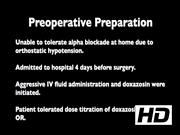
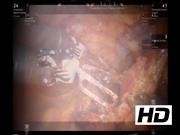
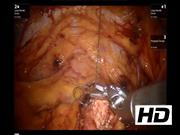
The patient was admitted 4 days before surgery because she could not tolerate alpha blockade as an outpatient caused by orthostatic hypotension. For the following 4 days, titration of an alpha blocker was effective with aggressive intravenous hydration. To start the case, the patient was placed in the cystolithotomy position and cystoscopy was carried out. A Collings' knife was used to fulgurate a margin around the paraganglioma. A 5F ureteral catheter was placed up the right ureter for easy identification. A Hassan technique was used to gain access into the abdomen and a six-port approach was used for the robot. The space of Retzius was developed to drop the bladder. A cystotomy was made and a holding stitch was placed through a cuff of normal bladder to allow for manipulation of the bladder paraganglioma. The mass was dissected out by following our outline intravesically. Feeding vessels were isolated and clipped. Once the mass was removed, the cystotomy was closed in two running layers. At the end of the case, a catheter and drain were left in situ.
Results:
The patient remained vitally stable throughout the entire case and she was extubated after surgery. She stayed in hospital for 3 days after surgery and remained clinically stable. Admission to the intensive care unit was not required. A cystogram on postoperative day 10 showed no evidence of a urine leak so the catheter and drain were removed. Pathology report showed a completely resected paraganglioma. On further follow-up, she reported cessation of her symptoms and repeat 24-hour urine collection showed normal catecholamines and metanephrines. Genetic testing came back negative for a pathogenetic mutation.
Conclusions:
Taking a careful history and completing the appropriate work-up is critical for this rare clinical presentation. Making the correct diagnosis will help with surgical planning because the standard of care is complete removal of the mass with appropriate preoperative preparation. We show that a robotic partial cystectomy is a practical and safe way to remove a bladder paraganglioma.
No competing financial interests exist.
Runtime of video: 7 mins 35 secs
Statistical analysis: No statistical analysis was performed.
Patient Consent Statement: We, the authors, have received and archived patient consent for video recording/publication in advance of video recording of procedure. They are also aware of our plan to publish this video footage.
Get full access to this article
View all access options for this article.