





Abstract
Introduction:
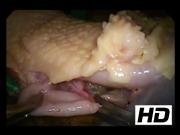
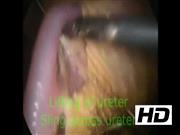
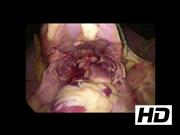
Simulation in laparoscopic surgical training is essential for mastering skills and adapting to two-dimensional observation of three-dimensional anatomy. Various training models have been developed for commonly done urologic procedures, which include laparoscopic pyeloplasty, 1 ureteral reimplantation, 2 and urethrovesical anastomosis. 3 Although literature has been published, it is difficult for a novice surgeon to use these models in his or her institutional laboratory. The technicalities of preparation are difficult to understand making use of these models limited. Different surgeries require different skill sets and unique models to practice the steps of surgeries. We present a video demonstration of preparation and use of chicken models mimicking three surgical procedures: laparoscopic pyeloplasty, 1 ureteral reimplantation, 2 and urethrovesical anastomosis 3 in one construction.
Materials and Methods:
Steps for preparation of chicken model for laparoscopic pyeloplasty, ureteral reimplantation, and urethrovesical anastomosis and the steps of surgical exercise were video recorded with explanation. The video was then reviewed by 10 novices and 10 expert laparoscopic surgeons. All the participants after the video review were asked to fill up a six-point questionnaire pertaining to model preparation, positioning of the model, orientation of anatomical structures in the model, dissection of tissues, similarity of suturing, and utility in surgical training. The video was rated on a scale of 1 to 5 with 5 representing the best and 1 the worst scores by the participants. Mean scores were calculated and assessed.
Results:
The mean scores of novices for the questions on model preparation, positioning of the model, orientation of structures in the model, dissection of tissues, similarity of suturing, and utility in surgical training were 4.4 ± 0.52, 4.30 ± 0.48, 4.30 ± 0.823, 4.50 ± 0.53, 4.60 ± 0.69, and 4.80 ± 0.42, respectively. The mean scores for experts were similarly 4.7 ± 0.48, 4.30 ± 0.66, 4.30 ± 0.82, 4.60 ± 0.52, 4.80 ± 0.42, and 4.70 ± 0.48. The opinion of novice and expert surgeons suggests that preparation and use of the model may be feasible.
Conclusions:
The preparation and use of chicken models for laparoscopic pyeloplasty, ureteral reimplantation, and urethrovesical anastomosis are feasible. It has the potential to be used as a training tool once validated.
The experiments were carried out in compliance with the relevant local institutionally reviewed animal use regulations and/or national laws relating to the conduct of animal experimentation. Two chicken cadavers were used. There is no financial disclosure or conflict of interest.
Runtime of video: 10 mins
This was presented as an abstract at SIU Lisbon on 2017.
Get full access to this article
View all access options for this article.