






Abstract
Introduction:
To evaluate the safety and efficacy of combined top and down low-power thulium laser enucleation of the prostate (ThuLEP). Evaluation of short-term (1-year) functional outcomes.
Materials and Methods:
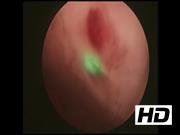
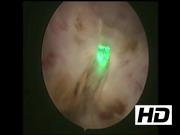
Between May 2017 and November 2018, after institutional board review approval, effectively consented patients underwent combined top and down low-power ThuLEP. We used a 30-W thulium laser with a 550 μm laser fiber and a 26F continuous flow resectoscope. We included a link for a video clarifying our technique of dissection. We collected data related to prostate size, enucleation time, morcellation time, perioperative complications, and early outcomes.
Results:
Thirty patients underwent combined top and down low-power ThuLEP with mean age 64 ± 5 years. Acute urine retention was the main indication for surgery in 25% of patients, whereas the remaining had mean International Prostate Symptom Score 24 ± 4. The mean prostate volume was 112 ± 23 mL and the mean Qmax was 7 ± 3 mL/sec. Mean operative time was 113 ± 25 minutes, whereas mean enucleation time was 89 ± 10 minutes, and mean morcellation time was 19 ± 5 minutes. The mean enucleated prostate volume was 75 ± 12 grams and the mean hemoglobin drop was 1 ± 0.4 g/dl. There was no need for blood transfusion and the mean hospital stay was 19 ± 6 hours and catheters were removed on discharge. The first visit was at 1 month, and we observed significant mean Qmax improvement18 ± 5 mL/sec. Our results showed no significant change of IIEF-5 score at 12-month follow-up compared with baseline.
Conclusion:
Low-power thulium enucleation with a combined top and down technique provided a safe and efficacious outcome. The low-power setting would eliminate the need for high-power thulium laser machine and the less eschar formation, which could shorten the steep learning curve for ThuLEP. Although, in our experience, the combined approach has reduced strenuous wrist flexion and the resultant compression over the urethral sphincter, a randomized controlled trial would be mandatory to confirm such results with a larger sample size.
Consent: Authors have received and archived patient consent for video recording/publication in advance of video recording of procedure.
No competing financial interests exist.
Runtime of video: 6 mins 45 secs
Get full access to this article
View all access options for this article.