






Abstract
Introduction:
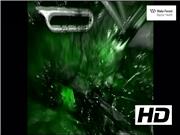
Fluorescence-enhanced molecular imaging augmented with robot-assisted laparoscopic surgery can facilitate the performance of uro-oncologic cases. Although a number of molecules have shown promise in image-guided surgery, 1 indocyanine green (ICG) has been the most studied and most published agent in the literature. ICG is a nontoxic nonradioactive compound that enables deeper tissue penetration and improved observation under near-infrared light. ICG can be given intravenously or through direct injection into the pathologic organ, and its applications are diverse. In this video, we show utilization of fluorescence-enhanced molecular imaging in robot-assisted uro-oncologic surgery.
Materials and Methods:
We have implemented the use of ICG–near-infrared fluorescence (NIRF) at our institution since 2010. Since then, we performed fluorescence-enhanced molecular-guided robotic surgery in >500 uro-oncologic cases, resulting in a constant refinement and precision of our surgical technique. For upper tract pathology analyses including renal and adrenal carcinoma, the authors reconstitute 10 mL of sterile saline into 25 mg ICG vial and intravenously inject ∼2 mL at distinct time intervals during the procedure. For lower tract pathology analyses including prostate and bladder carcinoma, the authors prefer direct injection of the pathologic organ (0.4 mL of 1 mg ICG for percutaneous prostatic injection and 2 mL of 2.5 mg/mL of ICG for cystoscopic injection of urothelial tumor). The video, herein, represents a compilation of video segments showing the use of ICG–NIRF in the treatment of renal, adrenal, ureteral, prostate, and bladder malignancies.
Results:
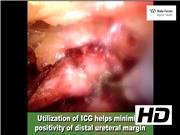
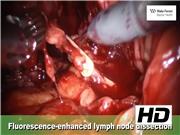
ICG–NIRF applications for oncologic renal surgery include assessing for adequate ischemia, viability of renorrhaphy, fluorescence patterns of renal lesions, and super-selective clamping when performing partial nephrectomy, 2 For central endophytic renal tumors, utilization of ICG has been shown to facilitate complex partial nephrectomy. 3 For adrenal lesions, utilization of ICG–NIRF can provide histologic delineation of adrenal pathology analysis and identification of vasculature and lymph node drainage patterns. 4 In radical nephroureterectomy and bladder cuff excision, ICG can be instilled intravesically to ensure adequacy of bladder cuff and bladder repair. For lower tract pathology analyses such as bladder and prostate, direct injection of the pathologic organ can facilitate in structure identification and lymph node dissection. 5,6 Furthermore, ICG–NIRF is quite useful in performing intracorporeal diversion as surgeons may assess vascular arcades of bowel segments and anastomotic viability in real time. 7
Conclusions:
ICG offers unique advantages for the robotic uro-oncologic surgeon. Mastery of these techniques can facilitate the performance of uro-oncologic cases in a minimally invasive manner.
No competing financial interests exists.
Authors have received and archived patient consent for video recording/publication in advance of video recording of the procedure.
Runtime of video: 7 mins 28 secs
Keywords
Get full access to this article
View all access options for this article.