






Abstract
Introduction:
Conventional treatment options for giant bladder stones would include open vesicolithotomy or endoscopic cystolithotripsy. The former requires an open surgery, and may not be suitable for patients with multiple medical comorbids. In contrast, traditional laser cystolithotripsy is time consuming, and may require a prolonged surgical time. ShockPulse™ technology is a lithotripsy system that uses intermittent ballistic shockwave energy coupled with constant ultrasonic shockwave to break down stones. It allows the fragmentation and aspiration of stones simultaneously, which gives a clear operative field and reduces the need for bladder emptying. This technology has been well adopted in the treatment of renal stones through percutaneous nephrolithotomy. We would like to report a novel use of ShockPulse technology in the management of giant bladder stones. Our institution has performed a total of five cases of endoscopic ShockPulse lithotripsy for such stones for a 6-month period (July–December 2017), and has found it to be both feasible and elegant. We report our experience in this and provide an example of how a giant bladder stone could be cleared endoscopically within a short operative time.
Materials and Methods:
A retrospective review of all endoscopic ShockPulse cystolithotripsy cases performed at our institution was performed. Perioperative parameters such as operative time, length of stay, complications, and stone parameters such as stone length and density were retrieved and analyzed.
Results:
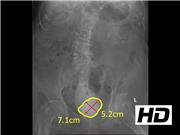
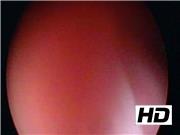
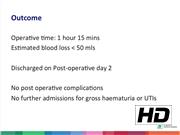
The mean stone length was 4 cm, and the mean stone density as measured on noncontrast CT was 870 HU. The largest bladder stone measuring 7.1 cm was completely fragmented endoscopically, as depicted in this video. The mean age of the patients in our series was 74.2 (57–86) years, whereas the mean operative time was 47 (20–77) minutes. The median duration of hospitalization was 2 days, and there were no perioperative complications reported. None of the procedures were staged, and the stone-free rate was 100%, as confirmed by direct endoscopic observation at the end of the procedure. Not surprisingly, we found an inverse relationship between stone density and the ShockPulse lithotripter stone fragmentation rate.
Conclusions:
ShockPulse lithotripsy may be beneficial to patients having large bladder stones who may not be fit for open surgery. Further studies need to be carried out to determine its benefits as compared with traditional surgical approaches. Our institution's experience in this area is promising, and we hope to extend the use of this technology to more patients with giant bladder stones.
No competing financial interests exists.
Runtime of video: 4 mins 54 secs
Get full access to this article
View all access options for this article.