






Abstract
Introduction:
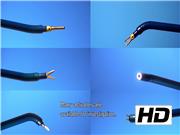
Laparoendoscopic single-site surgery (LESS) made its introduction in the urologic community in 2007 and has significantly evolved since then. 1 –3 However, such a procedure remains a technical challenge. 4 In this study, we have evaluated the feasibility of a needle-assisted LESS-radical prostatectomy (RP) procedure using a recently developed series of steerable laparoscopic instruments (Steerable Instruments, Ghent, Belgium) each having seven degrees of freedom. 5 In contrast with existing articulated instruments, the steerable instruments permit torque transmission, in which rotation of the surgeon's wrist results in a rotation of the tip, even in bent position.
Materials and Methods:
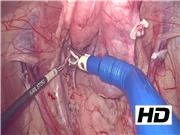
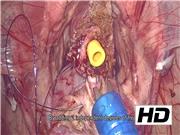
The study was carried out in a nonsurvival porcine model, approved by the Ghent University ethical committee (EC2016/83). The procedure was designed and trained before on a series (more than six) of cadavers. A 12-mm Airseal® trocar enabling access for the steerable instruments and a 10-mm trocar for a 30° HD 3D endoscope were inserted through a 25 mm, transverse, umbilical incision. Both trocars perforated the peritoneum separately. Two needlescopic grasping forceps allowed retraction and fixation of structures. The vesicourethral anastomosis was performed using two V-Loc™ 90 2-0 barbed sutures. The primary outcome to be measured was the technical feasibility of the procedure.
Results:
The surgery, using the steerable laparoscopic instruments series, was completed effectively without intraoperative complication. The steerable needle driver allowed the needle to be driven effortlessly through the tissue in a perpendicular manner, without losing time because of positioning of the needle on the instrument. The setup, resulting in a barely noticeable scar, combines a multitude of advantages. First, the 12-mm umbilical trocar provides a versatile access for the steerable instrument. The steerable instrument can be quickly exchanged for a large suction tube allowing adequate aspiration in case of serious hemorrhage. Furthermore, the introduction of suture and the use of clip appliers are not hindered in this configuration. Other setups by contrast require an additional paraumbilical 8- to 12-mm assistant port jeopardizing the concept of scarless surgery. Second, by bringing the instrument from a lateral position to the umbilicus and as such closer to the surgeon, ergonomy is enhanced. Third, the assisting bipolar needlescopic instrument leaves no scar and relieves the surgeon from the clashing instruments. 6 –8 The articulated tip allows enhanced dexterity and eliminates the phenomenon of eclipsing or overshadowing of the visual field by the instrument shaft. Finally, with its inversed delta-shaped handle, the instrument requires only a small extracorporeal working space, reducing clashing with the camera head.
Conclusion:
The steerable laparoscopic instruments offer several considerable benefits during needle-assisted LESS-RP and address some major current limitations of minimally invasive approaches, with only a minimum of necessary hardware. The steerable laparoscopic instrument series is investigational. Further research is required to delineate the advantages and limitations of these instruments in a clinical setting and to optimize the surgical procedures to maximally benefit from its possibilities.
Acknowledgments:
The authors thank Kevin Bauwens and other ORSI academy staff for the outstanding support during the surgical procedures.
FD and AK report personal fees from Steerable Instruments, outside the submitted work. TDP, NL, RDG, PD, KT, PU, KB, YVN, AM, and DVR have no conflicts of interests or financial ties to disclose.
Runtime of video: 3 mins 52 secs
Get full access to this article
View all access options for this article.