





Abstract
Introduction:
Retrocaval ureter (RCU) is a rare congenital anomaly resulting from dysplasia of the inferior vena cava (IVC). This anomaly has a segment of compressed and obstructed ureter posterior to IVC, and it can induce hydronephrosis and renal dysfunction progressively. Treatment involves cutting the compressed ureter of retrocaval segment, anteposition, and ureteroureteral or ureteropelvic anastomosis, which are generally performed with open approach because it has technical difficulties. So far, this surgery is effective, but it is quite invasive, putting a lot of strain on the patient. Laparoscopic reconstruction for RCU was performed, showing less invasiveness and more cosmetic advantage than open surgery. However, the number of articles published to date is not large, just sporadic reports of single cases. Herein, we present surgical techniques and operative results of laparoscopic pyeloplasties for seven patients with RCU.
Materials and Methods:
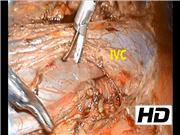
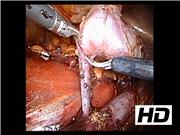
Seven patients with RCU were enrolled in this study from April 2005 to October 2016. The mean age (five males and two females) was 36.3 years. The chief complaint was flank pain in five patients; the remaining patients were detected incidentally. All patients showed hydronephrosis and typical S-shaped deformity of the ureter on imaging studies. Three patients showed obstructed patterns on renal scans. A single surgeon performed laparoscopic pyeloplasties with transperitoneal approaches. The ureter was divided at the most distal segment of the dilated proximal ureter and renal pelvis, and the inserted guidewire was identified. The distal ureteral stump was spatulated. A portion of the redundant pelvis was excised proximally, and the ureter was repositioned anteriorly to the IVC. The proximal end of the guidewire was pulled from the ureter, and then a Double-J ureteral stent was inserted over the guidewire. Anastomosis between the spatulated distal ureter and renal pelvis was performed with interrupted 4-0 Vicryl sutures, which were placed from the posterior side to the anterior side. The operative and follow-up results were checked and compared with published articles from MEDLINE database.
Results:
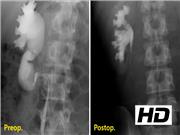
All laparoscopic pyeloplasties were effectively completed without conversion to open surgery. The mean operative time was 171.8 minutes (range 97–240 minutes). The estimated blood loss was 184.3 mL (range 50–332 mL). No operative complications were encountered. There were no obstruction and symptoms after the mean follow-up of 16.3 months (range 6–30 months). We found seven articles from PubMed, which were large series of laparoscopic reconstruction of RCU. A total of 65 patients, including our patients, underwent surgery and were all effective.
Conclusion:
Our results show that transperitoneal laparoscopic pyeloplasty is a safe and effective treatment for RCU. Data from published articles and ours summarize clinical parameters of RCU, and suggest that laparoscopic reconstruction can be a standard treatment for it.
Acknowledgment: This study was supported by Wonkwang University in 2016.
No competing financial interests exist.
Runtime of video: 5 mins 24 secs
Presented at the 2017 World Congress of Endourology (Moderated Poster Session 28–6), September 15, 2017, in Vancouver, Canada.
Get full access to this article
View all access options for this article.