





Abstract
Introduction:
Urachal cancer is a rare and aggressive type of cancer. There is no consensus regarding the management of urachal cancer. 1 The surgical excision can achieve long-term tumor control. No advantage to radical cystectomy compared with en bloc partial cystectomy with clear margins has been demonstrated. 2 The role of pelvic lymphadenectomy is still controversial. 3 The benefit of adjuvant chemotherapy remains unclear. It is usually reserved for relapsed and recurrent disease that cannot be surgically removed. 4 This video describes the main steps of robot-assisted laparoscopic partial cystectomy with en bloc resection of the urachus and bilateral pelvic lymphadenectomy for a mucinous urachal adenocarcinoma. 5
Materials and Methods:
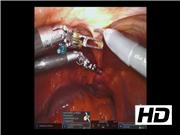
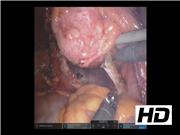
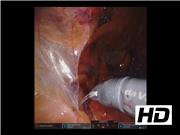
From January 2016 to June 2017, three male patients were referred to our attention with a diagnosis of urachal mucinous adenocarcinoma. Preoperative imaging was negative for lymph node or distant metastases in all patients. All patients were treated with a robotic approach. With the patient in supine position, five ports were placed transperitoneally. The patient was placed in the 28° Trendelemburg position. After the cranial dissection into Retzius' space, the bladder dome was excised with the urachus and the umbilicus. The bladder was closed in two layers with continuous running sutures. Bilateral pelvic lymphadenectomy was performed. Mean values with standard deviations (±standard deviation [SD]) were computed and reported for all items.
Results:
The mean (±SD) operative time was 123.3 ± 25.2 minutes. The mean blood loss was 56.7 ± 25.2 mL. No intraoperative and postoperative complications occurred. The patients were discharged 4.3 ± 0.58 days after surgery. The Foley catheter was removed 7.3 ± 1.2 days after surgery. The pathology report described in all cases a poorly differentiated adenocarcinoma with extensive extracellular mucin deposition. In two patients, all lymph nodes were free of metastases. In the case described in this video, 2 out of 17 lymph nodes were positive for metastases. All patients were managed by the hospital multidisciplinary team for urologic tumors and were enrolled in a strict follow-up protocol. At a follow-up at 14.3 ± 8.7 months, all patients are disease free.
Conclusions:
Robot-assisted laparoscopic partial cystectomy, urachal resection, and pelvic lymphadenectomy are feasible approaches to treat urachal cancer. It could reduce surgical morbidity, postoperative pain, and recovery time, while maintaining the oncologic principle of safe local excision.
Author(s) have received and archived patient consent for video recording/publication in advance of video recording of the procedure.
No competing financial interests exists.
Runtime of video: 6 mins 31 secs
Get full access to this article
View all access options for this article.