





Abstract
Objective:
Robot-assisted surgery has been increasingly used as a minimally invasive approach for reconstructive urinary tract procedures. 1 In this video, three reconstructive ureteral procedures (two ureteroneocystostomy and one ureteroureterostomy) are presented.
Materials and Methods:
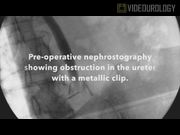
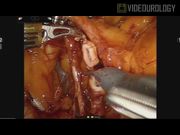
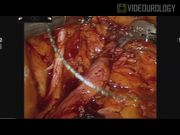
First patient was a 70-year-old woman who had right ureteral ligature during open hysterectomy. After percutaneous drainage for 3 weeks, she underwent robot-assisted exploration. The ureter was dissected and isolated proximal and distal to the obstructed ureteral segment. Ureter obstruction was because of a metallic clip at the level of the iliac bifurcation. The clip was removed. Obstructed ureteral segment was resected and robot-assisted ureteroureterostomy was performed. Second patient was a 48-year-old woman who had thermal injury of right distal ureter during robot-assisted laparoscopic hysterectomy. Perioperative urology consultation was conducted, and after completion of hysterectomy, psoas hitch and ureteroneocystostomy were performed with the extravesical Lich–Gregoir technique. Third patient was a 74-year-old man with left distal ureteral stricture because of transurethral resection of bladder tumor around the ureteral orifice. After ineffective ureteral catheterization attempt, ureterovesical anastomosis was planned. Distal end of the ureter was excised and sent for frozen section analysis. After confirmation of absence of tumor on frozen section analysis, robot-assisted laparoscopic ureteroneocystostomy was performed. In all patients Double-J ureteral stents were placed during the operation and optimal positioning was checked fluoroscopically. Double-J catheters were removed 4 weeks after the operation.
Results:
Postoperative period was uneventful in all three patients. None of them required blood transfusion. Intravenous urogram and diuretic renogram revealed no obstruction and kidneys were functioning well in all patients.
Conclusion:
Robot-assisted ureteral reconstruction is a safe and effective method. Robotic assistance allows minimally invasive urinary tract reconstruction with the advantage of vision on the console and robotic instruments.
Author(s) have received and archived patient consent for video recording/publication in advance of video recording of procedure.
No competing financial interests exist.
Runtime of video: 7 mins 34 secs
Abstract was presented at 32nd World Congress of Endourology & SWL, WCE 2014, September 3–7, 2014, Taipei, Taiwan.
Keywords
Get full access to this article
View all access options for this article.