





Abstract
Introduction:
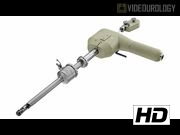
ENDOSEW® is a new sewing device developed for the placement of running sutures during (robot-assisted) laparoscopic procedures. 1,2 The study was conducted to evaluate the feasibility of a robot-assisted suturing of a U-shaped ileal neobladder with the ENDOSEW suturing device (KARL STORZ ENDOSKOPE, Tuttlingen, Germany) and the da Vinci System in an experimental setting. 3,4
Materials and Methods:
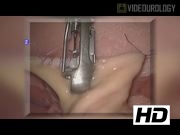
The length of the suturing unit is 300 mm with a diameter of 14 mm, so that it can be placed via a 15 mm trocar. Tissue up to 4 mm thickness can be sutured with a stitch overlap of 3 mm. Surgeon decides about the distance between two stitches (from 1.5 to 4 mm) by transporting the tissue more or less forward. An industrialized stitch (type 501) is created with only one threat by wrapping the threat around the tissue. The suturing device can place up to 38 stitches per minute (i.e., 120 mm/min). A polyglycolic acid 4.0 braided thread is used in applicators from 2.5 to 12.5 m. A 40 cm bovine intestinum was fixed at the mesenterium in a laparoscopic training model. After placement of the da Vinci trocars, ENDOSEW (suturing device for laparoscopic use) was inserted via a 15 mm trocar (suprapubic access) in a 30° angle and fixed by a retractor. Speed and direction of suturing are adjustable for the surgeon by a foot paddle. Beside the camera and the da Vinci trocars, an additional port was placed for assistance in the right lower abdomen. Time for preparation of the ENDOSEW was 10 min for the application specialists of the company. For statistical analysis we used descriptive methods.
Results:
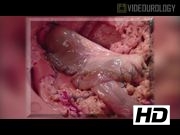
The U-shape of the neobladder was fixed by regular stitches. Time for preparation of the suturing device was 10 min by the application specialist of the company. After placement of the intestinum in the suturing device, the tissue (thickness 3 mm) was led through the stitch building tools and the rear suture was created by 58 stitches (length 15 cm), and the front suture was made by 64 stitches (length 20 cm). Total time for suturing a U-shaped neobladder was 136 min, and the total threat length used was 2.1 m (1.72 cm per stitch). After closure of the Studer chimney with regular stitches, a simulated “vesicourethral” anastomosis was built with the accessory material of the laparoscopic trainer. The neobladder was filled with 80 mL fluid and proofed to be watertight. Additionally, in suturing the neobladder we learned the following lessons: the small length of da Vinci scissor creates saw-toothed margins, the adjustment and adoption of bowel margins take time, and the limit for angulation of ENDOSEW is 30°. The suturing device produces comparable running sutures, which can be varied by the surgeon in distance and tissue tension, if needed. Further series (different material) showed a reduction of time for similar procedures by a steep training effect.
Conclusion:
Suturing a U-shaped ileal neobladder by the ENDOSEW in combination with the da Vinci system was feasible in an experimental setting. Providing a reduction of time for placement of sutures with additional experience, an intracorporeal application of ENDOSEW in combination with the da Vinci system seems possible and therefore might facilitate the intracorporeal construction of urinary diversions.
No competing financial interests exist.
Runtime of video: 6 mins 31 secs
Get full access to this article
View all access options for this article.