





Abstract
Introduction:
In patients who have completed a primary regimen of chemotherapy for a nonseminomatous germ cell tumor (NSGCT), retroperitoneal lymph node dissection (RPLND) is the recommended treatment modality for a residual retroperitoneal mass ≥1 cm in the setting of normal tumor markers. Currently, an open RPLND (O-RPLND) is the gold-standard surgical approach; however, it is associated with a significant amount of perioperative morbidity. Recent experience has demonstrated the utility of the robot-assisted laparoscopic approach in the primary setting for NSGCT; however, data are lacking in the postchemotherapy (PC) setting.
Materials and Methods:
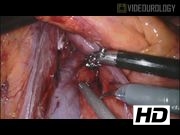
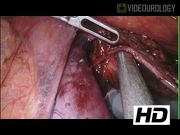
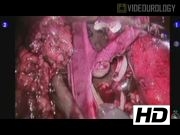
We conducted a multicenter, retrospective review of 163 men with NSGCT who underwent either a robot-assisted RPLND (RA-RPLND) or O-RPLND. Of these, 48 were in the PC setting—34 PC-RA-RPLND and 14 PC-O-RPLND. The robotic approach used has been described previously. 1 –5 Special consideration between the da Vinci® S, Si, and Xi systems regarding port placement and robot docking is discussed. Surgical considerations in this select group of patients include the following: appropriate patients are selected, full bilateral templates are performed, nerve sparing approaches can be considered based on disease burden, any tumor thrombus is treated as active disease, and the extent of disease may obviate the need for a more extensive resection. Pertinent comparisons were made between each approach.
Results:
Patient demographics and operative times were similar between groups. PC-RA-RPLND showed statistically better outcomes than PC-O-RPLND with regard to intraoperative blood loss (335.4 mL vs 1069.2 mL, p ≤ 0.001), postoperative pain (44.9 mg vs 972.9 mg of morphine equivalents, p ≤ 0.001), and duration of postoperative hospitalization (2.7 days vs 8.0 days, p ≤ 0.001). There was no difference noted in the mean number of nodes obtained (26.8 vs 24.9, p = 0.574). Although there was a significant difference noted in the duration of follow up (29.1 months vs 64.1 months, p ≤ 0.001), only two recurrences have been documented. Although both were in the PC-RA-RPLND group, neither were in-field recurrences.
Conclusions:
PC-RA-RPLND for NSGCT appears to be less morbid and better tolerated than the traditional open approach, all while allowing for intricate dissection of adherent planes, complete removal of concerning tissue, and complex vascular reconstruction. Our current data suggest a similar oncologic outcome; however, more research is needed.
The source of this video is from clinical practice. There are no conflicts of interest or obligations resulting from this video. J.O.L. and S.P.S. are consultants for Intuitive Surgical®. Remaining authors have no conflict of interests. The views and opinions expressed herein are those of the authors and do not necessarily reflect the official policy or position of the Department of the Navy, Department of Defense, or the U.S. Government
.
Runtime of video: 9 mins 59 secs
Keywords
Get full access to this article
View all access options for this article.