





Abstract
Introduction:
At times, sacral neuromodulation may fail primarily or secondarily to treat overactive symptoms or nonobstructive urinary retention. Can pudendal neuromodulation be utilized to treat these patients with continued success with either disease entity?
Materials and Methods:
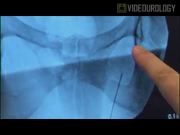
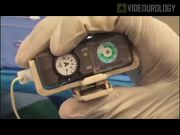
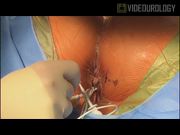
Between February 2014 and 2016, 14 patients underwent pudendal neuromodulation placement after failed stage 2 sacral neuromodulation without lead migration and could not control their symptoms as well as before. All underwent unilateral right-sided pudendal stage 1 neuromodulation for at least a 2-week trial with weekly follow-ups of their voiding diaries and straight catheterization of postvoiding residual urines.
Results:
Eighty-six percent of patients [12/14] had a 50% improvement with a 50% reduction of frequency, urgency, and nocturia [9/9]. Whereas 3/5 in urinary retention were able to void with a postvoid straight catheterization of <50 mL. Two patients both less than 50 years of age with diabetic cystopathy had improved sensation to void and voided in modest amounts of less than 10% of bladder capacity and needed to continue clean intermittent catheterization. All study participants achieved an anal wink with concomitant effective electromyography (EMG) tracing at <3 volts on at least two of the four lead probes. Most often lead probes 0 and 1.
Conclusion:
In the short-term, pudendal neuromodulation can be utilized with good success as a surgical salvage procedure for either overactive bladder symptoms or nonobstructive urinary retention [other than diabetic cystopathy]. We feel capturing an anal wink and EMG tracing a <3 volts may become pivotal for short-term efficacy.
Runtime of video: 6 mins 56 secs
Get full access to this article
View all access options for this article.