





Abstract
Introduction:
We show the main steps of PERUSIA (Posterior, Extraperitoneal, Robotic, Under Santorini, Intrafascial, Anterograde) RP reporting pentafecta outcomes.
Materials and Methods:
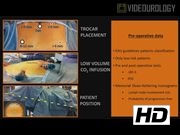
We retrospectively analyzed 160 patients undergoing PERUSIA-RP, between February 2012 and December 2014 with a minimum follow-up of 1 year. Only potent patients were included, with low-risk prostate cancer (LR-PCa), according to EAU guidelines.
1
The patients who fulfilled the appropriate criteria were offered active surveillance, those who refused it were offered active treatment. In absence of well-defined criteria, we arbitrarily excluded those patients with extracapsular extension risk >30%, according to Memorial Sloan-Kettering nomograms. In these cases, we performed a wider excision, according to the side specific density of positive biopsy cores. The surgical steps are the following: • Extraperitoneal space is digitally created without any adjunctive device. • −20° Trendelenburg position. • Docking of the robot (Da VinciSi, Intuitive Surgical, Sunnyvale, CA). • U-shaped incision on the bladder neck preserving circular fibers. • Perpendicular approach to medial aspect of the seminal vesicles, which were mobilized from their lodge, maintaining a medial avascular plane, avoiding damage of proximal neurovascular plate.
2
• Incision of the Denonvilliers' fascia. • Athermal dissection in a lateral manner, with enlargement of the retroprostatic space toward the prostatic pedicles. • Following the medial aspect of the Veil of Aphrodite, we reached the anterior periprostatic tissue, detouched bluntly from the fascia, without damaging the accessory neurovascular plate, a neural pathway for both cavernosal and sphincteric systems.
2,3
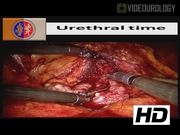
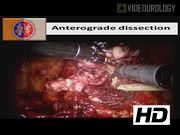
• Santorini plexus was not knotted, developing an anterior avascular plane to identify the prostatic–urethral junction maximizing the urethral length. • Urethrovesical anastomosis in a semicontinuous manner using Quill®.
Urinary continence was evaluated through direct interview; the definition of continence was no pad use, according to the question number 5 of the EPIC questionnaire. 4 Immediate continence (24 hours after catheter removal) was pointed out. Patients were defined potent if IIEF-5 was ≥17, categorizing who need oral drug to reach this score. 5 Perioperative and oncologic outcomes were reported. Functional outcomes were evaluated at 3 and 12 months.
Results:
Mean operative time: 129 minutes. Estimated mean blood loss: 198 mL. Overall complications' rate, according to Clavien–Dindo, was 15% (24/160), without major degrees. Of the 160 patients, 107 reached immediate full continence (66.9%), 150 at 3 months (93.7%), and 155 at 1 year (96.9%). Potency rate was 70% (112/160) and 80% (128/160) at 3 and 12 months, respectively; of those 55.4% (62/112) and 47.5% (70/128) were with regular use of IPDE5. Thirty-three patients (20.6%) experienced positive surgical margins (PSMs), of whom 16 were focal (<1 mm), all with a PSA ≤0.01 at 12 months. PSMs were 10%, 22.8%, and 24.7% in pT2a,b, and c, respectively. Thus, five patients experienced biochemical cancer recurrence (3.1%), treated with salvage radiotherapy, and seven (4.4%) needed adjuvant radiotherapy. Main limitation of our study was a short follow-up.
Conclusions:
PERUSIA-RP might help to reduce damaging of the periprostatic neurovascular structures. Preservation of periurethral anterior support minimized urethral retraction. PERUSIA-RP showed very encouraging results in LR-PCa, providing a quick recovery of potency and continence. Otherwise, particularly during learning curve, PSMs rate seems still high and further studies are needed to understand whether the PSMs rate will drop with increasing experience.
Runtime of video: 7 mins 23 secs
Get full access to this article
View all access options for this article.