





Abstract
Objectives:
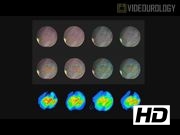
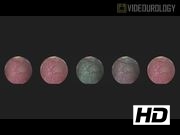
To evaluate the variation of interpretation of the same bladder urothelium image in different Storz Professional Image Enhancement System (SPIES) modalities. SPIES contains White light (WL), Spectra A (SA), Spectra B (SB), Clara and Chroma (CC) modalities.
Materials and Methods:
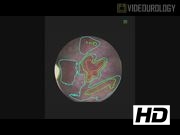
An App for the i-PAD retina was developed to study evaluation of images. A total of 80 images from 20 bladder areas acquired in four modalities were included. Seventy-three participants completed the study. Images were analyzed on differences in delineated tumor margin variation, perceived quality of the image, and delineation time.
Results:
A separation between high-agreement (n = 14) and low-agreement (n = 6) images was found. In high-agreement images, no difference in root mean square (RMS) was found between modalities. In low-agreement images, WL (26.5 pix) and SA (33.4 pix) had a higher RMS than CC (18 pix) and SB (21.4 pix). The quality of SPIES modality images was rated significantly higher. Delineation time was similar.
Conclusion:
In low-agreement cases, images in CC and SB have less variation in interpretation than images in WL and SA. The image quality in SPIES modalities is graded significantly higher than in WL. There is no difference in delineation time between modalities.
No competing financial interests exist
.
Runtime of video: 6 mins 51 secs
Get full access to this article
View all access options for this article.