





Abstract
Objectives:
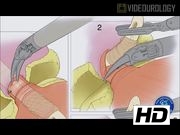
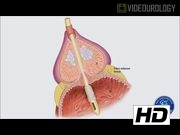
To describe our novel surgical technique for preserving bladder neck during robot-assisted laparoscopic radical prostatectomy (RALP).
Methods:
Between December 2012 and May 2014, 52 RALP surgeries were performed in our institute. Demographic, perioperative, and postoperative data were recorded. Quality of life (QoL) scores were assessed before RALP, after urethral catheter removal, and at the first month of RALP. Fatty connective tissue between the bladder neck and prostate was identified and cauterized in all patients, to visualize the circular muscle fibers of internal sphincter and simplify the preservation of the bladder neck. Complications were analyzed accordingly to the Clavien–Dindo classification. Statistical analyses were performed.
Results:
The mean follow-up was 9.6±5.2 months and the mean age was 61.1±6.5 years. Our novel surgical approach for preserving bladder neck was performed in 52 patients. The patient resulted to be continent right after catheter removal. The mean urinary catheterization time after the procedure was 9.4±1.4 days. Regarding QoL, no statistically significant difference has been identified between preoperative conditions and 1 month after RALP (respectively, p<0.001, p=0.5). Furthermore, there was no complication in relation to bladder neck such as bladder neck stricture, acute/chronic urinary retention, as well as no Clavien 3, 4, and 5 complications. In addition, no conventional laparoscopy and/or open surgery conversion was required in any of the collected RALP cases.
Conclusion:
Our novel surgical approach provided effective early continence at the time of catheter removal after RALP, within a short-term follow-up. The early recovery allowed the collection of satisfactory QoL scores, in combination with a low complication rate.
We would like to thank Michael Ackerman on behalf of The National Library of Medicine's Visible Human Project for photos of cadaveric slides
.
Runtime of video: 6 mins 37 secs
Get full access to this article
View all access options for this article.