





Abstract
Introduction and Objective:
Robot-assisted laparoscopic prostatectomy (RALP) with suprapubic tube (SPT), compared to urethral catheter (UC) drainage, has been proposed to improve patient's comfort and recovery. We sought to compare short- and intermediate-term outcomes for pain and satisfaction after RALP with SPT versus UC drainage.
Materials and Methods:
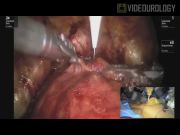
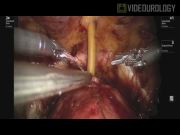
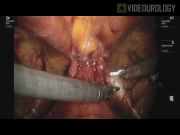
After obtaining institutional review board approval, we performed a retrospective review of 93 men who underwent a RALP between August 2012 and June 2013. As part of the standard postoperative assessment, these men completed a series of questionnaires addressing postoperative pain and satisfaction. Group 1 (n = 57) underwent a RALP by a single surgeon who placed only a UC and removed it between postoperative day (POD) 7 and 10. Group 2 (n = 36) underwent a RALP by a different single surgeon who intraoperatively placed a percutaneous SPT and UC. On POD 1, the UC was removed and the SPT was left to drainage. On POD 9–10, the SPT was capped and removed on POD 11–12 if the patient was adequately emptying his bladder. Each of the surgeons for the patients in Groups 1 and 2, respectively, preserved bladder neck when technically possible, performed a single layer anastomoses, and did not perform a Rocco stitch reconstruction.
Results:
There were no statistically significant differences between the groups for preoperative mean age, body mass index, American Society of Anesthesiologists scores, prostate-specific antigen, nerve sparing, estimated blood loss, and prostate volume. Both the groups had a median postoperative Gleason sum of 7. Pathological T3a or less was found in 95.2% of Group 1 and 94.4% of Group 2 patients. No patients experienced intra- or postoperative complications. One week after the surgery, the mean penile pain score was statistically significantly lower in Group 2 (14% reported moderate to severe pain) compared with 23% in Group 1 (p < 0.0001). Bladder spasms were also significantly higher for Group 1 compared with Group 2 (26.3% vs. 16.7%, p < 0.0001). Moreover, when asked about overall pain, 33.4% of patients in Group 1 reported moderate to severe pain compared with 30.6% of patients in Group 2 (p < 0.0001). When asked “How big a problem has your urine storage device been?” 17.6% of patients in Group 1 reported it as “moderate to big” problem compared with 13.9% of patients in Group 2 (p < 0.0001). There were no complications related to the catheters in either Group 1 or 2.
Conclusion:
SPT drainage is associated with less penile pain and better patient satisfaction compared to UC drainage. Continued data accrual is under way to assess trends in larger sample sizes.
No competing financial interests exist.
Running time: 8 mins 56 secs
Keywords
Get full access to this article
View all access options for this article.