





Abstract
Introduction and Objectives:
Rectovesical fistulas are a rare but devastating complication of radical prostatectomy. Management can be challenging due to deep location in the pelvis and recent surgery. We present a case of a patient whose prostatectomy was complicated by unrecognized rectal injury and pelvic abscess. After diverting colostomy, he was referred for management of the resulting rectovesical fistula. The patient failed primary closure with a sliding rectal advancement flap.
Methods:
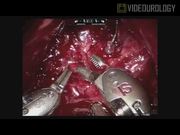
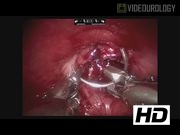
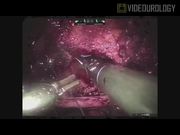
In this video, we demonstrate robotic repair of a rectovesical fistula. The fistula tract was first dissected posterior to the bladder. Due to the location of the fistula, a transvesical approach was also required to identify the distal end of the fistula. Once the fistula was completely separated from the bladder, it was primarily closed. An omental flap was then mobilized and secured over the fistula site.
Results:
The patient underwent successful repair using minimally invasive techniques, preventing the morbidity of a large open procedure. The repair was confirmed with retrograde urethrogram and CT with rectal contrast.
Conclusions:
Robotic rectovesical fistula repair using a combined anterior and posterior approach is a useful technique to allow complete visualization of the fistula tract and adequate separation of the rectum and bladder. The addition of an omental flap decreases recurrence and facilitates healing of damaged tissues. Using minimally invasive techniques the patient spared a large open reconstruction.
No competing financial interests exist.
Runtime of video: 6 mins 56 secs
Get full access to this article
View all access options for this article.