





Abstract
Introduction:
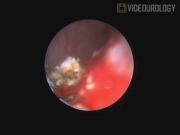
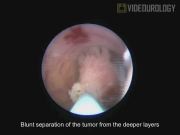
Transitional cell cancer is the fourth most frequent carcinoma. The upper urinary tract is affected in only 5% to 10%. An affection of the renal pelvis is observed twice as often as of the ureter. In conformity with the EAU Guidelines on upper tract urothelial cell carcinoma, the radical nephroureterectomy is still the gold standard treatment. In daily practice, we have patients with severe renal failures or a functional or anatomical single kidney or the request for a kidney-conserving surgery. In this video, we present the en-bloc resection technique of a localized, solitary papillary tumor in the upper urinary tract using a Thulium:Yag-Laser.
Materials and Methods:
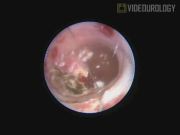
A standard white-light semirigid ureteroscopy was performed using 9.5F (Uretero-Fiberscopes Karl Storz, Karl Storz, Germany). The tumor in the pyeloureteral junction was en-bloc resected with a Thulium:YAG-Laser and a 365-μm fiber (Revolix and PercuFib, both LisaLaser Products OHG, Katlenburg-Lindau, Germany). We adjusted the laser energy to 10 W for this procedure. The tumor was extracted with a 1.9F Zero Tip nitinol basket (Zero Tip Nitinol Retrieval Basket 1.9F; Boston Scientific, Natick, MA). Cold cut biopsies were taken from the tumor ground with a flexible biopsy forceps (EuroMedical GmbH, Bodman-Ludwigshafen, Germany). Subsequently, the tumor ground was coagulated with laser energy. Afterward, a 6F Double-J (DJ)-ureteral-catheter (OptiSoft; OptiMed, Ettlingen, Gemany) was inserted.
Results:
The inserted DJ-catheter was removed 14 days after discharge. The histopathological analysis indicated a pTa G1 tumor. It was resected “en bloc” without positive margins of the specimen. The cold cut biopsies show no residual tumor cells. Until today, no recurrence was observed for 1.5 years. Since surgery, kidney function is approximately normal with a calculated glomerular filtration rate of 59 mL/minute.
Conclusions:
The en-bloc resection of solitary low-grade papillary tumors of the upper urinary tract using a Thulium:YAG-Laser might be a feasible treatment option in the hands of experienced endourologists.
We declare that there were no commercial associations that might create a conflict of interest in connection with this article. None of the authors had any competing financial interests.
Runtime of video: 7 mins 30 secs
Keywords
Get full access to this article
View all access options for this article.