





Abstract
Introduction:
Laparoscopic surgery has demonstrated superiority in terms of morbidity compared to open surgery in a variety of urological procedures. 1 –3 With the introduction of laparoendoscopic single-site (LESS) surgery, surgery has significantly shifted away toward less surgical invasion of the abdominal wall. LESS surgery as a new evolving surgical technique still represents a challenge for most urologists. This approach requires surgical expertise and advanced surgical equipment. 4,5 An advantage in pain or recovery time has been showed by LESS surgery respect to conventional surgery. 6 In this video, we present a novel technique for LESS-RP using a Kymerax® robotic device. We describe technical features of the device as well as intraoperative utilization, tips and tricks to overcome technical challenges during the surgery.
Materials and Methods:
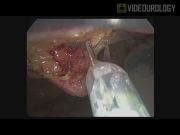
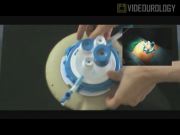
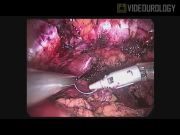
The patient is a 54-year-old man with a total prostate specific antigen (PSA) of 6.7 ng/mL and free PSA ratio of 12%. Digital examination was not prostate cancer suspicious and the BMI was 28 kg/m2. A left lobe prostate adenocarcinoma, Gleason 6 (3+3), was diagnosed by an ultrasound-guided transrectal prostate biopsy. The prostate volume was 27.4 cc. The patient reported no erections in his history for more than 3 years. Kymerax (Terumo) hand-held robotic device is an articulated, reusable system that incorporates a lateral and circular movement in its end side. The surgeon manipulates the handle's controls to effectively maneuver the instrument to adjust the position of the tip in each case to the requirements of the field. A single port (Octoport®), one precurved grasper (Olympus) for tissue handling and a rigid optic were used during the procedure.
Results and Conclusions:
The procedure was completed successfully without complications. The total operative time was 230 minutes (prostate excision 202 minutes and anastomosis 28 minutes). The Visual Analogic Scale (VAS) score for postoperative pain 12 hours after surgery was 2.3. Patient resumed oral intake and ambulated within 12 hours after the surgery. The drain was removed on postoperative day 1 and the hospital stay was 48 hours. The patient was satisfied with the cosmetic outcome. Complete continence was achieved by the patient within 2 weeks after catheter removal. The pathology revealed acinar adenocarcinoma, Gleason 6 (3+3), located in the left lobe and negative surgical margins were described. The first month postoperative PSA was 0.03 ng/mL. Our pioneer LESS-RP experience using Kymerax robot was successful. LESS-RP surgery is under development and any recommendation can be made. Although more technical improvements are needed, robotic tweezers definitely reduced the struggle of the surgery, especially during urethrovesical anastomosis.
No competing financial interests exist.
Runtime of video: 9 mins 41 secs
Keywords
Get full access to this article
View all access options for this article.