





Abstract
Introduction:
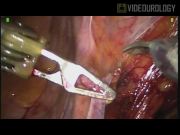
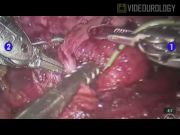
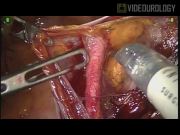
The benign ureteral stricture disease and the urothelial carcinoma of the distal ureter can be managed by distal ureterectomy and ureteral reimplantation. The da Vinci robotic surgical system has been increasingly used in the management of a variety of urologic diseases. To assess the application of robotic surgery in the management of the distal ureter, we evaluated the feasibility and safety of robotic distal ureterectomy (RDU). We highlight our surgical technique with a surgical video.
Materials and Methods:
Nineteen patients with benign or malignant disease involving the ureter were enrolled between June 2004 and March 2012. Preoperative, intraoperative, and postoperative parameters were recorded and analyzed. The modified Clavien system was used to grade postoperative complications.
Results:
Ten patients underwent RDU for urothelial carcinoma of the distal ureter, and the other nine for benign stricture disease or iatrogenic injury. The median age at surgery was 65 years (interquartile range [IQR]: 58.5–76.5 years). The median estimated blood loss was 180 mL (IQR 50–200 mL) and the median operative time as 235 minutes (IQR 200–271 minutes). Ten patients underwent robotic reimplantation with a psoas hitch, and nine patients underwent robotic primary ureteral reimplantation. The median length of hospital stay was 2 days (IQR: 2–4 days). All the patients were discharged with a catheter, which was removed after a cystogram between postoperative days 7 and 10. Postoperative adverse events included oliguria, clot retention, and one pulmonary embolus. Of the 10 patients treated for urothelial carcinoma, 1 had pT1 disease, 2 had pT2 disease, 5 had pT3 disease, and 2 had pT0 disease. At a median follow-up time of 25.3 months, all the nine patients treated for the benign stricture disease or iatrogenic injury had no evidence of obstruction. At a median follow-up time of 12.3 months, the five patients treated for the ureteral malignancy showed no evidence of disease, and five were alive with the disease.
Conclusions:
In select patients, RDU is a technically feasible option for the management of both the benign and malignant ureteral disease. Further controlled trials are necessary to confirm the noninferiority of RDU, especially for patients with urothelial carcinoma of the ureter.
No competing financial interests exist.
Runtime of video: 8 mins 1 sec
Keywords
Get full access to this article
View all access options for this article.